


Key Developments and Market Impact
US Treasury Secretary Janet Yellen announced plans to significantly increase sanctions against Russia on October 23 from the White House. This announcement has led to a rise in international oil and gold prices, impacting global markets with potential repercussions for international trade. The situation highlights the influence of geopolitical tensions on commodities and suggests possible implications for cryptocurrency volatility.
Heightened Sanction Strategy Against Russia
Janet Yellen declared a heightened sanction strategy against Russia at the White House. This announcement followed the cancellation of a planned Trump-Putin meeting. While the specific measures remain undisclosed, this initiative aligns with U.S. policy regarding Russia's international conduct.
Oil and gold prices have already responded to the news, reflecting shifting investor sentiment as these commodities often serve as market barometers. The absence of a specific meeting between Trump and Putin suggests heightened geopolitical tensions, further influencing market reactions.
Global reactions include increased market attention due to potential disruptions in Russian trade. Investors are closely monitoring subsequent announcements by Yellen, signifying an increased watch on international economic ramifications. As Janet Yellen, US Treasury Secretary, remarked, "Sanctions have proven to be an effective tool in applying pressure on Russia's economic capabilities, and we are committed to refining our approach as needed."
Historical Economic Shifts and Bitcoin's Response
Did you know? Historically, sanctions have compelled Russia to adjust its global trade activities significantly, disturbing its economy and energy sector, reminiscent of the 2022 G7+ price cap on Russian oil.
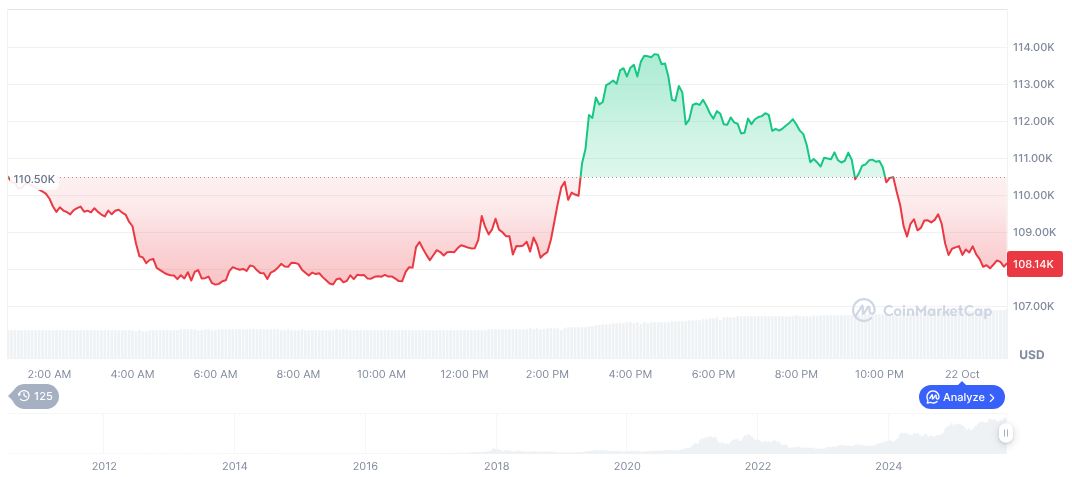
Bitcoin's market remains volatile amidst geopolitical tensions. According to available data, BTC's current price is $107,207.00 with a market cap of $2.14 trillion. Trade volume declined by 15.49% in 24 hours, showing a daily price drop of 1.71%.
Analysts suggest these sanctions may affect global financial stability, potentially leading to tech and financial sector adjustments. Historical trends show that major geopolitical events significantly influence global markets, highlighting the need for proactive regulatory strategies.