



Political Deadlines Drive Legislative Urgency
U.S. Senator Thom Tillis emphasizes the critical need for Congress to enact cryptocurrency legislation by early 2026, citing the potential for political timing to hinder progress. His comments underscore the urgency for lawmakers to act before electoral politics become a significant obstacle.
The senator's warning highlights the potential impacts on stablecoins and major cryptocurrencies, as prolonged uncertainty could stall regulatory clarity and affect market operations. Failure to enact legislation before the electoral cycle intensifies may leave crypto markets facing continued uncertainty through 2026.
Senator Thom Tillis, a member of the U.S. Senate Banking Committee, emphasized the impending handicap that electoral politics could pose to cryptocurrency legislation. His remarks underline the urgency for Congress to pass such measures by early 2026. He stated, "If we don’t get [crypto legislation] done by the first part of January, February, then I don’t think it happens in this Congress. I think we move into the political season." This push aligns with concerns about possible political gridlock affecting legislation designed to regulate the growing digital asset market.
The proposed legislation primarily focuses on market structure and payment stablecoins, with indirect implications for major cryptocurrencies like Bitcoin and Ethereum. Tillis's warning highlights looming political hindrances, risking further uncertainty in regulatory clarity. Senate Bill 1582 is part of ongoing efforts reflected in such proposals.
Despite the senator's call for action, major industry players such as Binance and Coinbase have withheld immediate comment on the potential legislation's delay. Brian Armstrong, CEO of Coinbase, reportedly participated in advocating for clarity, underscoring industry concerns about the political process impacting market structure. The importance of frameworks, as discussed in Senate Bill 954, is evident from ongoing legislative dialogues.
Impact on Markets Amid Legislative Uncertainty
Did you know? In 2017, the U.S. SEC's introduction of securities laws to ICOs resulted in a substantial decrease in domestic crypto activities, as many sought operations offshore to avoid complex regulatory environments.
As of October 28, 2025, Bitcoin (BTC) is priced at $113,955.53 with a market cap of $2.27 trillion and a 24-hour trading volume at $58.64 billion. Showing a 0.71% decline over 24 hours and 3.13% increase over seven days, the data indicates modest volatility. Source: CoinMarketCap.
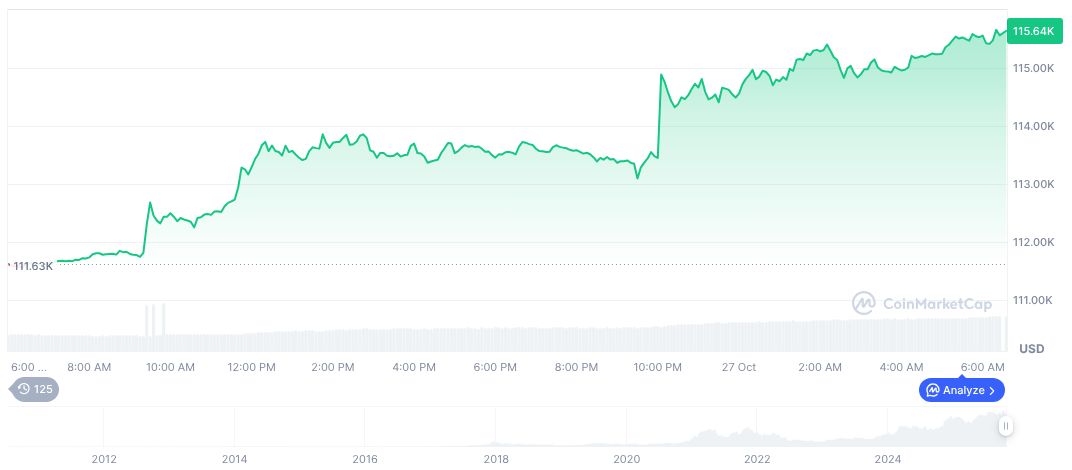
Coincu's research team suggests that the lack of immediate legislative clarity could sustain market volatility and investor hesitancy. Past enforcement activities, like against DAOs, reflect recurring themes that underscore the importance of precise legal frameworks in protecting and sustaining innovative financial ecosystems.