



Key Developments in Government Funding
The U.S. Senate has advanced a government funding bill, a critical step towards ending a prolonged shutdown. This bipartisan effort involves cooperation between Democratic and Republican senators, aiming to resolve federal funding issues by January 30, 2026. The bill's progression could have indirect impacts on macro-financial stability and cryptocurrency asset volatility, including Bitcoin (BTC) and Ethereum (ETH).
The proposed federal appropriations extension seeks to fund the government until January 30, 2026, ensuring continuity for essential sectors such as Agriculture, Defense, and Veterans Affairs. The immediate implications of this advancement include mitigating disruptions to government services and reducing economic uncertainties that have been amplified by the shutdown.
"We are committed to ensuring that we move forward on vital funding to end this record-long shutdown." – Senate Majority Leader John Thune (R-S.D.)
Anticipated Crypto Market Volatility
Financial markets and the cryptocurrency industry are closely monitoring these legislative developments. While there have been no official statements from crypto leaders, market observers anticipate potential increases in volatility as fiscal conditions evolve. This heightened sensitivity is often seen in macro-sensitive assets like Bitcoin during periods of economic uncertainty.
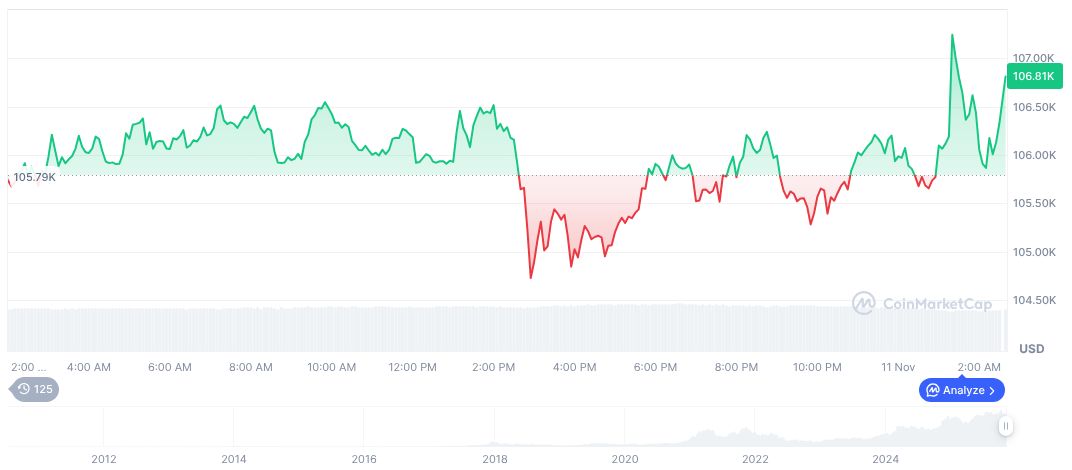
Historical data indicates that Bitcoin (BTC) has often experienced increased volatility during U.S. government shutdowns, largely influenced by broader economic uncertainties. The current value of Bitcoin (BTC) is $106,945.13, with a market capitalization of $2.13 trillion and a dominance of 59.58%, according to CoinMarketCap data. The 24-hour trading volume for BTC stands at $66.13 billion, showing a 2.54% decrease. Over the past 90 days, BTC's price has seen a decline of 10.37%.
Research teams observe that prolonged legislative processes can lead to fluctuations in crypto markets, particularly as fiscal policies undergo shifts. Historical trends suggest that such uncertainties often impact macro-sensitive assets, with Bitcoin frequently serving as an indicator during economic challenges.