



Key Developments in the LuBian Mining Pool Bitcoin Theft
The U.S. Department of Justice has seized 127,271 bitcoins, a move directly linked to a controversial 'hack-on-hack' incident involving the LuBian Mining Pool and Chen Zhi, the Chairman of Prince Group. This significant seizure underscores the evolving landscape of cryptocurrency security and the complexities of state intervention in digital asset recovery.
The seized funds, initially stolen in a 2020 hacking incident, remained dormant until 2024. They were subsequently transferred again before being seized by U.S. authorities in 2025. This timeline highlights a sophisticated attempt to move and potentially launder the stolen assets.
Unprecedented Seizure of Digital Assets
The U.S. Department of Justice's investigation culminated in the seizure of 127,271 bitcoins. These bitcoins were originally stolen in a 2020 hacking incident targeting the LuBian Mining Pool. The investigation revealed complicated ties between the stolen funds and Chen Zhi, the Chairman of Prince Group. Chen Zhi allegedly used his position to orchestrate money laundering operations, incorporating the hacked bitcoins into these schemes.
This action represents the largest forfeiture action ever undertaken by the U.S. government in relation to digital assets. The seized bitcoins are now valued at approximately $15 billion, a testament to the significant value of the stolen cryptocurrency.
Bitcoin Market Volatility and Expert Analysis
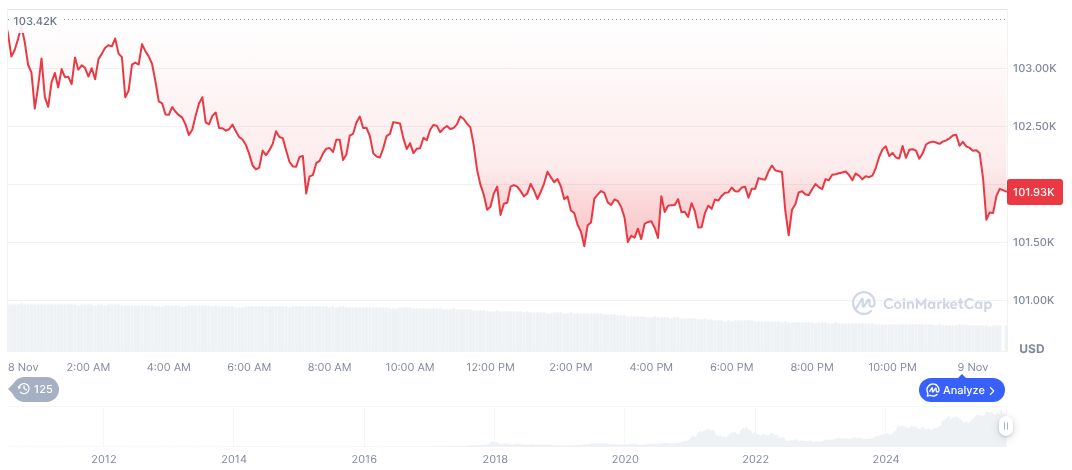
The seizure has coincided with a period of volatility in the Bitcoin market. According to current data, Bitcoin (BTC) is priced at $102,184.72, with a market capitalization of $2.04 trillion and a dominance rate of 59.34%. Over the past 30 days, BTC has experienced a decline of 15.95%, which can be attributed, in part, to the ongoing investigations and market uncertainty.
The circulating supply of Bitcoin is 19,946,421 BTC, with no significant changes reported in market leadership quality. The LuBian Mining Pool bitcoin theft incident is recognized as one of the most substantial in history, emphasizing ongoing vulnerabilities in cryptographic key management systems.
Experts from Coincu suggest that this incident may lead to the implementation of stricter regulations and the development of more advanced security mechanisms to prevent similar breaches in the future. Historical data consistently shows recurring threats to blockchain integrity, reinforcing the critical need for industry-wide adherence to best practices and heightened vigilance.
"The DOJ states that these bitcoins are now in their custody. Now valued at $15 billion, they represent the largest ever forfeiture action by the US government." — Elliptic Research