
Navigating Crypto News

CoinFeather
Navigating Crypto News

Quick market read from this story
US lawmakers are investigating underwriters, including Dominari Securities (linked to the Trump family), for facilitating Chinese stock manipulation schemes that have defrauded investors of an estimated $16 billion.
The probe focuses on "ramp-and-dump" tactics used by Chinese companies listed on US exchanges, raising concerns about the integrity of market access for foreign entities.
This regulatory scrutiny could lead to increased oversight of financial intermediaries involved in cross-border IPOs, potentially impacting future listings and investor confidence.
Deep Dive
US lawmakers are investigating several Wall Street underwriters, including Dominari Securities, for their alleged role in facilitating stock manipulation schemes involving Chinese companies listed on American exchanges. The House Select Committee on China has sent letters to D. Boral Capital, Dominari Securities, and Revere Securities, seeking information about the Chinese initial public offerings (IPOs) they underwrote.
The lawmakers accuse these firms of enabling "ramp-and-dump" stock manipulation schemes where Chinese shell companies inflate their share prices through coordinated trading and promotion. Subsequently, insiders allegedly dump their shares onto retail investors before the stock value collapses. The committee highlighted that these schemes have drained an estimated $16 billion from US investors since 2023, with the FBI reporting a 300% increase in complaints related to Chinese stock manipulation.
Dominari Securities is drawing particular attention due to its connections with the Trump family. The firm, located in New York's Trump Tower, is owned by Dominari Holdings. Eric Trump, son of former President Donald Trump, is the fourth-largest shareholder, and both Eric Trump and Donald Trump Jr. joined the company's advisory board in February 2025. Last year, Dominari also facilitated fundraising for Thumzup, a company that adopted a Bitcoin treasury strategy and received investment from Donald Trump Jr.
The House Select Committee on China is examining whether US financial intermediaries may have inadvertently aided manipulation schemes tied to Chinese issuers. The investigation seeks documentation from the underwriters, including communications, trading records, funding sources, and due diligence policies concerning Chinese IPOs. The firms have been given a deadline of Friday to submit the requested documents. Previous warnings by FINRA regarding such practices were also mentioned in the inquiry letters.
Source, catalyst, and sector overlap from the latest feed.
Strategy has amended its STRC sales program to allow for more efficient issuance, directly enabling a record-breaking single-day purchase of approximately 1,420 BTC. The increased STRC issuance, facilitated by relaxed ATM sales restrictions, signals a more aggressive capital deployment strategy by Strategy to accumulate Bitcoin. Despite Bitcoin trading below Strategy's average cost basis, the record STRC issuance and subsequent BTC purchase highlight sustained investor interest in the company's Bitcoin treasury strategy.
The integration of Babylon's BTCVaults with Ledger hardware wallets enhances security for Bitcoin collateralization, potentially increasing adoption of self-custodial yield strategies. By leveraging Ledger's Clear Signing technology, this partnership addresses user concerns about transaction transparency, making it safer for Bitcoin holders to engage with DeFi applications. This development signals a growing trend of bridging traditional self-custody solutions with advanced DeFi functionalities, expanding the utility of Bitcoin beyond simple holding.
BIP-360 introduces Pay-to-Merkle-Root (P2MR) to Bitcoin, a measured step towards quantum resistance by eliminating Taproot's vulnerable key path spending and forcing all transactions through script paths. While BIP-360 enhances quantum defense by reducing public key exposure, it does not offer immediate full post-quantum security, as existing UTXOs remain vulnerable until migrated. The implementation of P2MR will necessitate ecosystem-wide updates for wallets, exchanges, and custodians, potentially leading to slightly larger transaction sizes and increased fees. This development signals a proactive, long-term approach by Bitcoin developers to address future cryptographic threats, prioritizing gradual migration over immediate, disruptive changes.
The reported $1 million Bitcoin theft via a fake police raid highlights a concerning trend of increasing 'wrench attacks' targeting crypto holders in France, suggesting heightened physical security risks for individuals holding significant digital assets. The rise in wrench attacks, with France experiencing the highest number of incidents, indicates a growing threat vector that could impact investor sentiment and potentially lead to increased caution in asset storage and management. While this event is a direct loss for the victims, it does not represent a systemic risk to Bitcoin's underlying technology or market infrastructure, thus warranting a neutral sentiment and limited market impact beyond individual security concerns.
Bitcoin's price action is currently driven by liquidity sweeps, with a potential move towards $72,000 before a possible pullback to lower liquidity clusters around $64,000-$68,000. Improving momentum, evidenced by a rising RSI and significant increases in spot trading volume, alongside strong ETF inflows, suggests renewed buyer interest and potential for further upside. Sustained institutional demand via spot Bitcoin ETFs, coupled with capital rotation from gold, indicates a positive structural shift supporting Bitcoin's price trajectory. The current price action, characterized by short liquidations and the anticipation of further liquidity grabs, presents a volatile but potentially opportunistic short-term trading environment.
Anthropic's lawsuit against the U.S. government over alleged blacklisting from federal procurement could set a precedent for AI vendor restrictions. The legal challenge highlights the significant market access and potential revenue at stake for AI companies seeking government contracts. A favorable ruling for Anthropic could reopen federal procurement channels and influence future regulatory approaches to AI vendors.
US lawmakers are investigating Dominari Securities, a brokerage linked to the Trump family, for its role in listing Chinese companies on American stock markets, potentially impacting investor trust in similar ventures. The congressional probe focuses on suspicious trading patterns and alleged stock manipulation schemes that may have cost US investors billions, highlighting regulatory risks for companies involved in facilitating foreign IPOs. The FBI has reported a significant increase in complaints related to stock manipulation involving foreign issuers, signaling heightened scrutiny and potential enforcement actions. Given the regulatory focus and potential for increased oversight, market participants should be cautious of companies involved in facilitating cross-border listings, especially those with opaque trading histories.
Federal prosecutors are pushing for a retrial of Tornado Cash co-founder Roman Storm in October 2026 on charges of money laundering and sanctions violations, following a hung jury in the initial trial. The potential retrial carries significant implications for the broader crypto industry, as it tests the boundaries of prosecuting developers for open-source code and its alleged misuse. Despite the ongoing prosecution, recent regulatory shifts, including OFAC lifting certain Tornado Cash sanctions and DOJ statements on digital asset regulation, create a complex legal and market backdrop for the case. The defense is challenging the existing conviction and arguing against a premature retrial date, indicating potential legal delays and further uncertainty for the project and its stakeholders.
US prosecutors are pursuing a retrial for Tornado Cash co-founder Roman Storm on charges of conspiracy to commit money laundering and violate sanctions, indicating a continued legal battle that could set precedents for developer liability in decentralized technologies. The potential retrial, scheduled for October, highlights the ongoing legal uncertainty surrounding privacy tools and their developers, which could influence market sentiment and regulatory approaches towards similar projects. Despite a previous jury's inability to reach a verdict on these specific charges, the prosecution's decision to retry suggests a strong stance that may lead to significant legal outcomes impacting the broader crypto industry's approach to privacy and compliance.
South Korean authorities have successfully sold 320.8 BTC recovered from a phishing incident, realizing approximately $21.5 million for the national treasury. The sale was conducted in small batches over 11 days, indicating an effort to minimize market impact and avoid significant price disruption. This event highlights the ongoing challenges in managing seized digital assets and the potential for recovered funds to re-enter circulation.
The emergence of self-hosted token sale infrastructure like Saleium signals a maturing Web3 ecosystem moving beyond centralized launchpads towards more integrated project-community engagement. Projects utilizing Saleium can retain greater control over user experience and community connection during token launches, potentially enhancing brand loyalty and operational efficiency. The trend towards embedded token sale infrastructure suggests a shift from one-off fundraising events to a more integrated approach within a project's broader ecosystem development.
Michael Saylor's Strategy significantly increased its Bitcoin holdings by $1.28 billion, funded partly by new STRC preferred shares, reinforcing its position as a major corporate BTC accumulator. The partnership between Nasdaq and Kraken to launch tokenized stock trading by 2027 signals a growing institutional interest in bridging traditional finance with blockchain technology. The U.S. Treasury's acknowledgment of legitimate privacy uses for crypto mixers represents a nuanced regulatory shift, though concerns about illicit activity persist. BitMine's substantial expansion of its Ethereum treasury to $9.14 billion highlights a significant institutional bet on ETH's long-term value and potential.
Despite a recent $130 million sale, the Winklevoss twins maintain a significant $764 million Bitcoin holding, indicating continued conviction in the asset's long-term value. The Winklevosses' substantial BTC holdings, originating from their early adoption, underscore the enduring influence of foundational crypto figures on market sentiment and asset accumulation. With only one million BTC remaining to be mined and increasing institutional accumulation, the Winklevosses' strategic holding of a large BTC position aligns with a narrative of scarcity and potential future appreciation.
The significant 44% crash of MANTRA highlights the inherent risks of holding altcoins without thorough due diligence, contrasting with the audited presale of Pepeto which emphasizes foundational infrastructure development. Cardano (ADA) faces resistance around $0.26-$0.30, with whale movements and a descending trendline suggesting potential downside risk, making infrastructure plays like Pepeto appear more attractive for stable growth. Pepeto's presale, backed by a founder with a track record of building to multi-billion dollar valuations and a completed SolidProof audit, presents a potential infrastructure investment opportunity ahead of its Binance listing.
Live Feed
Loading the broader stream in the same flow as the homepage feed.
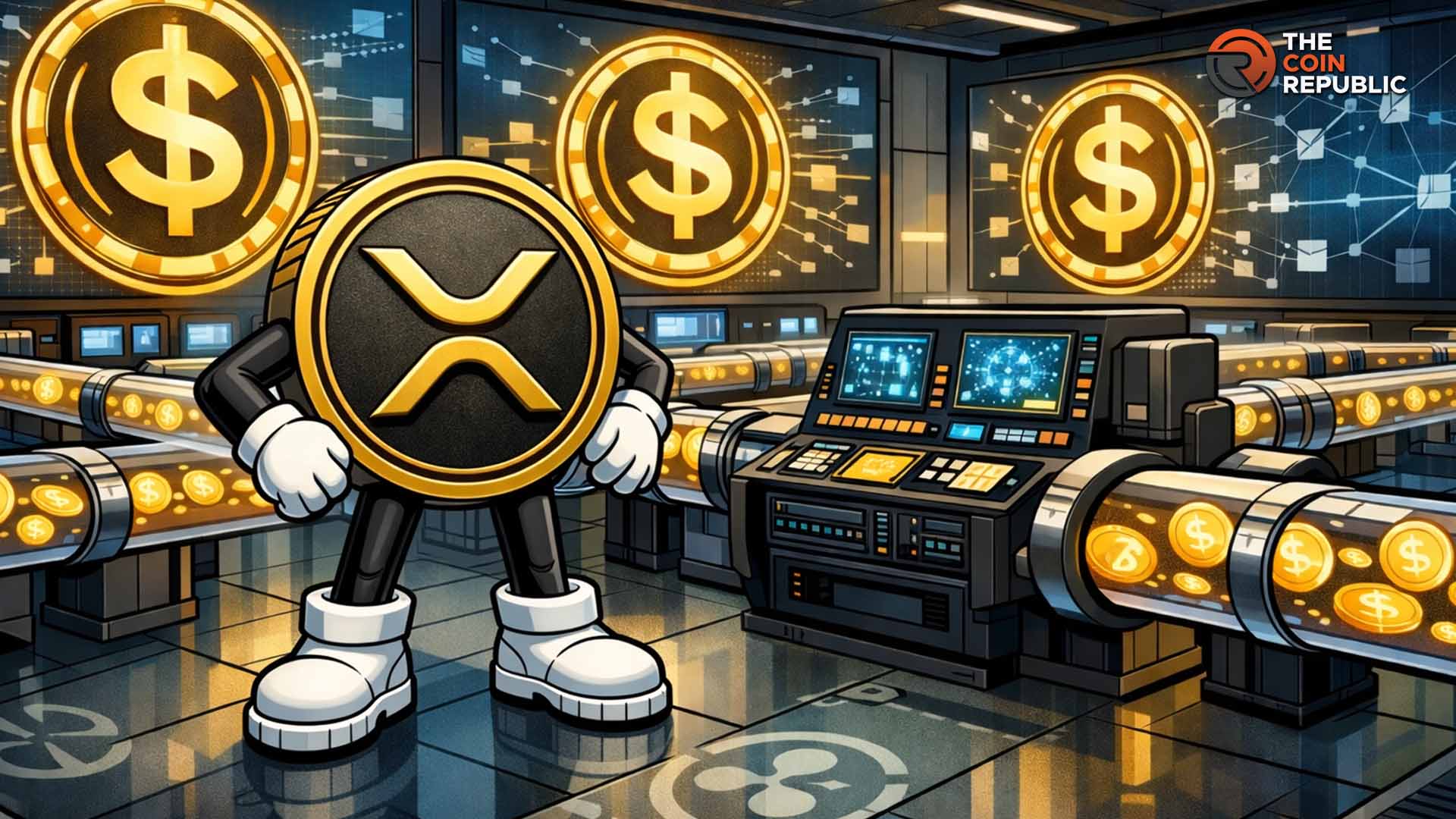
Ripple's payment network processing over $100 billion and its RLUSD stablecoin reaching $1 billion market cap signifies significant adoption and utility growth, potentially increasing demand for XRP as a settlement asset. The article highlights historical XRP price patterns correlating with the 100 EMA, suggesting potential accumulation zones and future upside targets between $6-$9 and $20-$25 if broader market conditions improve. Increased institutional interest in blockchain settlement solutions, coupled with Ripple's expanding payment infrastructure, could drive demand for XRP as a bridge currency for cross-border transactions.
Solana is consolidating near $85, with a critical breakout level identified at $100, suggesting potential for a short squeeze-driven rally if this resistance is overcome. Technical analysis on the 4-hour chart indicates SOL is testing rising channel support around $82-$84, with immediate resistance at $90-$91, implying a potential upward move towards $98-$100 if support holds. Recent liquidation of $3.49 million in high-leverage short positions suggests increased buying pressure and could fuel further upward momentum if key resistance levels are breached.

Arthur Hayes projects a significant 5x price increase for Hyperliquid's $HYPE token to $150 by August 2026, driven by strong projected annual revenues of $1.4 billion. The bullish outlook is supported by substantial current trading volume and open interest in perpetual futures on Hyperliquid, indicating active market participation. Anticipation of Hyperliquid's Portfolio Margin entering alpha phase adds to the positive sentiment, suggesting potential for enhanced trading functionalities and user growth.
Dogecoin is trading near a historically significant support zone identified by analysts, marking the third instance of such a pullback which has preceded substantial upward moves in the past. The current price action shows Dogecoin consolidating between $0.0897 and $0.0923, with declining weekly Average True Range (ATR) suggesting a potential for a sharp directional move. A reclaim of the $0.1300 Fibonacci extension level is crucial for Dogecoin to signal a stronger upward structure, with potential targets at $0.167 and $0.197 if successful. Despite a broken critical structural point at $0.1300, an analyst projects a potential surge to $1.20 if the current support at $0.085 holds, based on historical precedents.
Trust Wallet's new real-time scam protection feature enhances user security by scanning and warning against malicious wallet addresses before transactions are finalized. The implementation of this security tool across 32 EVM-compatible networks, including major chains like Ethereum and Polygon, signifies a proactive step by a prominent wallet provider to mitigate common fraud vectors like address poisoning. This development is likely to be viewed positively by users and could set a precedent for other wallet providers to adopt similar advanced security measures, potentially increasing user confidence in the ecosystem.

B. Riley initiated coverage on Strategy (MSTR) and Strive (ASST) with buy ratings, suggesting that the recent slump in bitcoin treasury valuations has created an attractive entry point for investors. The initiation highlights the potential for new digital credit financing models to drive growth within the bitcoin treasury sector, despite the recent price correction in BTC. Strategy's recent large bitcoin purchase and its digital credit platform, combined with Strive's diversified business model and attractive preferred share yields, are presented as key factors supporting their valuations.

The lack of a robust DeFi insurance primitive represents a critical gap, hindering institutional adoption by failing to provide necessary risk management for traditional finance players. Shifting focus from Total Value Locked (TVL) to Total Value Covered (TVC) is essential for DeFi maturity, as current low TVC indicates a system largely exposed to unpriced risks. Programmable insurance, utilizing uncorrelated capital and offering atomic payouts based on state verification, is presented as the key to transforming DeFi from a niche experiment into a resilient global utility. Assetizing risk through insurance acts as a market oracle for protocol health, providing a liquid price for security and enabling tradable instruments for smart contract and economic design risks.
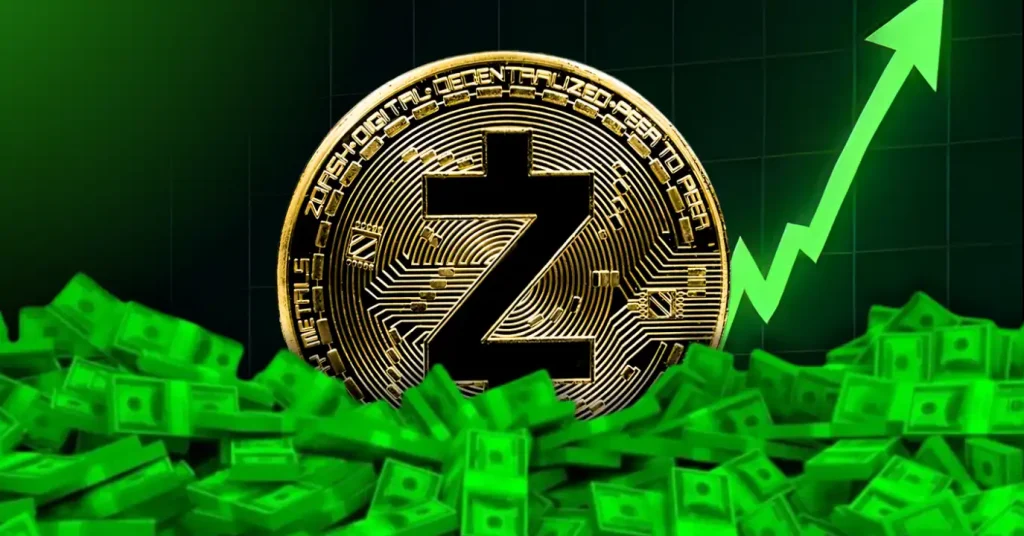
The $25 million seed funding round for Zcash Open Development Lab (ZODL), backed by major VCs like Paradigm and a16z crypto, signals renewed confidence and potential for enhanced development in the Zcash privacy ecosystem. Zcash price is approaching a critical descending resistance trendline near $230, with a successful breakout potentially leading to targets of $250-$260, while failure could result in a retest of the $200 support level. Recent on-chain data showing over $7 million in net ZEC inflows over two days, combined with the funding news, suggests accumulating interest and could support further price appreciation if sustained.
Signal context only. Validate with price action, liquidity, and risk limits before taking a position.
