


Banks Gain Authority to Hold Cryptocurrency for Operational Needs
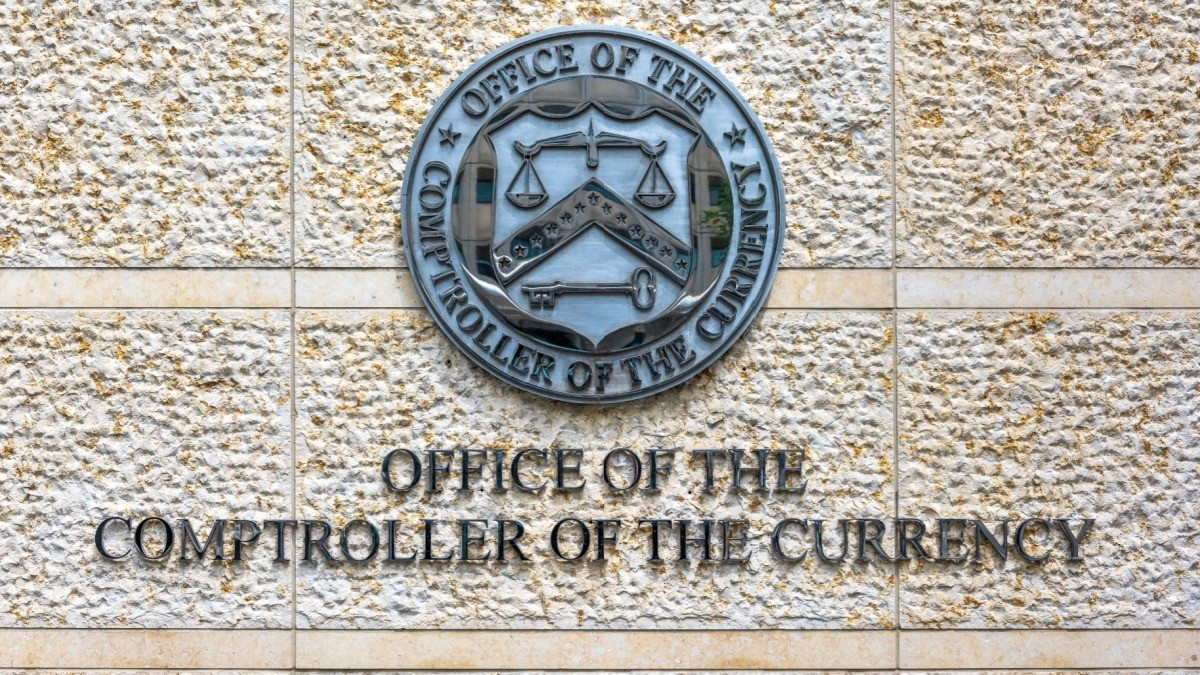
The chief regulator of America’s national banks has given institutions the green light to hold cryptocurrency on their balance sheets for the purpose of paying blockchain “gas fees,” marking one of the clearest signs yet of Washington’s shifting stance on digital assets. In a new policy document known as Interpretive Letter No. 1186, released Tuesday, the Office of the Comptroller of the Currency (OCC) said national banks may maintain the crypto assets they “reasonably expect to require” to process blockchain transactions.
These assets would be used to execute on-chain activity tied to customer services, custody operations or settlement activities. Blockchain networks such as Ethereum require transaction fees denominated in their native token. Without the ability to hold these assets, banks would face operational friction, including price swings and delays when buying tokens on the spot market. The OCC said these risks justify allowing banks to maintain a controlled balance of crypto for operational needs.
“We confirm that the proposed activities, as described and qualified by the Bank, are permissible,” the OCC wrote. The policy aligns with the Guiding and Establishing National Innovation for U.S. Stablecoins Act (GENIUS Act), which outlines situations where banks may need to process or facilitate digital asset transactions on behalf of customers.
Investor Takeaway
The OCC’s position moves banks closer to direct on-chain participation. Institutions now have clearer authority to keep crypto for operational purposes, reducing friction for future tokenized settlement and custody services.
Impact on Blockchain Networks Like Ethereum
The OCC’s guidance explicitly referenced Ethereum as an example of a network where transaction fees must be paid in the native token. According to the letter, banks operating on such networks previously had limited options:
- •Maintain a separate account holding the required token
- •Buy tokens on an exchange immediately before execution
- •Use a third-party gas-fee provider
- •Rely on other intermediaries to obtain tokens
These workarounds added operational complexity and exposed banks to potential price swings during volatile markets. By allowing banks to hold moderate levels of crypto directly, the OCC is reducing on-chain friction, clearing the way for institutions to settle transactions natively on networks like Ethereum. This could benefit tokenized settlement platforms, crypto custody services and banks building blockchain-based payment rails.
Broader Crypto Pivot Under the Trump Administration
The OCC’s updated stance reflects a broader pro-crypto shift across U.S. federal agencies since President Donald Trump entered office. Jonathan Gould, Trump’s appointee to lead the OCC, was confirmed by the Senate in July and has prioritized aligning bank policy with the administration’s goal of accelerating digital asset integration. Several notable changes have followed:
- •The Federal Reserve withdrew earlier guidance that discouraged banks from engaging with crypto.
- •The Fed and OCC issued a joint statement clarifying how banks may hold crypto on behalf of customers.
- •U.S. banks received confirmation they can buy and sell crypto assets as part of normal business operations.
- •The OCC removed certain “reputation risk” warnings from supervisory materials.
Collectively, these moves aim to normalize crypto participation across regulated financial institutions and prepare the banking system for tokenized settlement channels that could support stablecoin activity or blockchain-based payment flows.
Investor Takeaway
Regulatory alignment across the OCC, Federal Reserve and Treasury reduces barriers for banks entering the crypto space. Expect more institutions to explore tokenized settlement and on-chain custody solutions.
Future of U.S. Banks and Digital Asset Regulation
The OCC’s interpretive letter arrives as regulators develop a long-term supervisory framework for stablecoins under the GENIUS Act. Formal rules governing reserve models, redemption requirements and issuer oversight are still in progress. Until they arrive, banks are operating under transitional guidance that increasingly acknowledges the operational realities of blockchain-based finance.
For U.S. institutions, the immediate impact is practical: holding small amounts of crypto for gas fees allows banks to experiment with on-chain services without creating compliance uncertainty. Over time, this could support:
- •tokenized custody and settlement
- •wholesale stablecoin issuance
- •bank-operated blockchain infrastructure
- •integration with tokenized securities and digital asset marketplaces
With the OCC’s approval, banks now have a clearer regulatory foundation to bring blockchain-based applications into their core operations — a shift that could accelerate institutional adoption across major networks.