


Summary of Key Points
- •Senior officials from the United States and China met in Kuala Lumpur to discuss tariff tensions.
- •A U.S. Treasury spokesman described the discussions as "very constructive."
- •The negotiations are anticipated to have an impact on global trade policies and strategies.
Current Negotiations
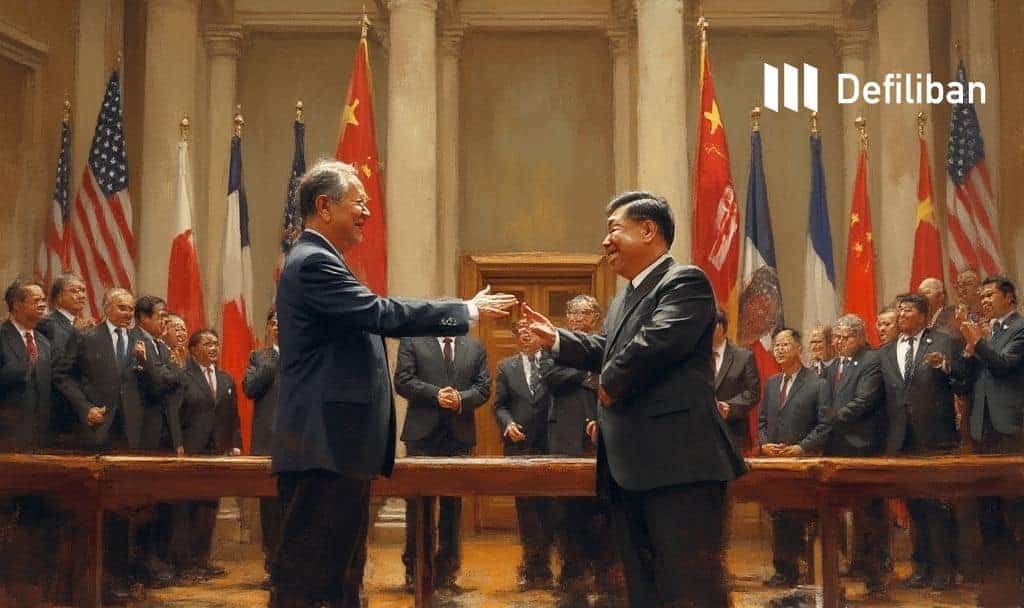
The United States and China are engaged in positive trade discussions as they approach a significant summit. Senior officials convened in Kuala Lumpur, Malaysia, to address ongoing tariff disputes. These meetings precede the anticipated summit between U.S. President Donald Trump and China's President Xi Jinping at the upcoming APEC meeting. Both nations are actively working to de-escalate trade conflicts and prevent further deterioration.
The U.S. delegation includes President Donald Trump, U.S. Treasury Secretary Scott Bessent, and U.S. Trade Representative Jamieson Greer. Leading the discussions for China are Vice Premier He Lifeng and chief trade negotiator Li Chenggang. The primary objective of these meetings is to resolve existing tariff and technology-related disagreements.
Signs of Progress in Constructive Talks
Recent statements indicate that the negotiations are proceeding positively. A spokesperson for the U.S. Treasury informed AFP that the talks have been "very constructive" and are scheduled to continue into the following day. Concurrently, the U.S. government is exploring new approaches to manage trade dynamics, which may include acquiring stakes in strategic companies.
Despite the promising nature of these discussions, certain challenges persist. Josh Lipsky of the Atlantic Council highlighted that officials still need to tackle issues concerning technology export controls and the trade of rare earth elements. The eventual outcome of these negotiations is likely to influence international trade policies and broader economic strategies.
Historical Context of U.S.-China Tariff Escalations
Historically, periods of heightened trade tensions between the U.S. and China have resulted in market volatility. Previous escalations in tariffs have led to fluctuations in the strength of the U.S. dollar and shifts in capital flow towards digital assets like Bitcoin. These events also impacted trading volumes during prior times of economic uncertainty.
Currently, there is no direct evidence linking specific cryptocurrencies to these ongoing talks. However, significant assets such as BTC and ETH could potentially see increased trading activity as the negotiations progress. For readers interested in enhancing their understanding of such topics, exploring tools like the ET Reader might be beneficial.
Disclaimer
The content provided on this platform is intended for informational purposes only and should not be interpreted as financial or investment advice. Investments in cryptocurrencies inherently involve risks. It is advisable to consult with a qualified financial advisor before making any investment decisions.