


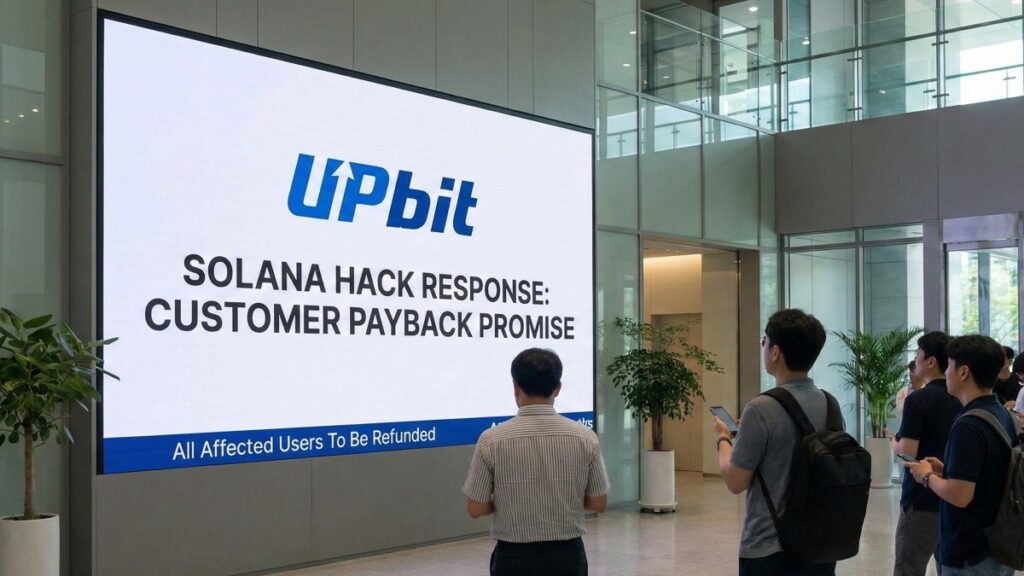
Upbit, a prominent South Korean exchange, has revealed a significant security breach involving Solana-network assets, resulting in a loss of $36 million. The attack impacted 24 tokens tied to Solana, including SOL and USDC, leading to the freezing of withdrawals and a sharp increase in volatility across related markets. This incident has raised serious concerns about the security of even leading cryptocurrency platforms.
Fallout From Hack Raises Red Flags on Exchange Security and Regulation
Blockchain data analysts have indicated that the method employed in the exploit was highly sophisticated, suggesting the involvement of an advanced hacking group rather than an ordinary hacker. This exploit highlights the persistent vulnerabilities that exchanges face, even with established security protocols in place. Consequently, there is mounting pressure from the community for more robust safeguards and stringent audits for cryptocurrency platforms.

In response to the breach, Upbit has committed to fully reimbursing all user assets affected by the hack, an effort to restore confidence and mitigate the fallout. The exchange froze approximately 2.3 billion KRW worth of funds and pledged compensation for all impacted customers. This action is seen by observers as a significant development, potentially shifting the perception of hacks from unavoidable losses to serious breaches requiring transparency and accountability.
The attack had immediate repercussions within the Solana ecosystem. Trading volumes saw a sharp decline, arbitrage flows ceased, and token prices experienced a temporary surge before stabilizing. Many investors re-evaluated their exposure to Solana-based assets, and market sentiment turned cautious. This underscores how a single security failure can have widespread effects across entire networks and impact investor confidence.
Industry analysts suggest that this event could catalyze a broader transformation in how exchanges and regulators approach cryptocurrency security. They anticipate intensified scrutiny of exchange protocols and potential regulatory reforms designed to enforce stricter safeguards and establish clearer custodial standards for user funds.
While the long-term impact of this incident remains to be seen, it emphatically underscores a critical lesson: the promise of decentralization does not inherently protect platforms from vulnerabilities. Ultimately, trust is built upon rigorous security measures, transparency, and the responsible management of digital assets.