


Hack Occurs Amidst Major Merger Announcement
On November 28, Upbit, South Korea's largest cryptocurrency exchange, experienced a significant hack that resulted in the loss of approximately 44.5 billion KRW (around $30.4 million USD) from its Solana network hot wallet. The breach occurred on the same day that Dunamu, Upbit's parent company, announced a merger with Naver’s fintech arm. Security firm GoPlus alerted the industry to key management issues, noting similarities with methods employed by the Lazarus Group. While Upbit confirmed that its cold wallets remained secure, the systemic vulnerabilities exposed by the attack have raised significant alarms across the cryptocurrency industry.
Oh Kyung-seok, CEO of Dunamu, confirmed that swift action was taken to halt all transactions immediately following the discovery of the breach. He also stated that the exchange would cover all losses incurred by users from company reserves, a commitment that contrasts with the delayed responses seen from other firms in similar situations and is expected to positively impact customer trust retention.
"We paused deposits and withdrawals immediately and will cover all losses with our own capital," stated Oh Kyung-seok, CEO of Dunamu.
Market Reactions and Security Implications
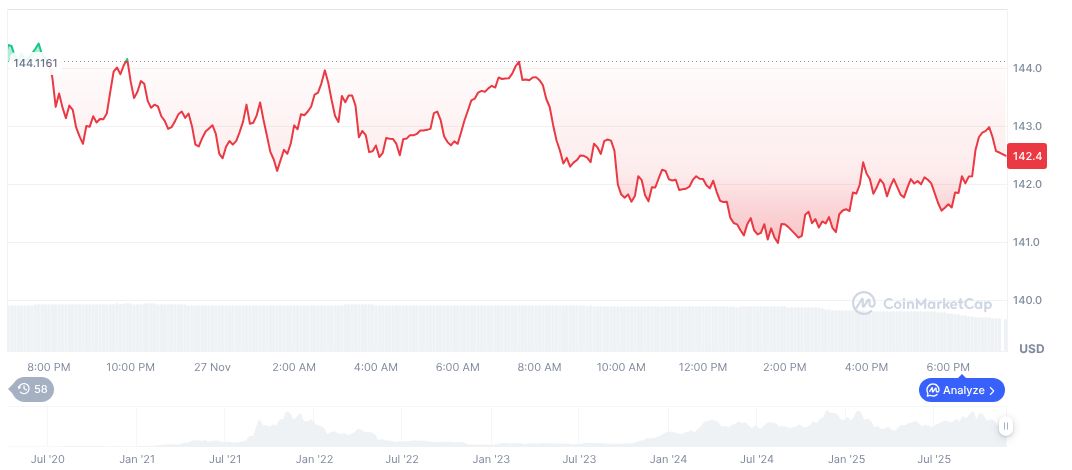
The Lazarus Group has a history of being linked to numerous cyberattacks targeting cryptocurrency exchanges, underscoring the persistent security challenges within the digital asset industry. Despite the hack, Solana (SOL) showed resilience, trading at $140.43 with a market capitalization of $78.56 billion. Over the preceding seven days, SOL experienced a 6.51% increase, although it saw a 1.58% drop in the 24 hours prior to the report. Trading volumes decreased by 38.70% to $3.31 billion, with data suggesting continued interest in the asset.
Coincu's research team suggests that this hack could lead to increased regulatory scrutiny for South Korean exchanges. Heightened compliance expectations may prompt exchanges to implement stricter internal controls and enhance their security protocols. Historical trends highlight the recurring nature of vulnerabilities within the crypto space, reinforcing the critical need for continuous technological upgrades and robust security measures to safeguard digital assets.