



Key Developments in DeFi Regulation Debate
Uniswap's founder, Hayden Adams, has publicly accused Citadel Securities CEO Ken Griffin of engaging in lobbying efforts with the U.S. SEC. The objective of this alleged lobbying is to classify DeFi protocol developers as centralized intermediaries. This development has ignited significant reactions within the decentralized finance community.
The core of Adams' accusation, made on December 4th, 2025, centers on the argument that regulating DeFi developers as centralized entities fundamentally misunderstands and undermines the decentralized nature of these protocols. This potential regulatory shift carries substantial implications for innovation, market fairness, and the future trajectory of the DeFi ecosystem.
Uniswap CEO's Allegations and Industry Repercussions
On December 4th, Uniswap founder Hayden Adams publicly stated that Citadel Securities CEO Ken Griffin was lobbying the U.S. Securities and Exchange Commission (SEC) to impose regulatory mandates on DeFi protocol developers. Adams drew a parallel between this alleged lobbying and Griffin's previous involvement with Constitution DAO, suggesting a pattern of interference from traditional financial figures. Adams expressed his concern that classifying DeFi developers as centralized intermediaries contradicts the foundational decentralized principles of these protocols.
The enforcement of such regulatory changes could significantly alter the DeFi landscape, potentially introducing more stringent compliance requirements for protocol developers. This, in turn, might impact capital inflows into DeFi, as industry participants may become more hesitant due to anticipated regulatory costs and perceived risks.
Ken Griffin’s accusation that DeFi can’t achieve fair access is absurd and shows the traditional market makers’ rejection of open-source decentralized liquidity. — Hayden Adams, Founder of Uniswap
The cryptocurrency sector has witnessed a spectrum of reactions to these allegations. Developers within the Ethereum and broader DeFi communities have voiced strong opposition to any regulatory frameworks that mischaracterize protocol developers, fearing it could stifle innovation. Adams himself emphasized the perceived absurdity of Griffin's claims, prompting widespread and animated discussions across social media platforms concerning the advancement of open-source DeFi solutions versus established traditional financial models.
Ethereum Market Trends and Regulatory Analysis
The ongoing dispute between Citadel and the DeFi space echoes dynamics observed during the Constitution DAO incident. This recurring conflict highlights the persistent struggle for recognition and dominance between decentralized platforms and established centralized financial interests.
According to recent data from CoinMarketCap, Ethereum (ETH), a foundational asset for many DeFi protocols, experienced a 5.82% increase over the preceding 24 hours, trading at $3,210.09. The current market capitalization of Ethereum stands at $387.44 billion, with trading volume surging by 14.79% to $31.33 billion in the same period.
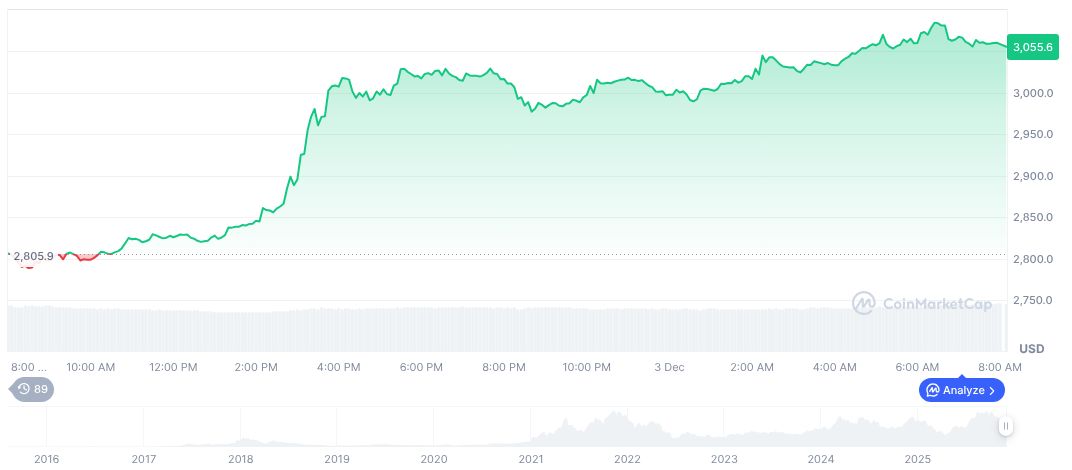
The Coincu research team suggests that the imposition of centralized regulatory frameworks on DeFi could discourage developers from pursuing open-source innovations, potentially leading to fragmented DeFi ecosystems. Historical analysis indicates that past periods of regulatory scrutiny have often correlated with market volatility, signaling potential downturn risks for emerging DeFi sectors. Ethereum (ETH), serving as a primary DeFi foundation asset, has shown a 5.82% increase over the past 24 hours, trading at $3,210.09.