



FCA's Strategic Stablecoin Regulation Timeline
The UK Financial Conduct Authority (FCA) plans to focus on regulating stablecoins linked to fiat currencies like the US dollar and British pound by 2026, according to CEO Nikhil Rathi.
This regulatory agenda aims to foster economic growth by enhancing digital financial services, increasing competitiveness, and supporting blockchain integration in the UK asset management industry.
By 2026, new digital asset rules and UK-issued sterling stablecoins are expected. This shift to stablecoin regulation promises faster payment solutions for both consumers and businesses in the UK. The FCA is committed to balancing economic growth with consumer protection and market integrity. Industry observers expect the tokenization of traditional assets, along with innovation in UK asset management sectors, to be key differentiators. Rathi's commitment to risk-taking has sparked discussions on potential implications for UK financial policies.
“The FCA will finalise digital asset rules and advance progress on UK‑issued sterling stablecoins by 2026.” — Nikhil Rathi, FCA Growth Letter to PM
A focused FCA approach on stablecoin rules could enhance the UK's digital finance standing. Key outcomes might include regulatory clarity and improved competitiveness in international trade sectors. Innovation may further drive UK dominance in the financial tech industry.
Stablecoins as Tools in Global Economic Digitization
Stablecoins are increasingly seen as pivotal tools for countries seeking to digitize their economies. As part of the UK's financial growth strategy, similar approaches have been adopted by major economies such as the US, highlighting the global shift towards digital currency utilization.
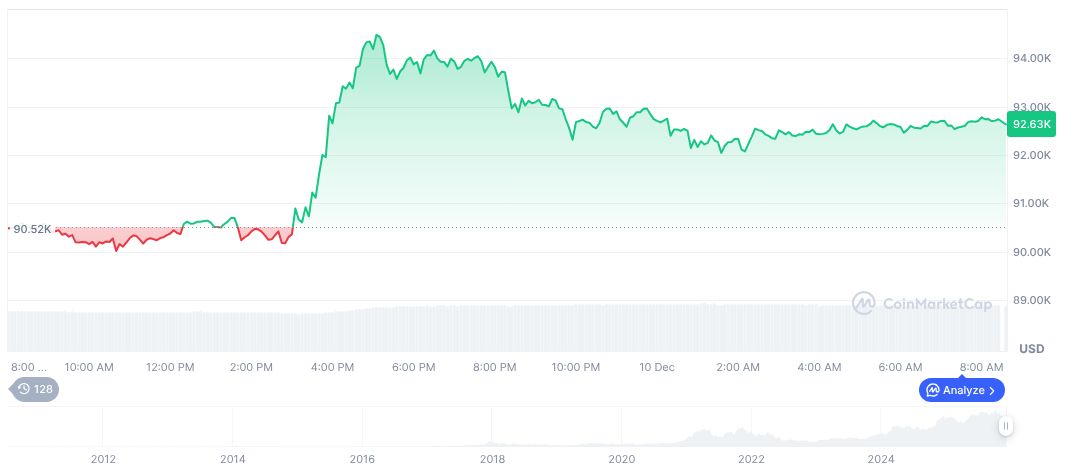
As of December 11, 2025, Bitcoin's value decreased by 2.47% to $90,298.09 with a market cap of $1.80 trillion. Its dominance reaches 58.53%, with the 24-hour trading volume showing a 7.97% change. Bitcoin's 30-day performance saw a notable 14.23% drop.
Rathi's commitment to risk-taking has sparked discussions on potential implications for UK financial policies.