


Escalation of Trade Tensions
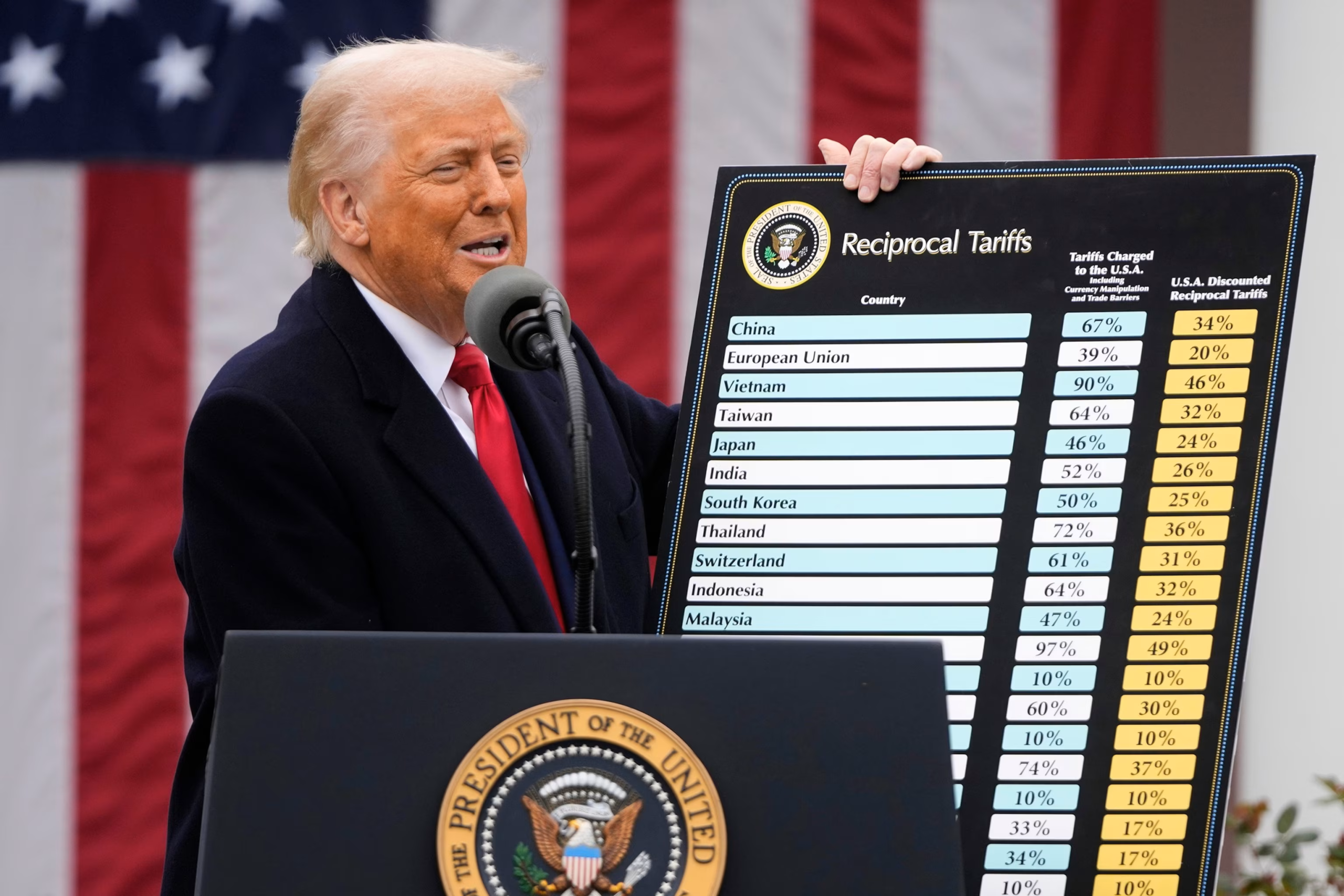
On January 17, 2026 (U.S. Eastern Time), U.S. President Donald Trump publicly threatened to impose sweeping new tariffs on exports from eight European countries—Denmark, Norway, Sweden, France, Germany, the United Kingdom, the Netherlands, and Finland. He announced via Truth Social that a 10% tariff would take effect on February 1 and rise to 25% by June 1 unless those countries agreed to negotiations tied to Washington’s long-standing and controversial interest in acquiring Greenland. This move immediately reignited global trade risk and raised concerns about economic coercion rather than conventional trade disputes.
The announcement, while not yet formalized through executive order or regulatory publication, was treated by markets as credible given its specificity in timing, scope, and escalation path. This prompted European policymakers to openly discuss countermeasures, including potential activation of the European Union’s Anti-Coercion Instrument, a framework designed to respond to economic pressure from external powers.
Market Reaction to Tariffs
Financial markets responded swiftly, with traditional safe-haven assets absorbing a surge of demand as investors priced in rising geopolitical and trade uncertainty. This drove spot gold up more than 2% intraday and silver up over 4%, with silver printing fresh all-time highs amid tightening physical supply narratives and renewed inflation hedging demand.

Equity index futures in the United States moved lower in parallel, reflecting concerns that renewed transatlantic trade tensions could weigh on corporate earnings, global supply chains, and already-fragile risk sentiment. This is particularly true as tariff escalation timelines intersect with earnings season and shifting expectations around monetary policy.
Bitcoin's Divergent Performance
Bitcoin, often framed as “digital gold” during periods of macro stress, initially participated in the risk-off move but quickly diverged. It experienced a sharp intraday reversal that saw prices briefly fall below $93,000 after an earlier push higher. Derivatives data showed approximately $680 million in long positions liquidated within a 24-hour window, underscoring how leveraged positioning amplified downside volatility even as broader macro uncertainty intensified.
This divergence proved notable because it contrasted with the strength seen in precious metals, reinforcing the idea that Bitcoin’s behavior in geopolitical stress scenarios remains structurally distinct from that of traditional havens. This is especially true in environments where leverage, derivatives positioning, and short-term speculative flows dominate price action.
Institutional Flows and Positioning
Despite the price pullback, institutional allocation into Bitcoin via regulated vehicles remained resilient. U.S. spot Bitcoin ETFs recorded net inflows of approximately $1.42 billion for the week, led by BlackRock’s IBIT, which alone accounted for roughly $1.035 billion in net inflows. This suggests that longer-horizon allocators continued to accumulate exposure even as short-term traders were forced out of leveraged positions.
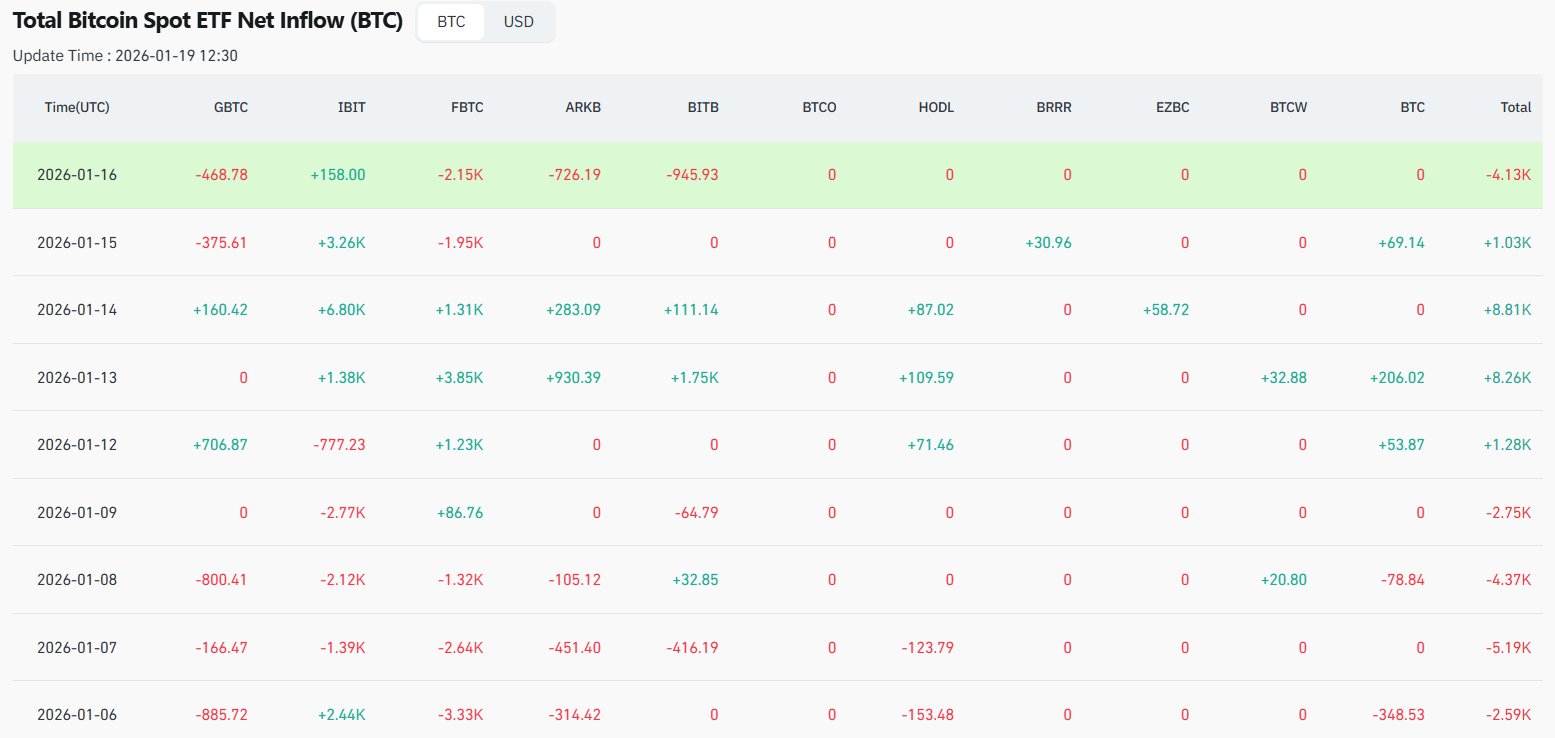
At the same time, the Coinbase Bitcoin Premium Index remained negative for a third consecutive day, signaling comparatively weaker spot demand from U.S. retail and discretionary buyers relative to offshore markets. This divergence often reflects caution among marginal buyers rather than outright institutional capitulation.
Divergent Market Sentiment
Market commentary became increasingly polarized following the move. Critics such as Peter Schiff argued that Bitcoin’s failure to keep pace with gold undermined its safe-haven narrative. Meanwhile, long-term Bitcoin proponents maintained that short-term volatility driven by derivatives liquidations does not negate Bitcoin’s structural appeal as a non-sovereign asset in an era of escalating political and trade uncertainty.
This split highlights a recurring tension in Bitcoin’s macro positioning: while its fixed supply and decentralized nature align conceptually with hedging narratives, its market microstructure—dominated by perpetual futures, options, and high-beta trading behavior—often causes it to trade more like a risk asset during acute stress events.
Broader Macroeconomic Context
The tariff threat also arrived alongside additional signals of aggressive U.S. industrial and trade policy. This included comments from the U.S. Commerce Secretary suggesting that foreign semiconductor manufacturers could face tariffs as high as 100% if they failed to expand production within the United States. This reinforced perceptions that economic policy is increasingly being used as a strategic lever rather than a purely commercial tool.
For global investors, this backdrop raises the probability of prolonged trade friction, retaliatory measures, and policy uncertainty. These are conditions that historically favor assets perceived as stores of value but also increase volatility across all markets where liquidity and leverage play central roles.
Implications for Crypto Markets
Taken together, the episode illustrates a nuanced reality for crypto markets in 2026. Bitcoin continues to attract meaningful institutional capital during periods of geopolitical stress, as evidenced by sustained ETF inflows. However, its short-term price behavior remains highly sensitive to leverage unwinds and positioning imbalances, preventing it from functioning as a clean, low-volatility hedge in the way gold traditionally does.
Rather than invalidating Bitcoin’s macro narrative, the divergence underscores its transitional status. It is simultaneously evolving into a strategic allocation for institutions while still trading as a high-beta, derivatives-driven asset in the short run. This suggests that its role in global portfolios is expanding, but not yet settled into a single behavioral regime.
Conclusion on Market Dynamics
Trump’s renewed tariff threats against Europe have reignited global risk aversion, propelled precious metals to record highs, and exposed the structural differences between traditional safe havens and digital assets. Bitcoin demonstrated both resilience in institutional flows and fragility in leveraged market structure, a combination that reflects a market still in the process of redefining what “safe haven” means in an era of political volatility, trade confrontation, and financialization across asset classes.