


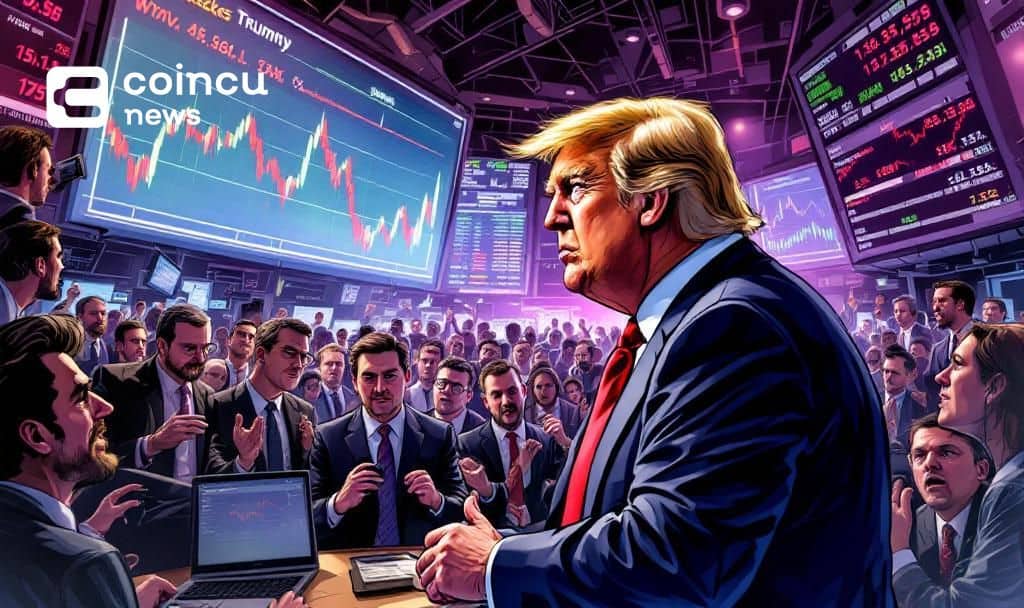
President Trump's recent policy maneuvers are poised to reshape market trends, particularly as the U.S. midterm elections approach. These strategic shifts carry the potential to unsettle markets, notably by challenging the independence of the Federal Reserve. This situation is expected to have a significant impact on sectors such as banking and defense, while simultaneously creating a climate of investor uncertainty in the lead-up to the midterms.
Ed Clissold of Ned Davis Research has highlighted the emerging "Big MAC Trade," a concept reflecting potential market shifts that could occur ahead of the U.S. midterm elections, largely influenced by President Trump's recent policy actions.
U.S. Stocks React to Trump's Financial Policies
Bank stocks experienced a decline following President Trump's directive to cap credit card interest rates at 10%. Concurrently, defense stocks saw a downturn as a result of a decision to halt dividend payments, with funds being diverted to production efforts. These measures have collectively contributed to market uncertainty, negatively impacting investor confidence and fueling increased volatility.
Ed Clissold commented on these developments, stating, "Policy adjustments targeting specific industries will pose a significant risk." Market participants are currently navigating how best to hedge against these emerging risks, leading to broader concerns across Wall Street. Clissold further emphasized the critical importance of closely monitoring challenges to the Federal Reserve's independence amidst these evolving policy changes.
Historical Precedents and Current Market Anxieties
Historical patterns suggest that periods where the Federal Reserve's independence is questioned often coincide with market uncertainty. This phenomenon has been observed in the initial tenures of new Fed chairs, which have sometimes been marked by notable market corrections within the first few months.
The prevailing behavior in historical markets indicates that corrections are frequently triggered when policy uncertainties become a dominant factor. These uncertainties are often amplified by issues such as challenges to the Fed's independence. The market exhibits particular sensitivity when substantial policy redirections are proposed, leading investors to adopt a stance of caution and recalibration.
As market analysts continue to evaluate these ongoing developments, concerns regarding credit spread widening and the prospects for inflation are increasingly gaining prominence. Expert opinions suggest that close attention should be paid to the upcoming midterm elections, as the resulting policy direction is likely to play a significant role in influencing market stability in the ensuing months.
"Top of the list is what could go on with the Fed... we have a readymade concern with Fed independence." — Ed Clissold, in a CNBC interview on December 15, 2025