


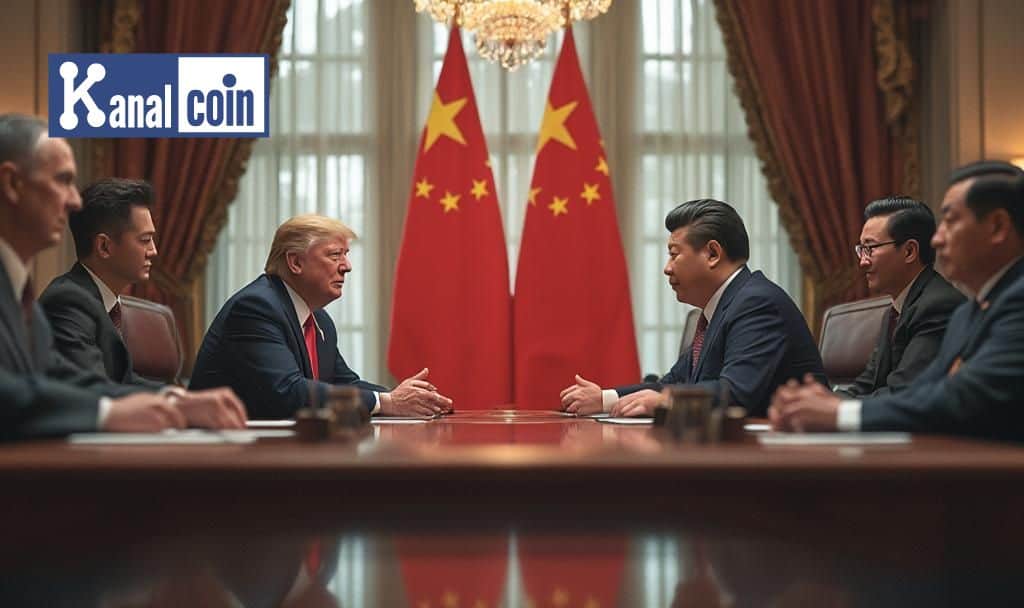
President Donald Trump has announced plans to reduce tariffs related to fentanyl imports from China. This decision follows ongoing discussions between the United States and China, reflecting the complex nature of their trade relationship. The tariff reduction is set to cover fentanyl and its precursor chemicals for a 90-day period.
Key players in these discussions include Donald Trump, as President of the United States, and Xi Jinping, President of China. The decision is presented as an effort to ease trade tensions and potentially create a more conducive environment for agricultural discussions. Official sources have confirmed the 90-day reduction period for these specific tariffs.
Financial Markets Show Little Reaction to Tariff Revision
While this tariff reduction is expected to impact sectors beyond traditional trade, there has been no immediate evidence of significant effects on cryptocurrency markets. Financial markets, particularly those dealing with volatile assets, often react to changes in trade policies and geopolitical developments, but comprehensive impact assessments are still ongoing.
Historically, trade tensions between major economies have influenced market volatility, sometimes reflecting in speculative activities. However, current data does not indicate that these specific tariff adjustments have spurred similar reactions in major cryptocurrencies like Bitcoin (BTC) or Ethereum (ETH), according to available exchange analytics and government reports.
Historical Context: U.S.-China Tariffs and Crypto Market Influence
Previous U.S.-China tariff adjustments have, at times, led to noticeable market fluctuations. While similar past decisions have increased volatility in assets like BTC and ETH, current geopolitical settings and economic indicators show no marked cryptocurrency market shifts due to the newly announced trade relief measures.
Analysts suggest that the temporary tariff reduction could serve as a precursor to longer-term trade agreements, which might eventually impact both traditional and digital asset markets. The evolving nature of these tariffs underscores the significance of ongoing U.S.-China dialogue and the potential for cooperation on various economic fronts.
“With Executive Order 14195 of February 1, 2025 … I determined that the failure of the Government of the People’s Republic of China (PRC) to act to blunt the sustained influx of synthetic opioids, including fentanyl … to the United States constituted an unusual and extraordinary threat…” - Donald J. Trump, President of the United States