


Key Points
- •Former President Donald Trump has announced a plan to distribute $2,000 tariff dividends for Americans by 2026.
- •The details of the payment structure are still being finalized.
- •The proposal may have potential market impacts on inflation and currency adoption.
Former President Donald Trump announced a plan to distribute $2,000 tariff dividends for Americans by 2026, potentially through varying forms of tax relief or direct payments, as outlined by Treasury Secretary Scott Bessent on ABC News.
This proposal raises concerns over its funding viability, potentially impacting inflation and prompting increased interest in cryptocurrencies as hedges against economic volatility.
Trump's $2,000 Tariff Dividend: Economic Strategy or Risk?
Former President Donald Trump announced plans for a $2,000 "tariff dividend" per American, excluding wealthier individuals. The distribution, he stated, would not be available this year but is intended to be part of a broader economic strategy by 2026.
The U.S. Treasury is exploring methods to return tariff revenues to the public, potentially via direct payments or tax relief options. However, direct payments require congressional collaboration and approval, and detailed mechanisms for distribution are yet to be settled.
"We are bringing in trillions of dollars from tariffs, and soon we will start paying down our $37 trillion debt. Americans will get at least $2,000 in tariff dividends, not including the wealthy. This is your money back!" — Donald J. Trump, November 10, 2025
Key market analysts, including Arthur Hayes and CZ, have weighed in, citing potential inflationary consequences. Hayes called the initiative a political stunt, while CZ pointed at cryptocurrency's adoption as a store of value amid such policies.
Inflation Concerns and Crypto Market Responses Explored
In 2025, the U.S. Treasury collected $195 billion from tariffs, yet a direct $2,000 payment to each American would require $300 billion. This historical context underscores the challenges of funding such proposals without incurring deficit increases.
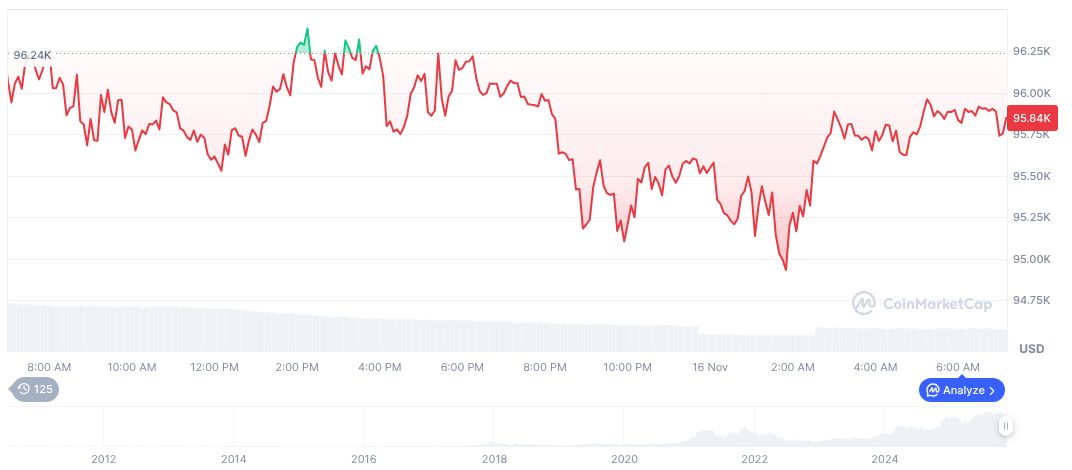
Bitcoin is currently priced at $94,872.97, with a market cap of $1.89 trillion and a dominance of 58.95%. Its 24-hour trading volume reached $68.08 billion. Over the last 30 days, Bitcoin's value has decreased by 11.13%.
Research insights indicate that the proposed tariffs could lead to increased inflation, prompting individuals to seek cryptocurrency for wealth preservation. Historical trends suggest similar monetary policies have previously driven BTC and ETH value growth as investors hedge against inflationary risks.