


Key Insights on Blockchain Revenue
Only 11 public blockchains generated over $100,000 in revenue last week, with Tron and Ethereum leading the pack. The top six chains account for over 95% of user spending, indicating a concentrated market dynamic. Tron, in particular, has seen substantial growth in user activity following recent fee reductions.
Tron's Fee Reductions Boost User Engagement
According to data from blockchain intelligence platform Nansen, a mere 11 blockchains surpassed $100,000 in revenue over the past seven days. The most significant contributors to this revenue include Tron, Ethereum, Solana, BNB Chain, Bitcoin, and Base, which collectively account for more than 95% of all user spending on-chain. Many other blockchains struggled to achieve substantial revenue figures.
Tron's strategic decision to reduce its transaction fees by 60% has demonstrably increased its transaction volumes and user interaction, thereby improving its standing among competing blockchains. This trend underscores the significant concentration of on-chain user spending within a select group of leading blockchains. Nansen's analysis highlights that "the top six blockchains by revenue are Tron, Ethereum, Solana, BNB Chain, Bitcoin, and Base, collectively dominating 95% of on-chain user spending."
The market's response has been a noticeable increase in developer and community engagement on these prominent blockchains. The emphasis placed on Nansen data by KOL AB Kuai.Dong has brought attention to the disparity in revenue generation across the blockchain landscape. No immediate regulatory comments regarding this concentration have been noted.
Market Data and Trends
The sustained dominance of Ethereum and Bitcoin in blockchain revenue generation aligns with historical trends, reaffirming their positions as primary platforms for user activity and financial transactions.
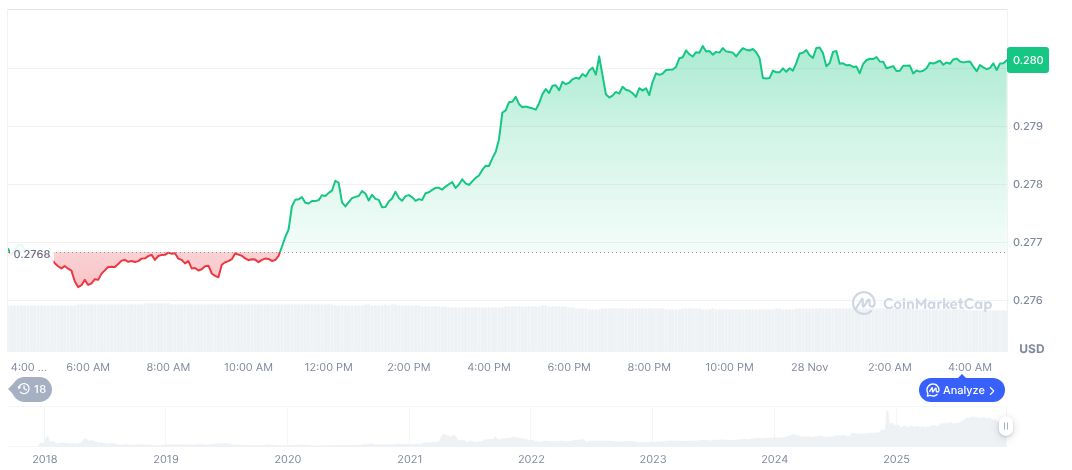
As of the latest reports, TRON (TRX) is valued at $0.28, with a market capitalization of $26.53 billion, representing 0.85% of the overall market. Its 24-hour trading volume has seen a decrease of 10.61%, and while it experienced a 1.35% price increase over the last 24 hours, it has seen a 17.41% drop over the past 90 days. These figures reflect TRON's recent market adjustments in the context of increased user activity.
Analysts at Coincu suggest that the concentration of users on a limited number of blockchains could stimulate further innovation and investment within these ecosystems. Technological advancements are likely to emerge as more blockchains strive to replicate the successes of Tron and Ethereum. This could potentially lead to significant changes in fee structures and overall network efficiency.