


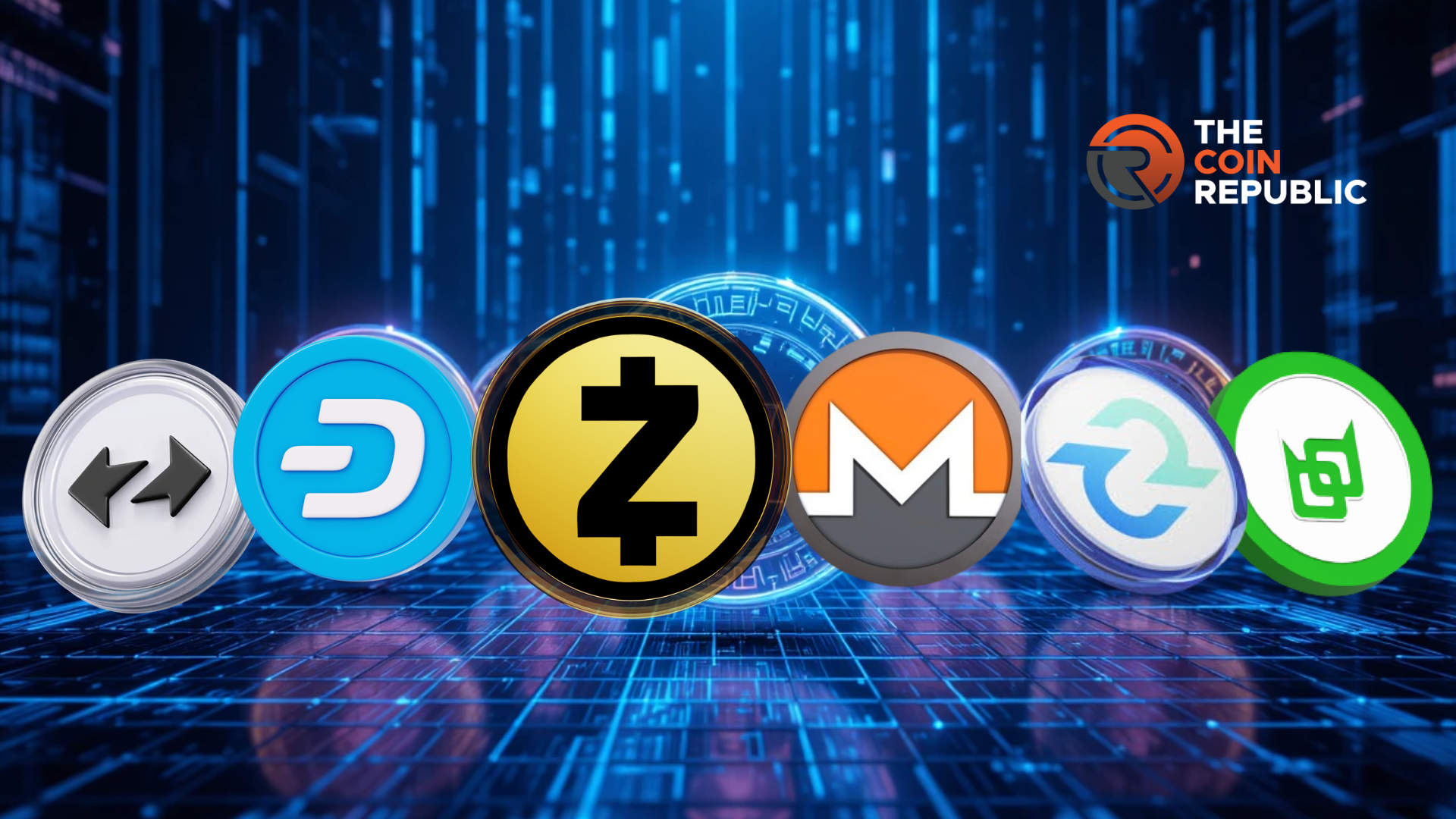
Privacy coins are experiencing a significant resurgence this week, breaking free from the broader cryptocurrency market slump. After a period of quiet accumulation, the prices of several key altcoins in the privacy sector are now showing strong upward momentum. While many cryptocurrencies are struggling to maintain their value, privacy-focused tokens are capturing attention and demonstrating impressive performance.
Zcash: The Top Performing Privacy Coin
Zcash is currently the standout performer among privacy coins, charting a strong upward trajectory that distinguishes it from the sluggish cryptocurrency market. The token's market capitalization has seen a remarkable increase of approximately 60% within the last seven days, with its price reaching $632. This significant rally has allowed Zcash to surpass Monero in market value, establishing it as the largest privacy coin by market capitalization.

This surge is attributed to a major update released by Zcash's developer, the Electric Coin Company, earlier this month. The update introduced cross-chain swaps and enhanced private payment functionalities to the network through an integration with the Near Intents transaction layer. This development has opened up new avenues for users to conduct discreet transactions and trades. Following the integration, activity on Near Intents saw a notable increase, and Zcash's "shielded pool," which manages encrypted addresses, expanded as more users began migrating their coins into private storage. Consequently, Zcash has regained prominence thanks to its recent upgrade and a surge in trader interest.
Monero
Monero has demonstrated resilience this week, even as competition within the privacy coin sector intensifies. Analysts have noted that the recent rally in Zcash could potentially benefit Monero as well. The privacy coin's price has risen by nearly 25.8% over the past seven days, boosting its market capitalization to $8.1 billion. While this growth is less dramatic than Zcash's recent surge, it highlights Monero's sustained strength as a leading privacy token.

In early October, the Monero network implemented its latest upgrade, known as Fluorine Fermi. This update is designed to bolster user protection against "spy nodes," which are malicious operators or botnets attempting to trace transactions and link them to specific addresses. Privacy and security remain central tenets of Monero's design, despite increasing regulatory scrutiny and exchange delistings. The challenges posed by growing oversight and advancements in blockchain tracing tools have made the landscape more difficult for privacy coins. However, Monero's developers have responded by consistently strengthening the project's privacy features and introducing incremental improvements. Last year, the Monero Research Lab proposed a new mechanism allowing node operators to maintain a blacklist of suspicious nodes identified by their IP addresses. These ongoing efforts underscore the project's commitment to maintaining the highest levels of privacy and security on its network, particularly in an environment that is increasingly resistant to digital anonymity.
Dash Coin
Dash coin has experienced a significant revival this week, climbing to $107. This marks the first time the token has surpassed the $100 threshold in several months and represents one of the most notable market movements currently. The breakout occurred shortly after the launch of Dash perpetual futures on Aster DEX on November 2, which offers leverage of up to 5x. This listing has injected a substantial amount of new liquidity and attracted traders seeking volatility, providing a significant boost to Dash.

The current rally is also part of a broader trend of revival for privacy coins. As investors increasingly shift their focus towards assets that emphasize anonymity and decentralization, Dash is once again gaining attention after a prolonged period of low activity.
ZKsync Privacy Coin
ZKsync has seen substantial gains this week, with its token surging by 13% to approximately $0.063. This rally began in early November and has maintained its momentum, positioning ZKsync as one of the top performers in both the privacy and Layer 2 sectors. As an Ethereum Layer 2 solution, ZKsync utilizes zero-knowledge rollups to process transactions off-chain, thereby reducing costs and increasing transaction speed. The project is now entering a new phase, with its developers undertaking a restructuring of the governance token and re-evaluating value circulation mechanisms within the network.

Co-founder Alex Gluchowski stated this week that ZKsync has evolved significantly beyond its initial design. It now encompasses several interconnected zero-knowledge chains that collectively form a more extensive ecosystem. He detailed a strategy to more closely align the token's value with actual network activity and economic output. The proposed modifications would enable the token to derive on-chain value from fees associated with interoperability, settlements, and messaging. Off-chain, additional value could be generated through licensing agreements for enterprise software and large-scale integrations. Gluchowski emphasized that as major enterprises adopt these functionalities, it is equitable for the network's ecosystem to share in the resulting economic benefits. This proposal could represent a pivotal moment for ZKsync, signaling a strategic shift from focusing solely on speed to building a more sustainable and enduring platform.
Decred Privacy Coin
Decred experienced a significant rally this week, climbing nearly 92% to close near $35 following a sharp surge early in the week. This performance represents its strongest in several months and suggests a renewed interest from the market.

For the past two years, Decred had been trading within a narrow range with minimal price movement. This changed abruptly as privacy-related tokens began to surge across the market, bringing Decred back into the spotlight.