


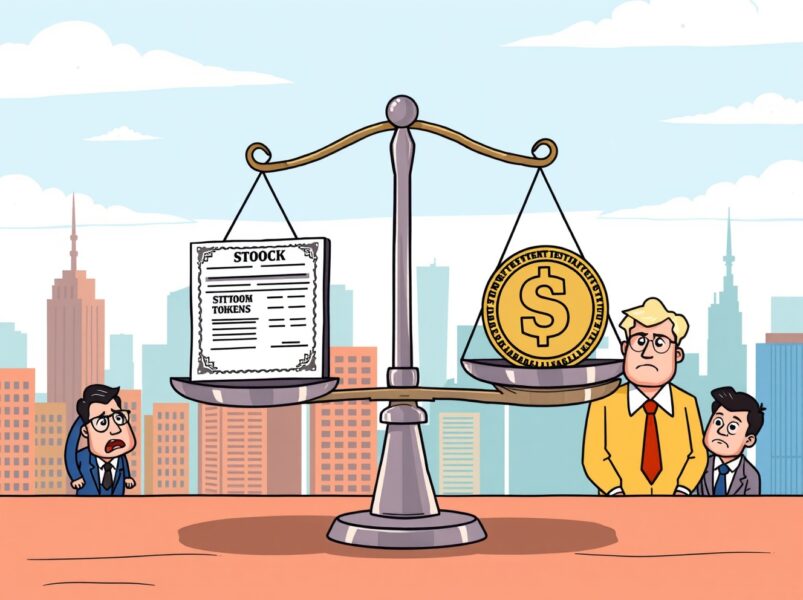
The World Federation of Exchanges (WFE) has issued a strong call to the U.S. Securities and Exchange Commission (SEC) regarding the burgeoning market of tokenized stocks. The WFE is concerned that unregulated crypto firms offering these digital assets pose significant risks to investors and could undermine market integrity. This situation highlights a critical juncture where financial innovation meets the necessity of robust regulatory oversight.
Why Tokenized Stocks Are a Regulatory Concern
The WFE has communicated its deep concerns to the SEC through a formal letter. The federation is particularly worried about the potential for crypto companies to sell tokenized stocks without adhering to established oversight mechanisms. This concern arises in the context of the SEC considering exemptions that could allow these firms to bypass standard broker-dealer registration requirements. The WFE argues that such exemptions create an inequitable environment, where traditional exchanges operate under stringent rules while crypto platforms might function with comparatively less scrutiny.
Risks Associated with Unregulated Tokenized Stocks
Tokenized stocks are digital tokens that represent ownership of actual company shares. However, when traded without adequate regulation, they present several potential risks:
- •Investors may not receive sufficient protection against fraudulent activities.
- •The potential for market manipulation could be amplified.
- •Significant price discrepancies might emerge between the real shares and their tokenized counterparts.
- •Investors could face limitations in their ability to seek legal recourse in case of disputes.
The WFE stresses that regulatory exemptions should not permit companies to circumvent fundamental principles designed to protect financial markets and their participants.
The Importance of Fair Competition in Tokenized Stock Markets
A core tenet of the WFE's argument is the necessity for all market participants to operate under a consistent set of rules. Traditional stock exchanges are subject to comprehensive oversight, a standard that the WFE believes should extend to platforms dealing in tokenized stocks, regardless of their technological basis. An imbalance in regulatory requirements can lead to several negative consequences:
- •The integrity of the overall market could be compromised.
- •Unfair competitive advantages might be established for certain entities.
- •Investor confidence in the emerging market for tokenized stocks could be eroded.
- •There is a potential risk of destabilizing broader financial markets.
Consequently, the WFE advocates for a unified regulatory approach that applies equally to all platforms offering tokenized stocks.
The Path Forward for Tokenized Stock Regulation
The SEC is now tasked with navigating the complex challenge of fostering innovation while ensuring robust investor protection. The decisions made in this regard could establish a significant precedent for the global treatment of tokenized stocks. Stakeholders across the financial industry are closely observing these developments, as the outcome will likely shape the future integration of digital assets with traditional financial systems and influence the pace of mainstream adoption for tokenized stocks.
Conclusion: Achieving Balance in the Tokenized Stock Landscape
The WFE's proactive engagement underscores the critical need for well-considered regulations governing tokenized stocks. While the pursuit of innovation is vital for progress, the paramount importance of safeguarding investors cannot be overstated. As the landscape of digital assets continues to evolve, regulatory frameworks must adapt to guarantee that financial markets remain equitable, transparent, and secure for all participants. The long-term viability and success of tokenized stocks hinge on striking the correct regulatory balance.
Frequently Asked Questions
What are tokenized stocks?
Tokenized stocks are digital representations of traditional company shares, existing on blockchain networks, which facilitates easier trading and transferability.
Why is the WFE concerned about tokenized stocks?
The WFE is concerned that the trading of tokenized stocks without proper regulation could expose investors to undue risks and create an uneven playing field in the financial markets.
What does the SEC’s proposed exemption mean?
The SEC considered allowing crypto firms to offer tokenized stocks without requiring them to register as broker-dealers, which would lessen the regulatory oversight they are subject to.
How could unregulated tokenized stocks harm investors?
Investors might face increased risks of fraud, have limited avenues for legal recourse, and be exposed to potential market manipulation if tokenized stocks are not adequately regulated.
What solution does the WFE propose?
The WFE advocates for consistent regulatory rules to be applied to all platforms, whether traditional or crypto-based, that offer tokenized stocks.
Will this affect cryptocurrency regulation broadly?
Yes, the SEC's decisions regarding the regulation of tokenized stocks could influence the broader regulatory approach to other digital assets in the future.