Understanding Binance’s Proof of Reserves
The 35th Proof of Reserves serves as a reminder of the collapse of the FTX exchange. During those times, revelations emerged about SBF, the Democratic “golden boy,” who sold non‑existent cryptocurrencies to customers while living a lavish lifestyle with their assets. After the collapse, SBF admitted in a Space broadcast that synthetic cryptocurrencies were sold to customers, meaning no real assets were behind the numbers displayed in the exchange interface.
Subsequently, the exchange claimed to be hacked, and some assets were siphoned off. SBF’s arrest, trial, and eventual imprisonment followed confessions from his accomplices. He committed one of the most unscrupulous acts in the crypto world, leading to losses exceeding ten billion dollars, prompting concerns over the actual existence of assets on centralized exchanges.
As a result, many centralized exchanges, including Binance, started publishing zk‑supported reliable proof of reserves reports, providing a verifiable method to ensure the actual presence of cryptocurrency in users’ wallets. While banks have a history of misusing customer deposits, experiencing this in crypto has brought about positive changes, fostering skepticism and verification possibilities against any deceitful practices.
Binance’s Proof of Reserves
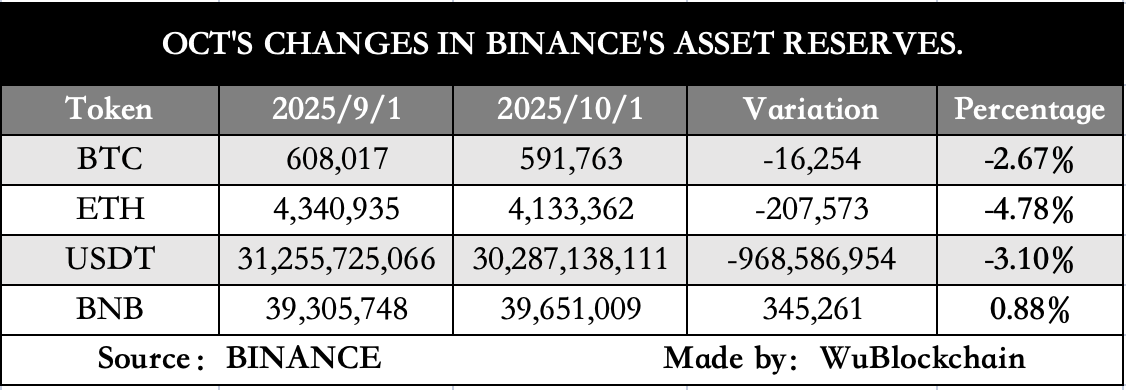
Binance’s recent release showed a 2.67% decrease in users’ BTC holdings from the previous month. Binance now holds 591,000 BTC, down by 16,200 from September. Similarly, ETH reserves fell by 4.78% to 4.13 million, and USDT assets also declined by 3.1%. These cryptocurrencies are mostly being moved to cold wallets.
Long‑term investors prefer storing their assets in cold wallets for more security, avoiding the easier access to spending provided by exchanges. In addition, demands from ETFs and crypto treasury companies result in institutions transferring assets from exchanges to corporate wallets.
This shift signifies fewer available BTC and ETH for purchasing on exchanges, reflecting a transition toward decentralized practices.