


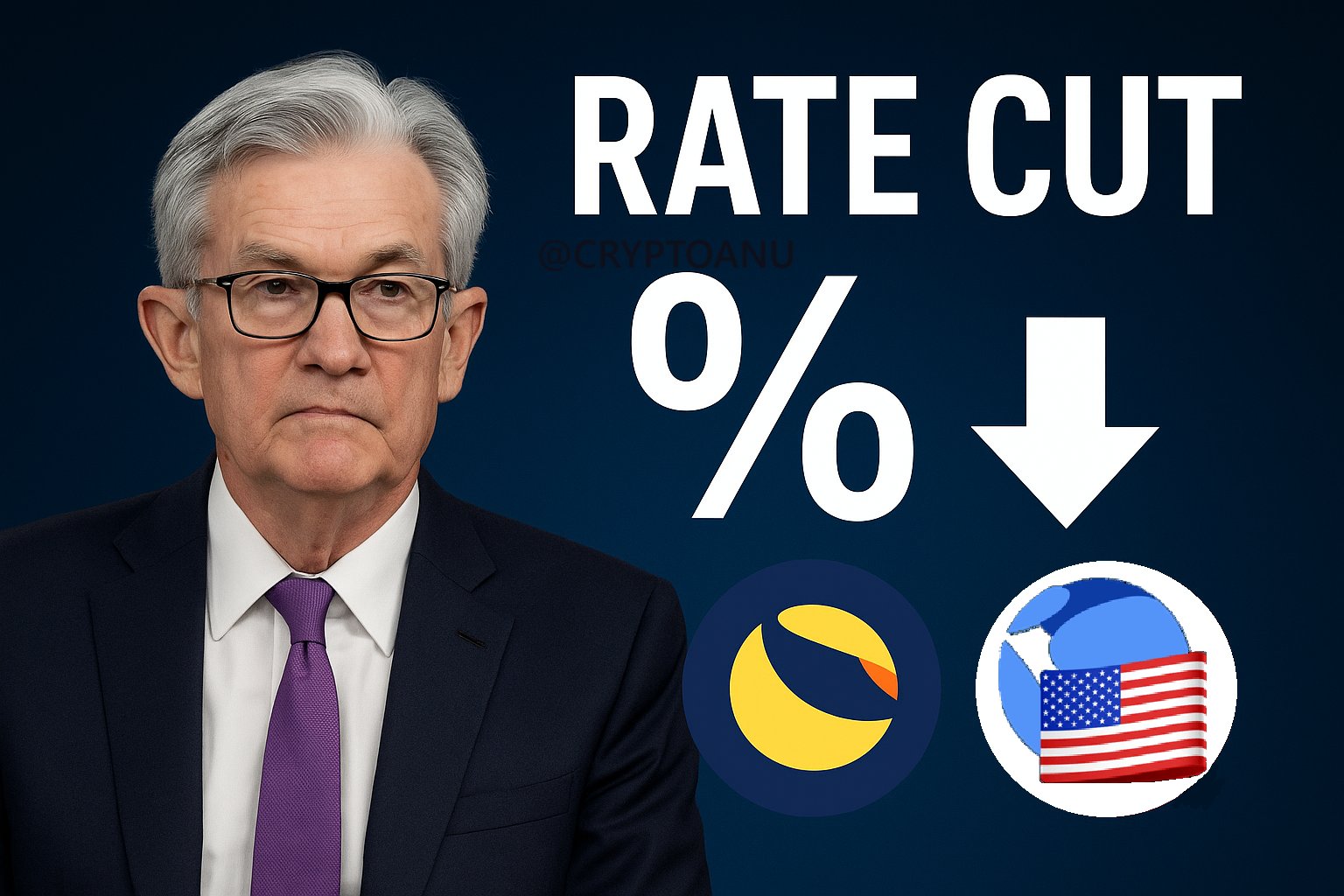
The Macro Shift: End of Tightening, Start of Liquidity
The U.S. Federal Reserve has officially ended quantitative tightening on December 1st and cut interest rates by 25 basis points. This marks the first clear signal that liquidity is returning to the financial system.
After nearly two years of aggressive tightening, the Fed's announcement is the signal that risk-on assets have been anticipating: cheaper money combined with increased liquidity typically leads to a higher risk appetite.
Crypto markets, which have been experiencing a lack of capital and momentum, are already showing signs of reaction, driven by new factors this cycle.
Memecoins Are the First Responders
When liquidity floods back into the market, memecoins often serve as the initial indicator. Just as Dogecoin and Shiba Inu led previous cycles, the liquidity wave anticipated for 2025 has its own emerging protagonists:
- •$TRUMP – A political memecoin resonating with cultural sentiment.
- •$MELANIA – The latest narrative-driven meme within the U.S. election meta.
- •$WLFI – Bridging real-world assets (RWA) with tokenized liquidity narratives.
- •$PPT – Promoting a hybrid approach combining DeFi and meme functionalities.
These tokens are not merely speculative assets; they function as liquidity indicators, highlighting the initial entry points for new capital into the crypto ecosystem.
Why This Matters for LUNC and USTC
While memecoins capture short-term attention, utility-focused chains like Terra Classic are poised to benefit next. Several factors contribute to this potential:
- •Liquidity initially absorbed by meme tokens often subsequently flows into "undervalued" Layer-1 ecosystems.
- •$LUNC, currently trading near historical support levels around $0.000015, presents an opportunity for asymmetric upside potential.
- •With the ongoing development of Market Module 2.0, the reactivation of IBC (Inter-Blockchain Communication), and tax-free conversion mechanisms, Terra Classic is undergoing a foundational rebuild precisely as macro liquidity is expected to return.
This confluence of policy easing and protocol revival creates the most favorable conditions for the chain since 2022.
The Macro Meets On-Chain: Real Yield & AI-DEX Era
While short-term traders focus on meme coin volatility, the more significant long-term opportunity lies in infrastructure development. The upcoming phase of Terra Classic's roadmap prioritizes:
- •Market Module 2.0: This aims to restore seamless swaps between $USTC, $LUNC, and stablecoin pairs.
- •IBC/SDK Upgrades: These upgrades are crucial for reconnecting Terra Classic to the broader Cosmos ecosystem.
- •AI-driven DEXs: This represents a potential future where trading platforms become self-learning and self-balancing.
Projects like Hyperliquid, Aster, and Apex are demonstrating the potential of merging artificial intelligence with decentralized finance. This suggests that LUNC could evolve into a sophisticated liquidity layer, moving beyond its identity as a legacy chain.
The Political Meta & the U.S. Narrative
The ongoing U.S. election season adds another significant dimension to the current market narrative. The emergence of Trump-themed memecoins, WLFI's real-world asset strategy (reportedly supported by networks associated with the Trump campaign), and increasingly pro-crypto rhetoric are collectively reshaping the mindset of American investors.
If LUNC and USTC continue to integrate with compliant, U.S.-based DeFi platforms – as suggested by rumors of WLFI's inclusion of USTC in its treasury – it could reposition the Terra ecosystem as a compliant and regulated DeFi hub, rather than a cautionary tale from the past.
Liquidity Rotation: From Gold to Crypto
Gold experienced a significant correction of 6% this week, marking its largest downturn in months. This suggests that institutional traders are beginning to rotate capital out of traditional safe-haven assets like precious metals and into digital assets in anticipation of the easing cycle.
For the cryptocurrency market, this potential rotation is not merely bullish; it could be explosive. Historically, periods of Federal Reserve dovish pivots have led to exponential rallies in altcoins, as liquidity cascades down from Bitcoin to Ethereum, mid-cap altcoins, memecoins, and finally to utility tokens.
$LUNC and $USTC are strategically positioned to benefit from this final phase of liquidity rotation.
What Happens Next
With rising macro liquidity and the ongoing rebuilding of the Terra ecosystem, the coming months will be critical in determining whether $LUNC can reclaim its status as a major blockchain network. Key developments to monitor include:
- •The deployment timeline for Market Module 2.0.
- •The effectiveness of USTC stability mechanics and the potential for a successful repeg.
- •The smoothness of the IBC reactivation process and integration within the Cosmos ecosystem.
- •The observed inflow of liquidity into alt-Layer-1 chains following the Fed's pivot, with memecoins likely leading the initial surge.
The Bottom Line
Favorable market conditions rarely align so perfectly, but the current landscape presents a compelling opportunity:
- •The Federal Reserve has initiated measures to increase liquidity in the financial system.
- •Memecoin enthusiasm is driving increased retail participation and capital inflow.
- •The fundamental infrastructure of LUNC is being rebuilt with robust DeFi architecture.
If historical patterns hold true for the current cycle, the subsequent liquidity rotation could significantly benefit Terra Classic, positioning it not just as a survivor but as a major beneficiary of the anticipated 2025 bull market.
Final Thought
"Making everyone rich overnight might not be the right approach." — CZ
However, patiently rebuilding, aligning technological advancements with macro liquidity trends, and fostering innovation within the community could indeed represent the redemption arc for Terra Classic that many have been anticipating.