


In Brief
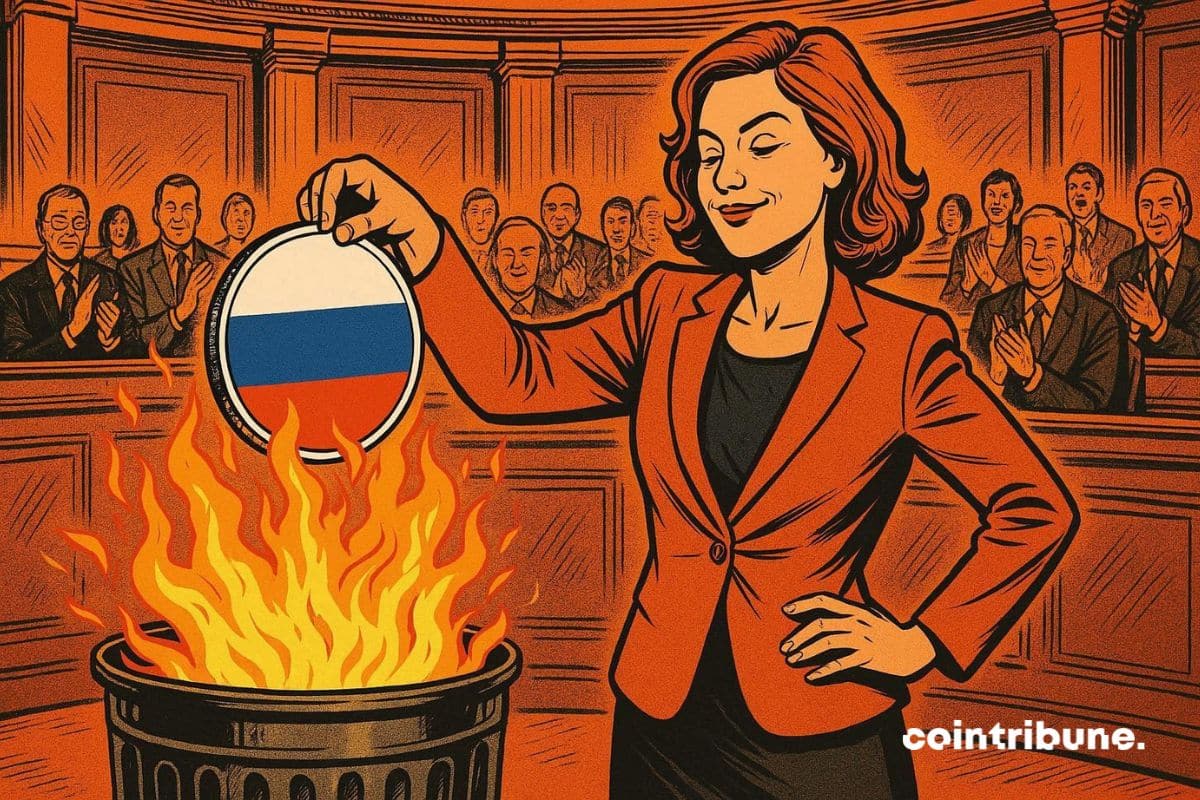
- •The EU bans the A7A5 stablecoin and sanctions Russian crypto platforms to cut war funding in Ukraine.
- •Eight banks and oil traders are targeted by the EU for their role in evading Russian sanctions via cryptos.
- •The EU’s 19th sanctions package marks a turning point in the economic war, but its effectiveness depends on controlling decentralized digital assets.
The A7A5 Stablecoin: Moscow's Financial Weapon
The A7A5 stablecoin, pegged to the Russian ruble, has become a key tool for Moscow to circumvent international sanctions. Russia has notably taken the lead in crypto adoption ahead of the United Kingdom. Created with the support of the Russian state, the A7A5 facilitates discreet financial transactions, often linked to the funding of the war in Ukraine.
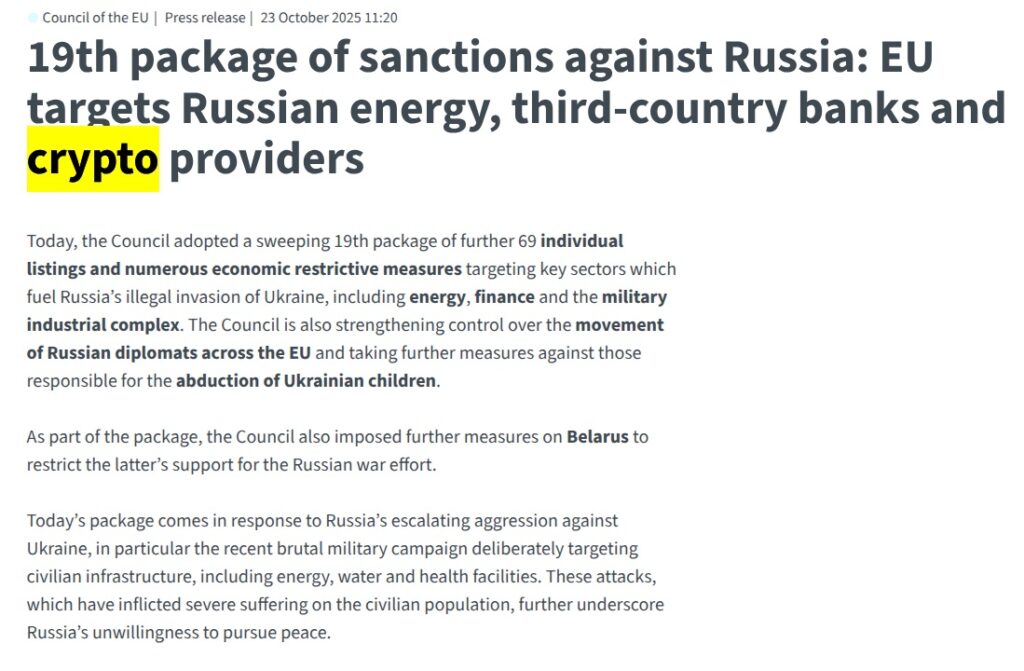
According to the European Commission, significant volumes of A7A5 have been used for cross-border payments, thereby escaping regulators' radars. The EU has decided to respond by banning any transaction involving this stablecoin within its member states. This measure targets not only the Kyrgyz issuer of A7A5 but also the crypto platforms that allow its exchange.
For European authorities, this is a crucial step to limit Russia’s ability to finance its military operations.
Crypto Platforms and Banks Targeted by EU Sanctions
The European Union is not only targeting the A7A5 stablecoin but also extending its sanctions to a network of banks and crypto platforms accused of facilitating the circumvention of financial restrictions. Eight banks and oil traders, based in Tajikistan, Kyrgyzstan, the United Arab Emirates, and Hong Kong, are now under scrutiny. These entities have played a significant role by enabling Russian actors to use cryptocurrencies like bitcoin or Tether for international payments.
Through the 19th sanctions package, the EU now bans Russian crypto payment providers and related software. Additionally, it restricts access to national payment systems such as Mir and SBP. These measures are designed to close financial exit routes utilized by Moscow.
Impact of Crypto Sanctions on the Russian Economy
The EU’s sanctions against Russian cryptocurrencies and stablecoins could have major repercussions.
For Russia:
The loss of access to tools like A7A5 limits Russia's ability to finance military activities and circumvent economic restrictions. The reactions from the Kremlin and oligarchs will be closely monitored.
For the EU:
These measures could also lead to fragmentation within the European crypto market, impacting exchanges and investors. Platforms like Binance or Kraken will need to adapt to this new regulatory framework or face sanctions.
However, the control of cryptocurrencies remains a challenge. With the emergence of decentralized solutions and technologies such as mixers and VPNs, regulation presents a significant hurdle.
With this 19th sanctions package, the EU demonstrates that the economic war is also being fought on the blockchain. In a digital borderless world, cryptocurrencies may continue to be a double-edged sword. This decision undoubtedly marks a turning point in the fight against illicit financing.