



Texas appears poised to become the first U.S. state to officially include bitcoin on its balance sheet. Following months of discussion and the passage of new legislation supporting the initiative, the state has reportedly initiated this move with a $5 million purchase of BlackRock’s IBIT ETF. This transaction represents the initial step in a $10 million allocation approved earlier this year and, if confirmed, signifies a significant shift in governmental approaches to digital assets.
Why Texas Is Investing in Bitcoin
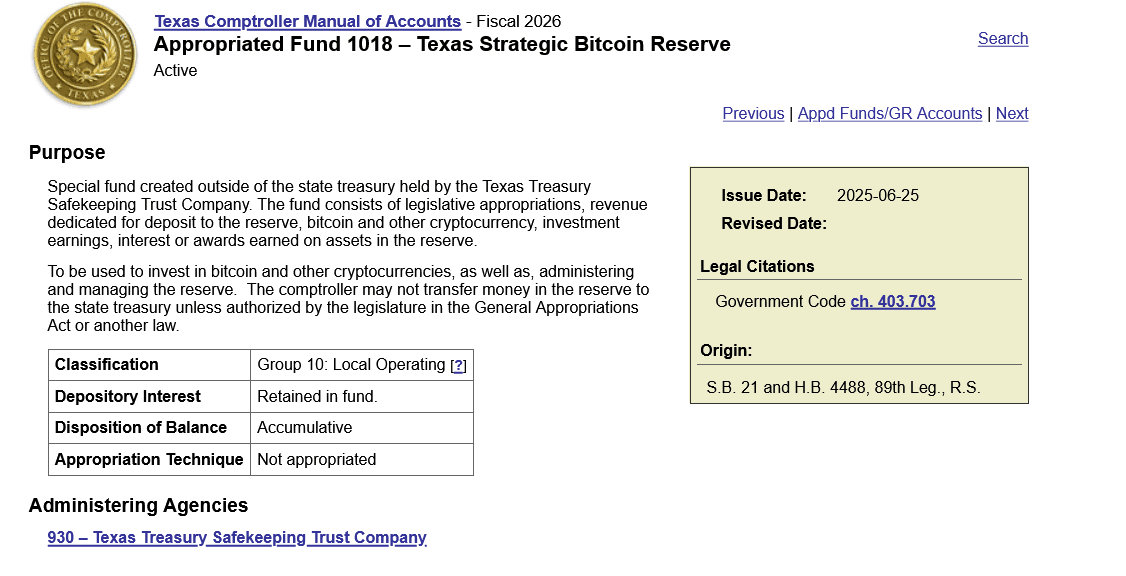
The purchase is being made under Senate Bill 21 (SB 21), a law signed by Governor Greg Abbott in June. This bill established the Texas Strategic Bitcoin Reserve, which is managed by the Texas Treasury Safekeeping Trust Company. The legislators behind SB 21 clearly stated their objective: they intended for bitcoin to be treated as any other long-term asset within the state’s investment portfolio.
Senator Charles Schwertner, the bill's author, expressed the sentiment earlier this year, stating that the state should have the freedom to consider "the best performing asset over the last 10 years." Despite bitcoin's history of volatility, its performance over the past decade presents a compelling case. This argument was persuasive enough to secure a dedicated $10 million allocation for the reserve.
The Initial Allocation: A $5 Million IBIT Purchase
Reports from the Texas Blockchain Council indicate that the state executed a purchase of approximately $5 million in BlackRock’s IBIT ETF on November 20. If these reports are accurate, this marks the very first utilization of the bitcoin budget authorized under SB 21.
This event also represents a symbolic milestone. Lee Bratcher, the president of the Texas Blockchain Council, described it as the first-ever bitcoin purchase by a U.S. state. While official confirmation from Treasurer Kelly Hancock is still pending, the timing and details align with the budget provisions and the established authorization process.
This development signifies that Texas is not waiting for a national consensus on digital assets. Instead, it is proactively implementing its own strategy for incorporating bitcoin into its reserves, akin to a sovereign nation.
How Bitcoin Integrates into the Texas Portfolio
Should this transaction be validated, IBIT would become the third asset class in the state's traditional holdings. The Texas Treasury Safekeeping Trust Company currently reports holdings of approximately:
- •$667 million in SPY
- •$34 million in a Janus Henderson fund
- •And now, potentially, a $5 million position in IBIT
While the dollar amount is relatively small, the symbolic significance is substantial. It signals that digital assets are now entering investment territories previously exclusive to equities and bonds.
This situation also highlights a rare convergence of institutional interest. Abu Dhabi's sovereign wealth fund added IBIT to its portfolio this month. Furthermore, Harvard University owns nearly seven million shares of IBIT, listing it as its largest U.S. holding as of September 30.
Eric Balchunas of Bloomberg aptly summarized the situation, noting that IBIT might be the only ETF currently held by Texas, Harvard, and a Gulf sovereign wealth fund simultaneously. This is a notable achievement for a fund that has been available for less than two years.
Why the Nation Is Watching Texas
Texas has a reputation for taking decisive action and addressing potential issues later, particularly in sectors like energy, cryptocurrency mining, and financial innovation. Its expanding blockchain ecosystem, coupled with political backing, positions it as a natural environment for testing state-level digital asset policies.
If this $5 million IBIT purchase is officially confirmed, it is unlikely to remain a state-specific development for long. Other states will closely monitor its performance, the governance framework employed, and the broader political reaction. Should the reserve prove successful and generate favorable returns, other states may begin to question their decision to remain on the sidelines.
This moment transcends a simple ETF trade. It represents a critical juncture in determining whether bitcoin can transition from a speculative asset to a recognized strategic asset at the state level.