



Key Developments in Tether's Uruguay Project
Tether Ltd. has confirmed the cessation of its Bitcoin mining operations in Uruguay. This decision has led to the layoff of a significant portion of its local workforce. The halt comes as a result of ongoing, unresolved disputes concerning energy tariffs.
This situation presents a considerable obstacle for initiatives aimed at utilizing renewable energy sources for cryptocurrency mining. It underscores the crucial influence of regulatory frameworks and energy pricing structures on the viability of such projects.
Stalled $500 Million Bitcoin Mining Initiative
Tether Ltd. had intended to establish a sustainable Bitcoin mining model in Uruguay. However, the project has been put on hold due to escalating energy costs and significant regulatory challenges. This decision has resulted in the dismissal of 30 employees, a substantial reduction from the initial ambitious plans that targeted a $500 million investment.
The operational impact of Tether's withdrawal is considerable, as the company had already invested over $100 million. The persistent tariff dispute prevented further financial commitments, despite the original plans for the development of three data centers and a renewable energy farm. Tether cited unfavorable electricity tariffs as the primary reason for its exit from the country.
"We had great ambitions for sustainable mining in Uruguay, but escalating energy costs and tariff disputes made the project no longer viable." - Paolo Ardoino, CEO of Tether
The local market has reacted to Tether's departure, with some commentators suggesting that energy tariff policies may hinder new technological ventures. There is a potential for governments to re-evaluate their regulatory policies to attract more technology-related investments. The Uruguayan labor department has officially confirmed the employee layoffs. Tether's leadership has previously advocated for pricing adjustments that would benefit all parties involved.
Bitcoin's Market Performance Amidst Global Energy Disputes
Tether's withdrawal from Uruguay is a consequence of unresolved tariff issues, mirroring challenges faced by other cryptocurrency companies during China's mining bans in 2021. This situation highlights the significant impact of regulatory environments on cryptocurrency infrastructure investments.
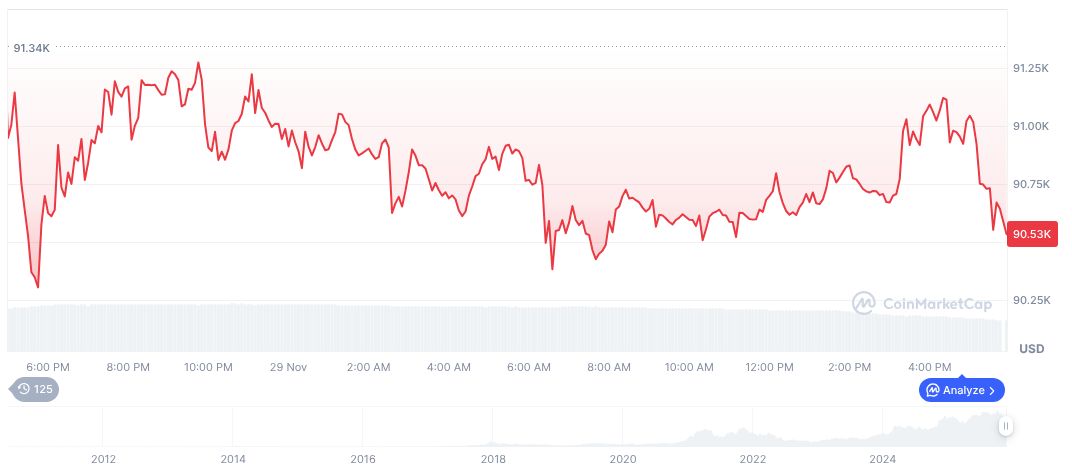
As of recent data, Bitcoin (BTC) is valued at $90,524.02 with a market capitalization of $1.81 trillion. Over the past 24 hours, BTC experienced a slight decrease of 0.11%, although it saw a gain of 7.14% over the last week. However, its value has dropped by 15.79% in the past 30 days. The 24-hour trading volume for Bitcoin has also declined by 31.78%.
Analysts note that while investments in renewable energy for mining remain a promising area, the associated risks are closely tied to regional power cost disputes. Achieving stability in energy pricing is essential for the success of mining centers and for bolstering crypto-backed investments.