



Strategy, the company formerly known as MicroStrategy, has added another significant block of bitcoin to its treasury. Between November 10 and November 16, the company purchased 8,178 BTC for approximately $836 million, with an average price of $102,171 per coin. This latest acquisition brings Strategy's total holdings to an impressive 649,870 BTC, valued at over $61 billion at current market prices. This amount represents more than three percent of the total bitcoin supply that will ever exist, underscoring Michael Saylor's aggressive acquisition strategy.
A Capital Machine Designed for One Purpose
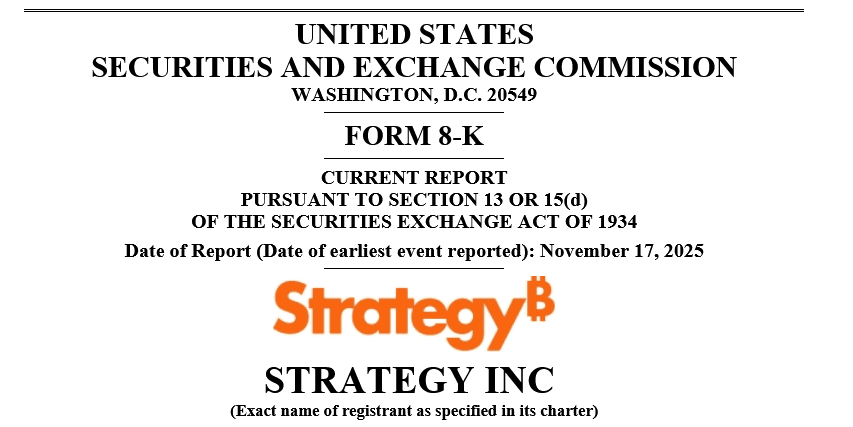
The funding for this latest accumulation is particularly noteworthy, as it did not come from operational cash flow or debt. Instead, it was financed almost entirely through proceeds from the company's perpetual preferred stock programs, including STRK, STRF, STRC, and the more recent euro-denominated STRE issuance.
Strategy has effectively established a sophisticated financial structure that converts capital markets into a continuous bitcoin acquisition engine. Each preferred instrument is designed with distinct dividend structures, conversion terms, and risk profiles, enabling the company to access investor capital across a wide range of preferences. This approach signifies a long-term financial strategy meticulously engineered to facilitate ongoing bitcoin acquisition through all market cycles.
Strategy’s Bitcoin Position Is Now in a League of Its Own
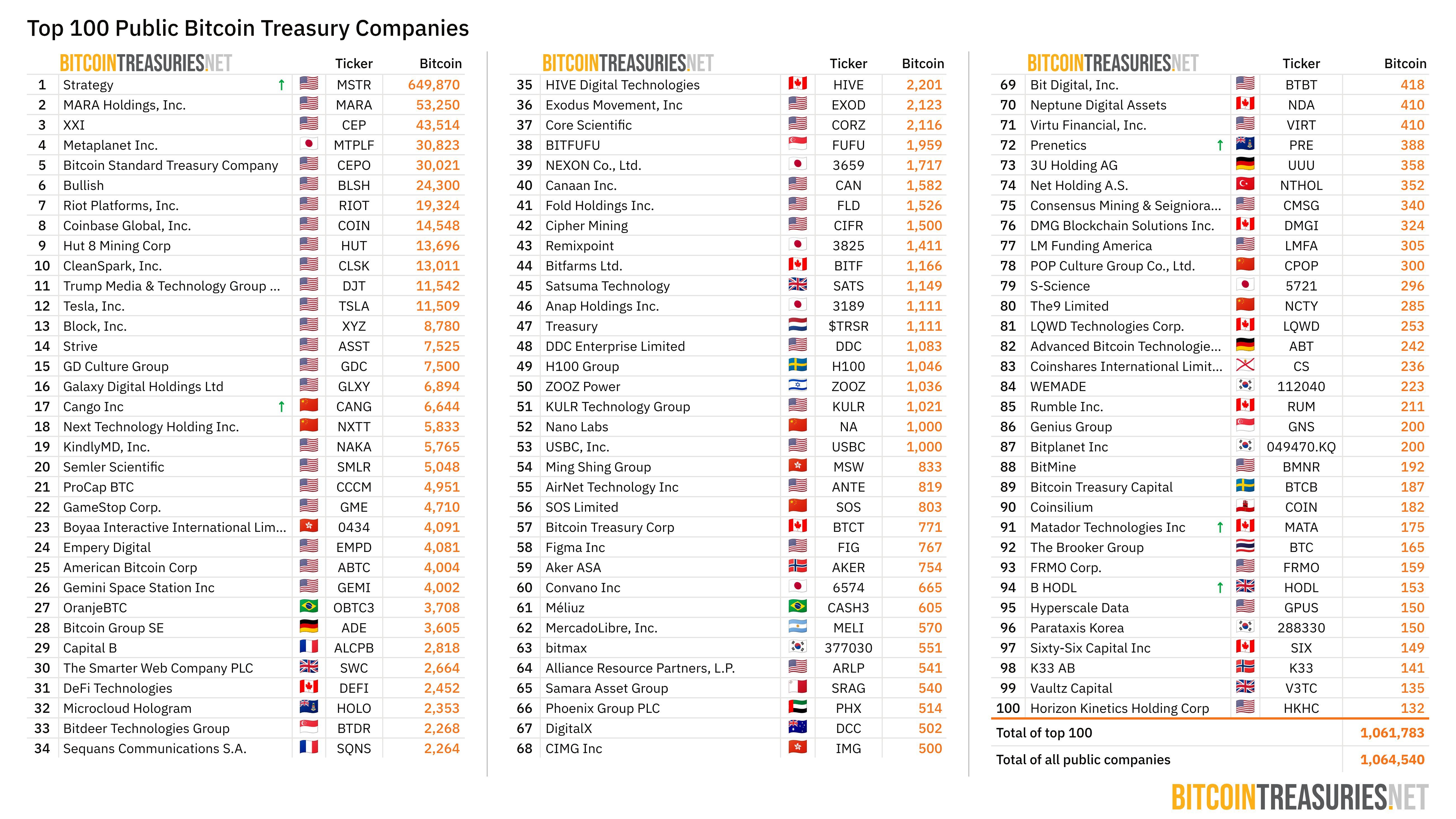
With nearly 650,000 BTC in its treasury, Strategy significantly surpasses all other public companies with a bitcoin treasury strategy. It has outpaced not only bitcoin miners and crypto-native firms but also major financial institutions that are exploring digital assets.
To provide context, companies like Marathon, Tether-backed Twenty One, Metaplanet, and Cantor Fitzgerald-backed Bitcoin Standard Treasury Company hold substantially less bitcoin than Strategy. Even when combining the holdings of several of the next largest corporate bitcoin holders, their total still falls short of Strategy's overall amount. The sheer scale of this operation is significant because as Strategy absorbs more bitcoin, a greater portion of the long-term supply becomes effectively unavailable in the open market.
Why the Stock Isn’t Matching the Momentum
Despite the substantial increase in its bitcoin holdings, Strategy's stock price has not mirrored this growth. The company's market-cap-to-NAV ratio has experienced a sharp contraction, its shares remain significantly below their summer peaks, and the stock has seen a decline of over 30 percent year-to-date. This disconnect has led to speculation that Strategy might be compelled to liquidate assets if bitcoin experiences further weakening.
Analysts at Bernstein view these concerns as unfounded. They highlight that Strategy's leverage is conservative. With $8 billion in debt compared to over $60 billion in bitcoin holdings, and with its capital programs continuing to attract strong institutional demand, the company is in a robust financial position. According to Bernstein, the structure implemented by Saylor is sufficiently resilient and liquid to prevent the company from being forced to sell bitcoin during a market downturn.
Michael Saylor Denies Bitcoin Sale Rumors
Last week, rumors circulated online suggesting that Strategy had sold over 47,000 BTC. Michael Saylor promptly addressed and refuted these speculations, stating that the on-chain movements observed were standard custodial rotations rather than actual sales. He informed CNBC that the company is actively purchasing bitcoin and that further disclosures would be forthcoming. This week's filings have corroborated his statements. In both public declarations and practical actions, Michael Saylor's position remains unwavering: the company has not sold any bitcoin and has no intention of doing so.
Why This Accumulation Matters for Bitcoin’s Future
With each acquisition, Strategy effectively removes a portion of the finite bitcoin supply from the market for the long term. This supply constraint becomes increasingly pronounced as more institutional players adopt similar strategies.
Even in a year where crypto markets have seen corrections and sentiment has cooled, Michael Saylor's buying activities continue at full pace. His strategy is designed to withstand severe downturns. He has consistently stated that the company's capital structure is capable of enduring a ninety percent bitcoin correction lasting several years. This level of resilience is crucial, as it indicates that bitcoin is not merely an investment for Strategy but rather the company's fundamental operating thesis.
Final Take
At its core, this situation reflects a deep conviction. Saylor is not reacting to short-term market fluctuations, fear, or headlines. He is executing a long-term plan that consistently absorbs significant amounts of bitcoin, irrespective of prevailing price conditions. Each acquisition further solidifies Strategy's lead over other corporate bitcoin holders and further tightens the available supply of bitcoin. The consistent message from Saylor is clear: the company is not selling, not slowing down, and not altering its course.