



Key Developments in Bitcoin Fraud Case
Zhimin Qian was arrested in the UK in connection with a major Bitcoin laundering scheme. Authorities discovered cryptocurrency wallets on her computer containing significant Bitcoin holdings. This arrest underscores the increasing ability of global law enforcement agencies to trace cryptocurrency transactions and highlights the growing judicial focus on tackling crypto-related crimes.
Magnitude of the Fraud and Seizure
Following multiple searches conducted by British law enforcement, Qian Zhimin's alleged involvement in a massive Bitcoin laundering scheme came to light. Evidence found on seized devices included mnemonic phrases that were crucial for accessing substantial Bitcoin holdings. Through international collaboration, UK police successfully detained Qian and seized 61,000 Bitcoin, which is valued at approximately £1.5 billion.
The scale and complexity of Bitcoin laundering operations present significant legal challenges. This incident serves as a stark reminder of Bitcoin's increasing appeal for use in organized financial crimes. The operation is indicative of broader, ongoing efforts to reinforce the role of electronic data in future legal proceedings.
Will Lyne, Head of the Economic and Cybercrime Command at the Met Police, stated, "Organised crime groups are using cryptocurrency to move, hide, and invest the profits of serious crime – but every crypto transaction leaves a trace."
Cryptocurrency Crime and the Push for Stricter Regulations
The significant increase in Bitcoin's value since the initial seizure highlights the inherent volatility of such assets and introduces complex legal implications for the handling of seized cryptocurrencies.
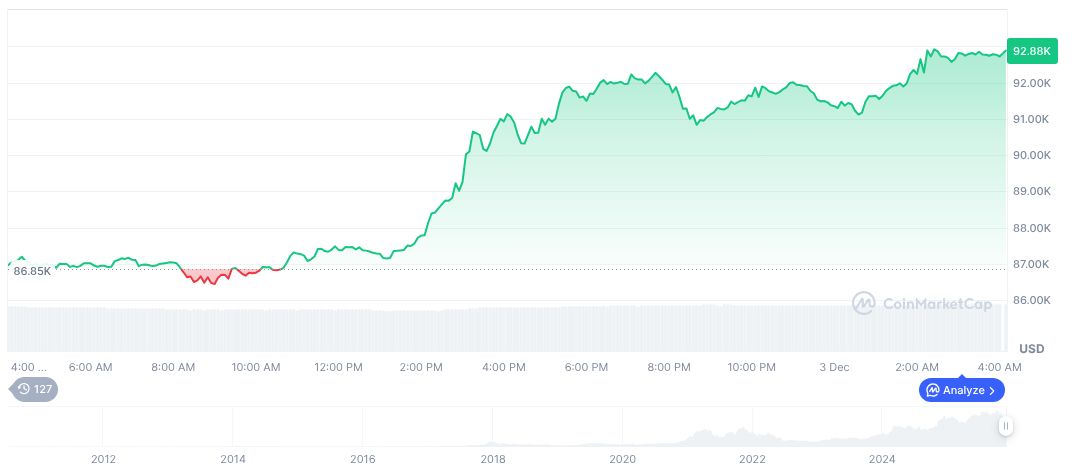
Bitcoin's current trading performance, as reported, illustrates its market position with a specific price and a market capitalization exceeding $1.87 trillion. Despite recent fluctuations, its substantial market dominance emphasizes its prominent role in global financial markets. Recent movements, including a notable rise over a 24-hour period, continue to reflect Bitcoin's dynamic nature within global markets.
The increasing scrutiny of cryptocurrency usage, particularly in light of fraudulent activities, is driving a demand for more stringent regulatory measures. This escalates calls for tighter compliance protocols within crypto-exchanges, which are setting crucial precedents for the industry. Enhanced data verification processes are seen as vital for forging effective global regulations that can address financial misconduct.