



Starlink rival Amazon Leo has launched a waitlist for many countries, including Nigeria, to collect details of would-be early users of its satellite Internet service when it eventually rolls out. The company recently began its first public testing with select enterprise customers ahead of an anticipated wider commercial rollout in 2026.
The waitlist provides for three broad categories of users:
- •Government: Government agencies and service providers like schools, hospitals, etc.
- •Personal: Individual users.
- •Business: Corporate users and business owners.
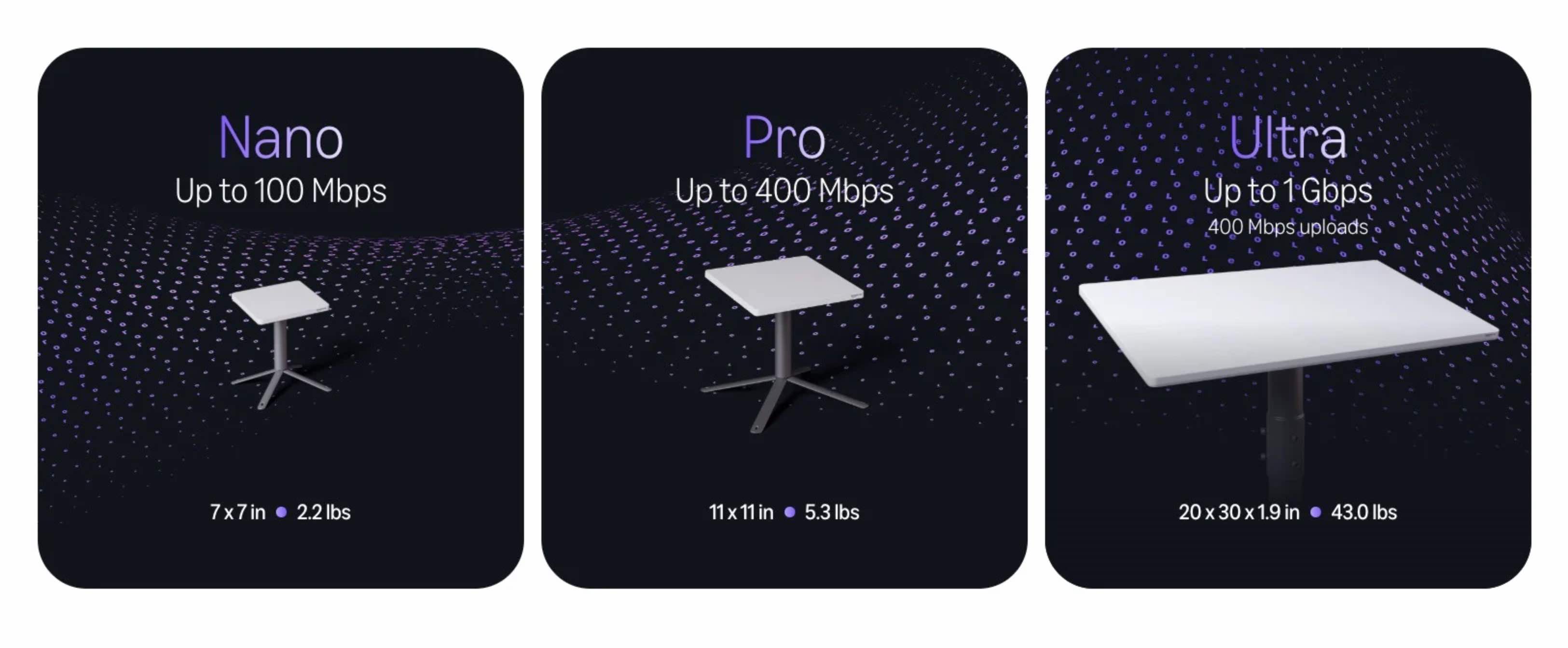
It also provides three different router types:
- •Ultra: This router will support download speeds of up to 1Gbps and upload speeds of 400Mbps. Amazon claims it will be the world’s fastest satellite Internet antenna.
- •Nano: This is the smallest and lightest antenna, and most likely to be the most affordable. The antenna weighs around 1kg and has a square dish panel measuring less than 18cm from side to side. It supports download speeds of up to 100Mbps.
- •Pro: This router is bulkier and heavier, measuring approximately 28cm across and weighing 2.4kg. It will offer download speeds of up to 400Mbps.
To apply, users can visit the Amazon Leo website to join the waitlist.
Amazon has partnered with Vanu, a US-based company, to deploy cellular towers in far-flung and rural parts of Southern Africa. There has not yet been an announcement regarding a distribution structure for West Africa.
What You Need to Know About Amazon Leo
Previously known as Project Kuiper, Leo launched its first operational batch of internet satellites into low Earth orbit (LEO) last year. The mission, dubbed “KA-01” (Kuiper Atlas 1), saw 27 satellites lifted off aboard a United Launch Alliance (ULA) Atlas V rocket from Cape Canaveral Space Force Station in Florida in September.
The project currently has a fleet of 153 production satellites in orbit and aims to expand to 1,618 satellites by July 30, 2026. While this number is smaller compared to Starlink’s satellite count, Amazon claims its top-end product will offer speeds of up to 1Gbps.
Amazon’s initiative to provide global broadband access has been in development for over 10 years. The company aims to deploy a constellation of more than 3,200 LEO satellites to deliver fast, reliable internet to customers worldwide, including underserved regions.

The first phase of the deployment will involve 578 satellites orbiting approximately 630km above the Earth’s surface, a slightly higher altitude than Starlink’s fleet. Using these satellites, Amazon is implementing 12 ground stations to provide backhaul connectivity to the Internet.
While SpaceX’s Starlink has a significant head start with its reusable Falcon 9 rockets and licensed capacity for 12,000 first-generation satellites (plus 7,500 for its second generation), Amazon is leveraging its technological capabilities and global reach to establish a competitive position.
The company has secured 80 launch missions with multiple providers, including ULA, Arianespace, and Jeff Bezos’ Blue Origin, to construct its initial satellite constellation.
Industry experts anticipate that the setup process will likely take at least another year, with the earliest optimistic global launch date projected for late 2026 or early 2027.