


Key Developments
South Korean customs authorities have successfully dismantled an international currency exchange network responsible for laundering approximately $101.7 million through cryptocurrency transactions. The operation, which was active from September 2021 to June 2025, utilized cryptocurrencies to obscure the origins of funds, making transactions appear as legitimate expenses.
As a result of the investigation, three individuals have been referred to prosecutors for potential charges. This crackdown underscores South Korea's commitment to implementing stringent measures against cryptocurrency-based money laundering, which has significant implications for capital flow regulation and prompts ongoing revisions to financial oversight strategies.
Operation Details and Regulatory Response
The Korea Customs Service's successful dismantling of this network highlights the evolving tactics employed in illicit financial activities. The system facilitated the conversion of multi-national crypto assets through South Korean wallets, funneling funds into local accounts without triggering immediate suspicion. This operation aligns with broader South Korean oversight on crypto transactions and demonstrates the nation's proactive stance in combating financial crime.
Authorities have intensified oversight targeting currency exchanges and have enforced stricter regulatory measures to prevent such activities. The South Korean Supreme Court's ruling on the seizability of Bitcoin in criminal probes is an example of the nation's move towards greater cryptocurrency accountability.
While community and official responses have been subdued, regulatory bodies have emphasized their ongoing commitment to cracking down on similar operations as part of their broader fight against illegal financial activities.
Market Context and Regulatory Shifts
South Korea has seen significant adoption of digital assets, with over 16 million crypto accounts recorded by March 2025. This high level of adoption necessitates a robust regulatory framework to address the growing threat of financial crimes, including money laundering.
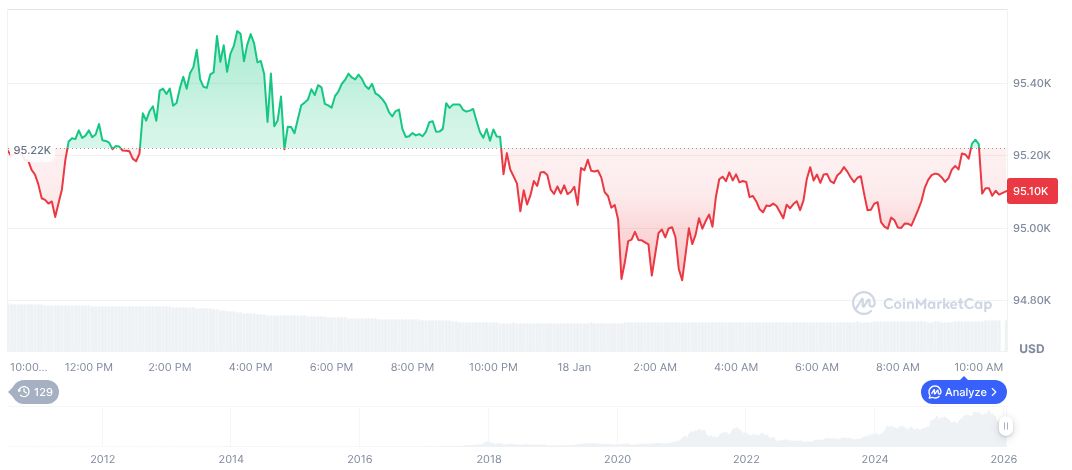
The market continues to exhibit volatility, influenced by the strengthening legal frameworks governing digital assets. Bitcoin (BTC) recently traded at $92,899.56, showing a 2.51% increase over the past week, despite a recent 2.30% daily drop. The current market cap stands at $1.86 trillion, with Bitcoin dominance at 59.10% and trading volumes up by 113.83% as of January 19, 2026.
Research suggests that increased regulatory scrutiny may lead to heightened oversight on exchanges, impacting both operational costs and compliance procedures. Industry experts highlight the need for crypto exchanges to adapt swiftly to mitigate operational challenges arising from this evolving regulatory landscape.
"With increasing regulatory scrutiny, crypto exchanges need to adapt swiftly to mitigate operational challenges," an industry expert highlights.
Market trends indicate continued volatility as legal frameworks strengthen, requiring agile adaptation from all stakeholders within the cryptocurrency industry.