



Key Points
- •South Korea plans to amend its law to recognize stablecoins as a form of payment.
- •The objective is to combat money laundering and tax evasion.
- •This initiative is expected to influence global trends in stablecoin regulation.
South Korean lawmakers have put forth a bill that would formally recognize stablecoins for payment purposes. This legislative effort aims to curb illegal activities such as money laundering and tax evasion, addressing concerns previously raised by the Bank of Korea regarding US dollar stablecoins potentially bypassing regulatory frameworks.
This proposed legislative action highlights the growing international scrutiny on stablecoins and their potential impact on the integration of digital assets into traditional financial systems.
South Korea's Legislative Push on Stablecoin Integration
South Korean legislators are advancing a proposal to amend the Foreign Exchange Transactions Act, which would officially recognize stablecoins as a form of payment, placing them alongside traditional currencies. This legislative amendment is primarily driven by concerns over the use of stablecoins to circumvent financial controls and aims to bring them under a defined legal framework.
Under the proposed changes, stablecoins would be subject to new regulatory oversight, aligning them with existing legal guidelines for traditional payment methods. This development could significantly influence global financial strategies concerning stablecoin transactions, ensuring greater compliance and reducing opportunities for illicit use.
Park Sung-hoon, a Lawmaker from the People's Power Party in South Korea, stated, "This regulatory change could affect the use of stablecoins for financial transactions in South Korea, potentially influencing the broader adoption of stablecoins globally."
Stablecoin Regulation: Historical Context and Future Implications
It is noteworthy that in 2019, South Korea already implemented strict regulations on traditional cryptocurrencies. This historical context suggests a potential early trend towards the regulation of stablecoins, foreshadowing the current legislative discussions that have emerged approximately four years later.
Market data indicates that Ethereum (ETH) holds a market capitalization of $494.36 billion, representing 12.87% of the total market dominance. Over the past 24 hours, ETH experienced a price decrease of 2.56%, settling at $4,095.87. Concurrently, its trading volume surged by 19.06%, signaling considerable market activity.
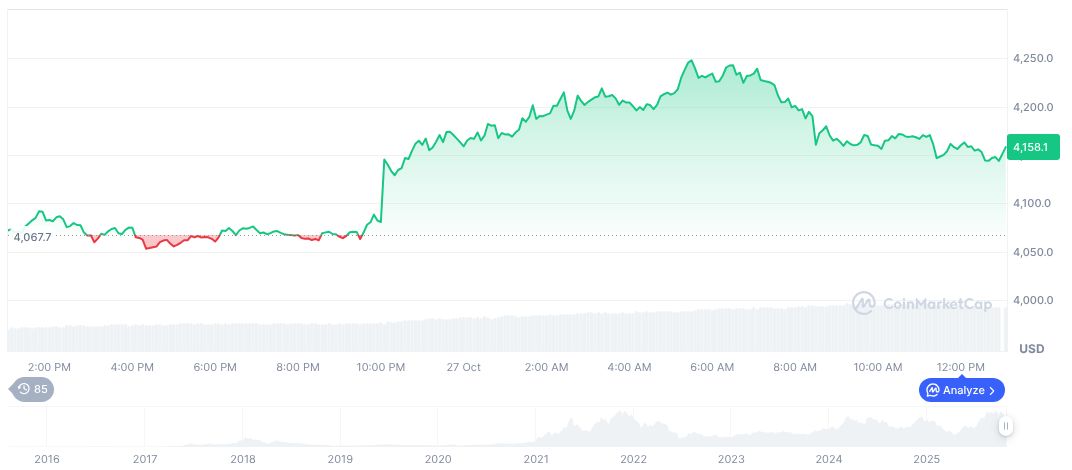
Research from Coincu suggests that the formal recognition of stablecoins could lead to the establishment of a regulated environment that promotes trust and transparency within the digital asset space. By integrating stablecoins into existing legal frameworks, this move may significantly boost their global adoption and influence the stance of international regulatory bodies regarding the inclusion of stable currencies in formal economies.