


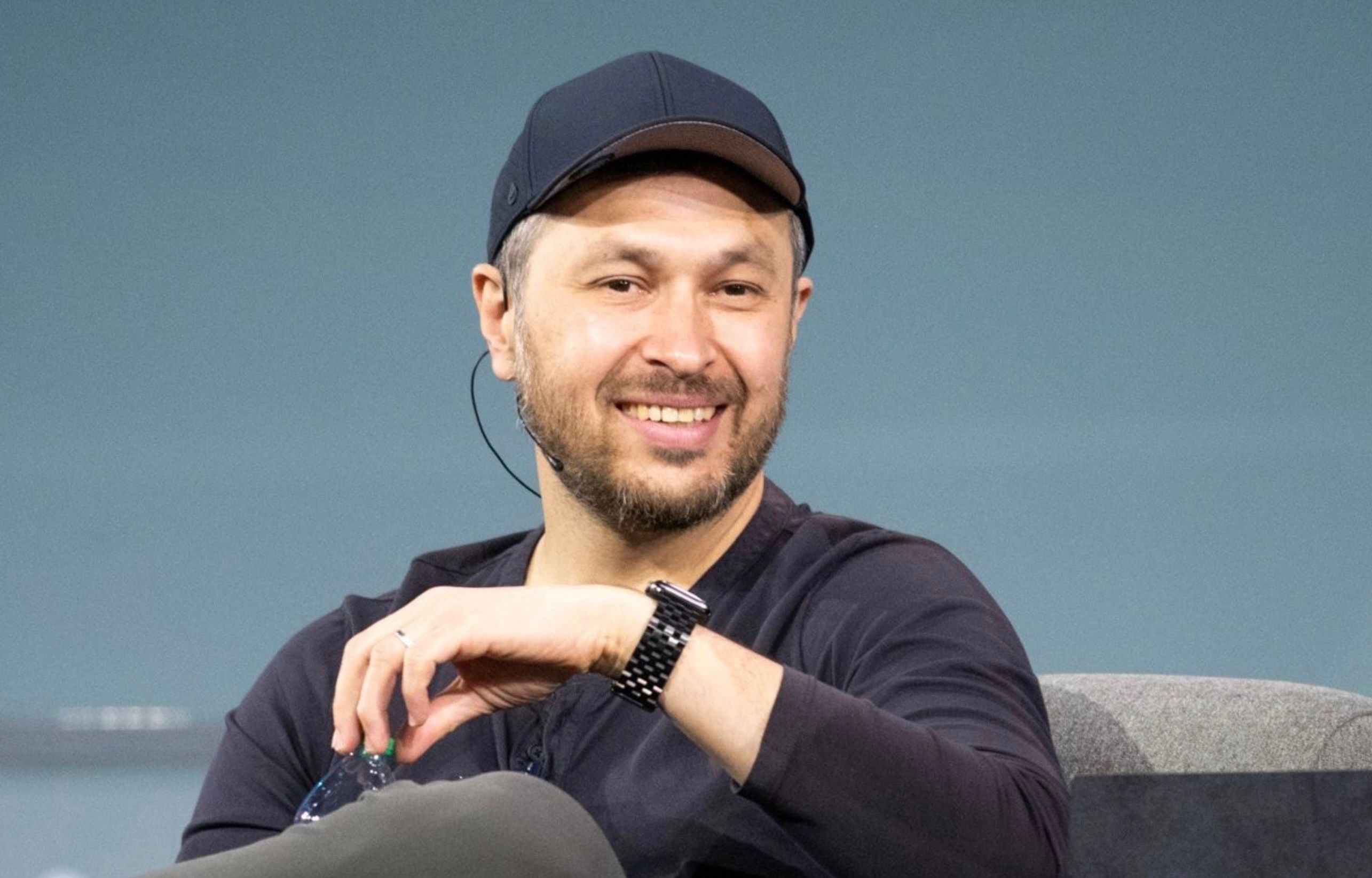
Solana Labs CEO Anatoly Yakovenko revealed his increasing reliance on artificial intelligence coding tools, specifically mentioning Claude, during his participation at TechCrunch Disrupt. He described how he often monitors the AI assistant while it addresses programming challenges, even during meetings. These remarks coincide with the Solana cryptocurrency protocol reporting a significant annual revenue of $2.85 billion and the successful launch of its first exchange-traded fund. However, the platform is also facing considerable criticism concerning certain coins that critics allege facilitate political bribery.
Key Developments:
- •Solana Labs CEO Anatoly Yakovenko stated that he actively observes the AI coding assistant Claude while it works, referring to it as a "force multiplier" for experienced software developers.
- •Solana announced an annual revenue of $2.85 billion and launched an exchange-traded fund (ETF) that garnered nearly $70 million on its debut day.
- •The platform is currently facing criticism regarding Trumpcoin, a cryptocurrency that has reportedly directed an estimated $350 million to the former president, sparking concerns about potential bribery.
AI Coding Tools Transform Software Development
Yakovenko, who possesses over 15 years of software development experience, elaborated on his growing dependence on agentic coding technology during his address at the tech conference. He emphasized that his extensive expertise enables him to effectively supervise the AI's progress and identify any deviations from the intended course.
"AI has been a great force multiplier for somebody who's an expert," Yakovenko stated. "Now I can just watch Claude churning through its thing and I can almost smell when it's going off the rails."
The co-founder of Solana acknowledged that his divided attention has become apparent to his colleagues.
"If people are in a meeting with me and I'm not paying attention, it's because I'm watching Claude," he explained.
Agentic coding describes artificial intelligence systems capable of autonomously generating, debugging, and modifying code with minimal human input. These tools are increasingly being adopted by software engineers seeking to expedite development cycles and delegate routine programming tasks.
Financial Achievements Amidst Public Scrutiny
The cryptocurrency protocol disclosed its annual revenue figure earlier this month, with a substantial portion of this growth attributed to activity on crypto trading platforms. Bitwise, a firm specializing in crypto asset management, introduced Solana's inaugural ETF just prior to Yakovenko's conference presentation. This fund experienced inflows of nearly $70 million within its first day of trading.
Yakovenko attributed the platform's performance to a growing acceptance among professionals in traditional finance.
"If you are a back-office finance person, you actually get crypto much, much faster," he remarked. "Finance people deal with settlement risk all the time. They deal with banking risk all the time."
These comments aimed to explain why individuals working in conventional finance sectors tend to grasp blockchain technology more readily than other demographics. Settlement risk refers to the potential for a party involved in a transaction to fail in fulfilling their obligations as agreed upon, while banking risk encompasses a broad spectrum of threats to financial institutions, including credit defaults and liquidity issues.
An exchange-traded fund functions by bundling assets, such as stocks or cryptocurrencies, into shares that are traded on standard stock exchanges. This structure allows investors to gain exposure to these assets without the necessity of directly purchasing them. The launch of the Solana ETF signifies a notable achievement for the cryptocurrency, which, like many digital assets, has experienced volatility in recent years.
Despite these advancements, Solana is encountering significant scrutiny regarding its alleged role in what critics describe as political corruption.
Trumpcoin, a cryptocurrency operating on the Solana protocol, has reportedly channeled an estimated $350 million to the former president. Critics interpret this as a form of bribery, particularly in light of high-profile pardons previously issued by the president for figures such as Tron founder Justin Sun and Binance founder Changpeng Zhao.
Yakovenko has refuted claims that he bears responsibility for the ways in which the platform is utilized.
He drew a comparison between Solana and email, asserting that both serve as neutral infrastructure. "I could send you an email with a link to Trumpcoin or Fartcoin, and both of those are protocols, both the email and the underlying protocol that creates that market," he explained.
Concluding Perspectives
Yakovenko's statements underscored the convergence of emerging technologies and the development of cryptocurrencies, even as Solana confronts questions surrounding its involvement in controversial financial transactions. The inherent open-protocol structure of the platform means that its creators have limited control over the coins and applications built upon it.