



Authorities Seize Significant Assets Linked to Alleged Fraud
Singapore police have seized over S$150 million in assets that are reportedly tied to Chen Zhi and Cambodia's Prince Group. These entities are accused of orchestrating a transnational fraud ring involving cryptocurrency. The action by Singaporean authorities follows reports from the United States and the United Kingdom that detail allegations of up to $15 billion in Bitcoin fraud. As part of this operation, asset freeze orders have been issued against six properties and a variety of financial assets, including bank accounts and securities, held by Chen Zhi and his associates.
"As part of the operation, the police seized and issued prohibition of disposal orders against six properties and various financial assets, including bank accounts, securities accounts and cash, with a total estimated value of more than S$150 million." — Singapore Police Force
Market Impact and Regulatory Scrutiny
This significant seizure by Singaporean authorities underscores a broader trend of intensified global enforcement efforts against cryptocurrency-related fraud. Such actions have the potential to impact Bitcoin liquidity and are expected to heighten scrutiny on cryptocurrency transactions worldwide, contributing to market unease and volatility.
Bitcoin (BTC) currently trades at $109,672.98 with a market capitalization of $2.19 trillion, according to CoinMarketCap. Despite a recent negative change of 0.82% over the past seven days, Bitcoin continues to maintain a dominant position in the market, capturing 59.05% of the total market share. Recent enforcement actions, such as this asset seizure, can lead to immediate fluctuations in market sentiment.
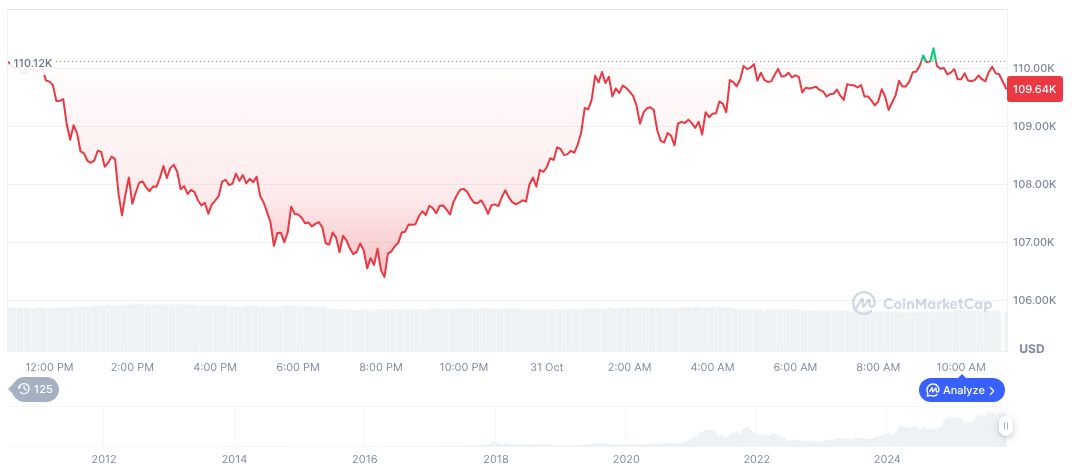
Experts in the cryptocurrency space highlight that these types of regulatory pushbacks can pave the way for stricter compliance measures. Such developments are viewed as potentially beneficial for the long-term integrity of the market. These actions typically shift the focus toward enhanced legal frameworks for crypto platforms globally, reinforcing the importance of regulatory cooperation.