



Key Insights
- •Shiba Inu's 606 million SHIB inflow drop signals reduced selling intent, but it is minor relative to total exchange holdings.
- •Technical resistance levels continue to limit price rebounds, indicating a lack of sustained buyer momentum in the short term.
- •Transaction volumes and on-chain activity remain flat, supporting the narrative of consolidation over speculative accumulation.
Shiba Inu registered a decrease of approximately 606 million SHIB in exchange inflows within 24 hours. This shift is generally perceived as a reduction in near-term selling pressure. Fewer tokens being sent to exchanges often points to a slowdown in immediate sell-offs by holders.
Despite this decline in inflows, the overall price movement of SHIB remains under pressure. The SHIB/USDT chart shows the asset trading below key moving averages. Short-term rebounds have failed to break through resistance levels. These patterns reflect stabilization, not active accumulation or buying strength.
Exchange Reserves Remain High
Currently, there are around 82 trillion SHIB held on exchanges. Compared to this total, the 606 million SHIB drop appears marginal. The decrease does not significantly shift supply dynamics or suggest a structural change. Exchange reserves remain elevated, indicating that broader market participants are not rapidly withdrawing assets for long-term holding.
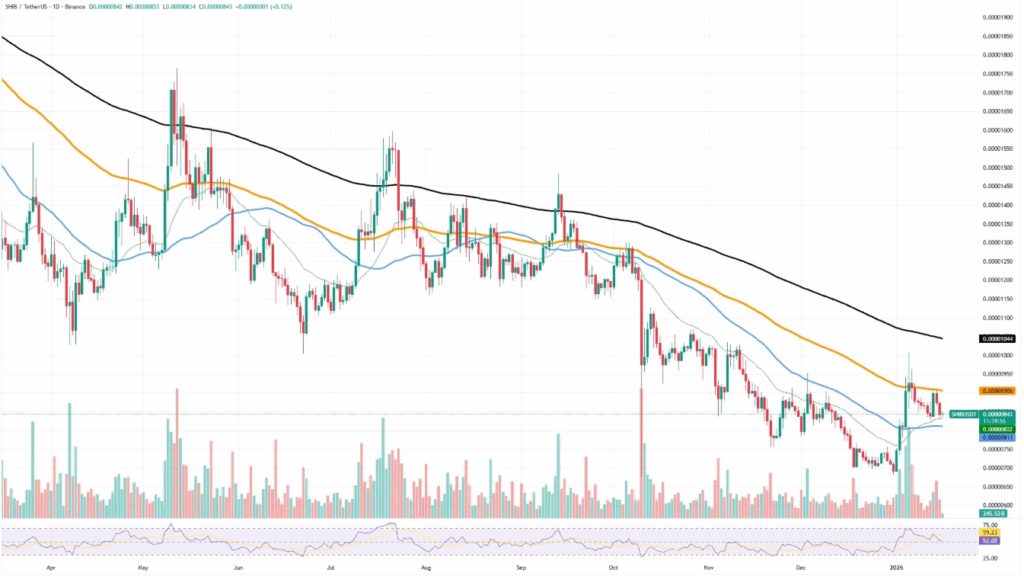
Recent price rebounds saw temporary volume spikes. However, these were not sustained. The follow-up activity weakened shortly after the bounce, which is characteristic of a relief rally within a longer corrective phase. Without consistent volume or a break above resistance levels, these moves lack momentum.
On-chain Activity Reflects Market Caution
On-chain data shows transaction counts remain steady, with no signs of increased speculative activity or aggressive accumulation. This reinforces the view that the market is in a consolidation phase following a prolonged downtrend. Key indicators continue to reflect hesitation rather than renewed enthusiasm.
Although the drop in exchange inflows is a positive signal in isolation, it does not guarantee a change in market direction. Significant outflows in larger volumes, a break above technical resistance, or strong external market support would be required to initiate a recovery trend. None of these conditions are confirmed at the moment.