



Key Nominations and Their Potential Impact
The U.S. Senate is advancing confirmation votes for key nominees who are expected to significantly influence the future of cryptocurrency regulation in the United States. Michael Selig is nominated to lead the Commodity Futures Trading Commission (CFTC) as chairman, while Travis Hill is nominated to chair the Federal Deposit Insurance Corporation (FDIC). Their confirmations are seen as critical for shaping the U.S. crypto market's regulatory framework, with a potential focus on deregulatory policies and adjustments to how banks interact with digital assets.
Selig, who previously served on the SEC's cryptocurrency task force, has expressed a commitment to fostering market competition and promoting innovation through clearer regulatory guidelines. Travis Hill, nominated for the FDIC chairmanship, has indicated an intention to review and potentially revise existing banking restrictions, addressing issues related to "de-banking." These appointments signal a potential shift in regulatory approach, with Selig set to oversee the enforcement of crypto regulations and Hill planning to re-evaluate previous administration policies on crypto banking limitations. Their roles are considered pivotal in determining how financial institutions engage with digital assets and commodities.
Industry and Market Reactions
Community reactions to these nominations have been notably subdued, with no public comments from prominent industry leaders thus far. However, Selig's statements during his Senate hearings emphasized his commitment to making the CFTC a more efficient and transparent regulator. He stated, “If confirmed as Chairman, I commit to you that the CFTC will have a steady hand at the wheel… I pledge to work tirelessly… to facilitate well-functioning markets, promote competition and innovation, and ensure that the CFTC remains a world-class regulator.” Market stakeholders are closely observing these developments for their potential impact on the cryptocurrency sector.
Historical Context and Bitcoin's Volatility
Past leadership changes within regulatory bodies like the Commodity Futures Trading Commission have historically led to increased market surveillance and significant market impacts, drawing parallels to reactions observed during the 2008 financial reforms. This historical context highlights the potential magnitude of the appointments of Selig and Hill.
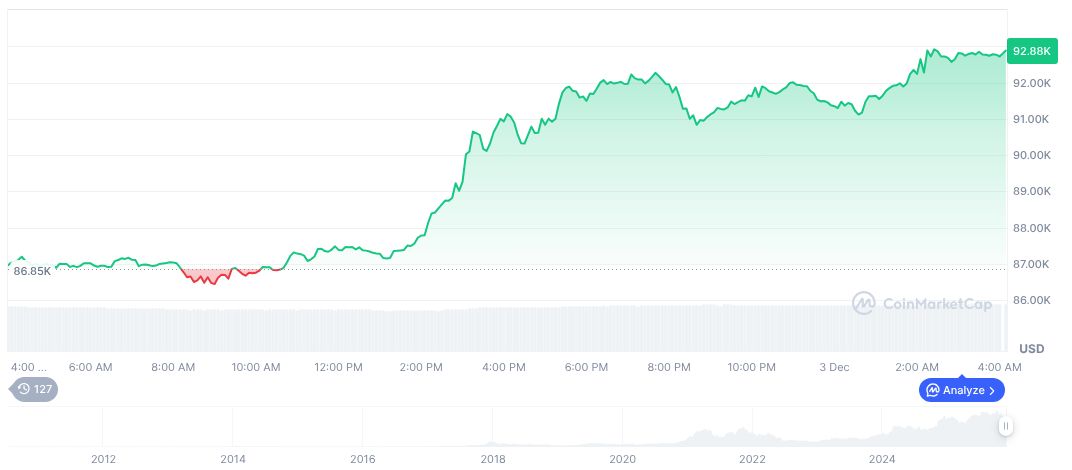
Amidst these regulatory shifts, Bitcoin (BTC) has experienced volatility. According to available data, Bitcoin is trading at approximately $93,090.12, reflecting a 1.64% increase over the past 24 hours. The cryptocurrency's market capitalization is around $1.86 trillion, with a market dominance of 58.50%. Despite recent daily gains, Bitcoin has seen a decline of 12.54% over the last 30 days and a 23.83% drop over 60 days, indicating a period of recent price fluctuations.
Insights from Coincu Research suggest that these regulatory nominations could lead to a better alignment of U.S. crypto policies with current market demands. This development is seen as part of a broader global trend toward more synchronized international regulations, which could influence the dynamics of the crypto asset market on a wider scale.