


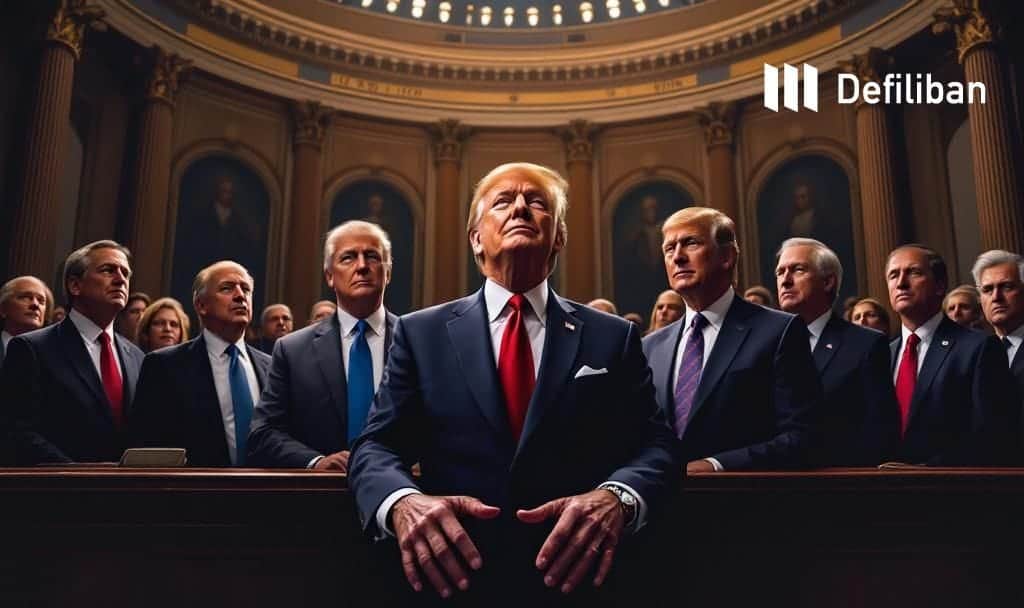
Legislative Push for Digital Asset Clarity
The U.S. Senate Banking and Agriculture Committees are preparing to vote on a bipartisan bill designed to establish a regulatory framework for digital assets. This significant legislative effort aims to bring clarity to the cryptocurrency market and expand the oversight roles of both the Securities and Exchange Commission (SEC) and the Commodity Futures Trading Commission (CFTC).
Leading this initiative are Senate Banking Committee Chair Tim Scott and Senate Agriculture Committee Chair John Boozman. Each committee is developing its own version of the bill, reflecting their distinct legislative priorities. The Banking Committee's draft focuses on the regulation of security tokens, while the Agriculture Committee's approach centers on the oversight of digital commodities.
Key Figures Driving the Legislation
Tim Scott of South Carolina, who chairs the Senate Banking Committee, has been a prominent voice in discussions concerning digital assets, with a particular emphasis on consumer protection. John Boozman from Arkansas, as the chair of the Senate Agriculture Committee, brings a legislative history related to the CFTC and digital commodities. Boozman has previously played a substantial role in efforts to regulate digital commodities and sponsored the Digital Commodity Customer Protection Act (DCCPA). Both senators have been actively involved in the digital asset regulatory space since at least 2022, leveraging their legislative experience to advance this bill.
Leadership Statements on Progress
Chairman Tim Scott expressed a positive outlook on the bill's progression during an appearance on Fox Business. He indicated that both committees intend to mark up and vote on the legislation by the end of the current year. Scott’s stated goal is for the Senate to consider the bill early in the following year.
"By the end of this year, next month, we believe we can mark up and vote in both committees and get this to the floor of the Senate early next year so that President Trump will sign the legislation making America the crypto capital of the world."
Tim Scott via Fox Business
Paul Grewal, Chief Legal Officer of Coinbase, shared his perspective on social media, acknowledging the complexities involved but conveying confidence in the ability to finalize the necessary details.
Institutional Interest and Market Observations
Despite no explicit mention of specific funding or grants within legislative statements, the attention from institutional players such as Citi, JP Morgan, and Blackrock is noteworthy. These financial institutions have demonstrated interest in market structure developments and are actively participating in blockchain initiatives, including those on platforms like Avalanche.
The impending legislation is anticipated to have a significant impact on major cryptocurrencies, including Bitcoin (BTC) and Ethereum (ETH), as well as a wide range of DeFi tokens, Layer 1, and Layer 2 assets. These digital assets are likely to fall under the expanded regulatory jurisdiction of either the SEC or the CFTC.
Potential Impact on Digital Assets
Currently, there is no primary on-chain data directly linked to the bill's legislative progress. However, historical regulatory developments in the digital asset space have often correlated with fluctuations in total value locked (TVL) and increased market volatility, particularly affecting protocols that have significant exposure to the U.S. market.
Previous regulatory discussions, such as those surrounding the Lummis-Gillibrand Act, led to temporary market reactions. These included observed outflows from DeFi protocols and price volatility in governance tokens like AAVE and UNI. Similar market dynamics could potentially emerge with the progression of this new bill.
Future Considerations and Community Engagement
While the complete text of the bill has not yet been published, discussions across platforms like Crypto Twitter and various legal forums are actively anticipating its release. Industry insiders, including Cody Carbone, CEO of the Digital Chamber, expect that ongoing feedback and adjustments to the draft will be a part of the process.
"What I think happens next is Senate Ag continues to take industry feedback, and over the next few weeks they start filling out those bracketed portions."
Cody Carbone
Until the bill's final text is confirmed, community and developer discussions are focused on the potential implications for compliance requirements, particularly for DeFi protocol front-ends and Decentralized Autonomous Organizations (DAOs). Channels on platforms like GitHub and Discord are actively monitoring the bill's potential impact.