


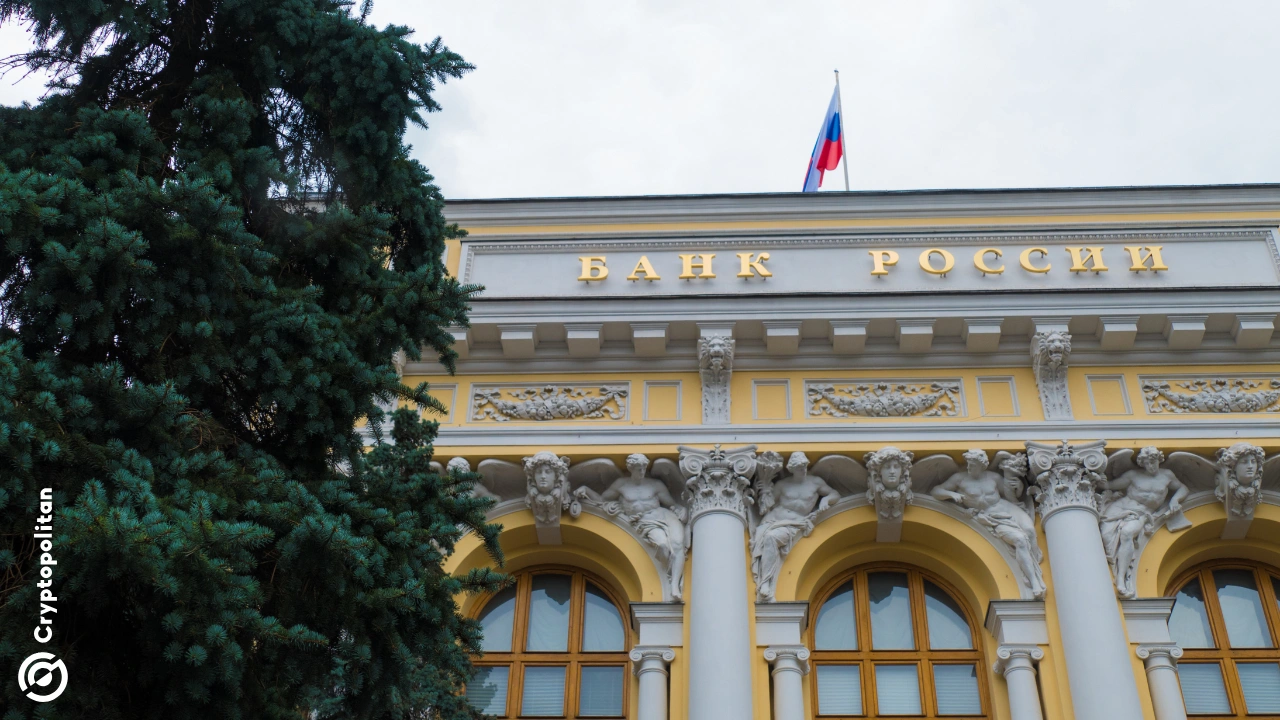
Shift in Regulatory Stance on Digital Assets
The Bank of Russia has indicated that it is open to the possibility of relaxing current regulations that restrict cryptocurrency transactions within the country. This potential shift is occurring as the nation's monetary authority engages in discussions with the Ministry of Finance, which had previously signaled a move towards more lenient rules concerning digital assets.
Exploring Looser Crypto Regulations
The prospect of easing Russia's cryptocurrency regulations is gaining traction, with another significant regulatory body expressing a willingness to broaden access to digital assets for Russian citizens. This development was initially announced by the Ministry of Finance (Minfin) in early November and has since been corroborated by a senior official from the Central Bank of Russia (CBR).
Last week, Deputy Finance Minister Ivan Chebeskov informed local media outlets that financial authorities are prepared to abandon a specific regulatory definition. This definition, as previously reported, exclusively permits a limited group of "highly qualified" investors to engage with decentralized digital currencies like Bitcoin and their associated derivatives.
Vladimir Chistyukhin, the First Deputy Chairman of the Bank of Russia, confirmed these discussions, stating, "Indeed, our colleagues from the finance ministry correctly stated that we are discussing the feasibility of using [the term] ‘highly qualified’ in the new crypto regulation."
Speaking to reporters on Monday, Chistyukhin clarified that the CBR now believes it is "quite possible" to ease these regulations. He added, "Rules for crypto asset circulation should be eased beyond this extremely narrow category of investors, especially given the restrictions currently in place for Russian legal entities and individuals using normal currencies to make payments abroad."
Impact of Sanctions on Russia's Crypto Policy
The Central Bank of the Russian Federation may be prompted to relax its crypto regulations as a direct consequence of the sanctions imposed upon the nation. The extensive penalties levied by Western allies against Moscow following its invasion of Ukraine have significantly curtailed Russia's access to conventional financial channels over the past few years.
Despite a historical stance of strong opposition to the unfettered circulation of cryptocurrencies within the nation's economy, the CBR proposed the implementation of an "experimental legal regime" (ELR) for cryptocurrency operations in March of this year.
Under the ELR framework, Russian companies have been enabled to utilize digital currencies for cross-border settlements, while individuals meeting specific criteria, often referred to as "superquals," have been permitted to purchase and trade crypto assets.
In May, the Bank of Russia issued a special circular for financial institutions, authorizing the offering of derivative instruments based on cryptocurrencies within the domestic market. However, these instruments remain accessible only to investors who have been officially recognized as highly qualified. This status can be obtained by professional firms, as well as private individuals who meet certain criteria related to their income and other investment holdings.
The financial thresholds for this status are notably high. Individuals are generally required to possess at least 100 million rubles in bank deposits and securities, along with an annual income exceeding 50 million rubles from the previous year. These figures equate to approximately $1.2 million and $600,000, respectively, making crypto assets largely inaccessible to the majority of ordinary Russian citizens.
The CBR has recently acknowledged that household investments in Russian crypto derivatives remain modest, totaling just over $47 million. The bank also noted that these investments do not pose a significant risk to the country's financial system.
The central bank now appears to be leaning towards supporting the expansion of this market. In October, the regulator made the decision to permit commercial banks to engage in operations with digital assets. Concurrently, it urged lawmakers to enact comprehensive legislation that would regulate crypto investments outside the scope of the existing experimental regime.
Further demonstrating this evolving stance, in November, the CBR announced its intention to allow mutual funds to invest in crypto derivatives. The bank has also recently proposed the necessary draft amendments to facilitate this change.
Official Views on Crypto's Future Role
Vladimir Chistyukhin has further emphasized that crypto assets could potentially become a "normal instrument," noting that they are already being utilized in such a capacity.
"Where we’ll settle on this depends on future discussions with the Ministry of Finance. As I said, we are in close dialogue," the deputy governor remarked.
"It seems to me we’ll be able to advance and publicly express our position by the end of the year," Chistyukhin concluded.