


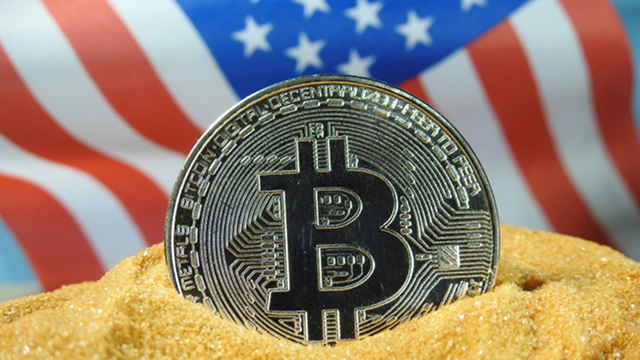
Legislation Proposes Bitcoin Tax Payments for National Reserve
Ohio Representative Warren Davidson introduced legislation on Thursday that would allow Americans to pay federal taxes in Bitcoin. These payments would then be directed into a U.S. Strategic Bitcoin Reserve. The Bitcoin for America Act is designed to diversify national wealth into a non-inflationary asset that can serve as a long-term store of value.
Davidson explained that the bill would offer the American people more choices when paying taxes. Simultaneously, it would provide the government with a stronger financial foundation. He emphasized that this legislation would position the country to lead in the global landscape as the world navigates the future of sound money and digital innovation, rather than merely follow.
According to Davidson's statements to the Bitcoin Policy Institute, the bill would grant both individual and corporate taxpayers the option to pay their taxes using Bitcoin. Taxpayers would gain a degree of control over how tax funds are allocated by choosing to pay in Bitcoin, with these funds being directed to the strategic reserve instead of being used for other government expenditures, such as foreign aid.
Historical Context of Strategic Bitcoin Reserve Proposals
Months into his administration, President Donald Trump signed an executive order that aimed to create a strategic Bitcoin reserve. This reserve was to be formed from approximately 200,000 Bitcoin already in the possession of the federal government. These coins had been forfeited as a result of criminal or civil proceedings, with the exclusion of those that still needed to be returned to crime victims. Since then, Republican lawmakers have introduced multiple bills seeking to codify a strategic Bitcoin reserve into law.
Similar proposals have been put forth in Congress with the intention of establishing the Strategic Bitcoin Reserve, although none have successfully advanced to passage. Senator Cynthia Lummis had previously introduced legislation that would have involved the United States purchasing up to $80 billion worth of Bitcoin. This initiative was intended to be funded through the issuance of new certificates that would re-rate Federal Reserve gold holdings.
Following this, Representative Byron Donalds introduced a bill that proposed adding Bitcoin to a Strategic Reserve, but only through budget-neutral actions or via the seizure of funds in criminal or civil proceedings. Davidson's current proposal represents a middle-ground approach when compared to these previous legislative attempts.
Analysis and Potential Impact of the Bitcoin for America Act
The Bitcoin Policy Institute has formally endorsed the bill. In collaboration with BitcoinQuant, they developed a forecasting model to illustrate the potential output of the reserve if American citizens begin paying taxes in Bitcoin. The model's projections indicate that if just 1% of federal taxes were paid in Bitcoin from January 1, 2025, through the end of 2030, the reserve could accumulate over 2.6 million Bitcoin. At current prices, this would be worth approximately $230 billion.
Conner Brown, who serves as the head of strategy at the Bitcoin Policy Institute, commented that the bill demonstrates that a strategic Bitcoin reserve does not need to be implemented as a top-down mandate. By allowing Americans to voluntarily contribute Bitcoin through their tax payments, the legislation establishes what is described as the first truly democratic, market-driven model for national Bitcoin accumulation. In a related development, Detroit became the largest U.S. city earlier this year to permit its residents to pay taxes and other city fees using cryptocurrency.
On Thursday, Bitcoin was trading around $88,769. This represents a decline of nearly 30% from its all-time high in August, which surpassed $126,000. The market continues to process expectations regarding interest rate cuts and broader weakness observed in the cryptocurrency market.