


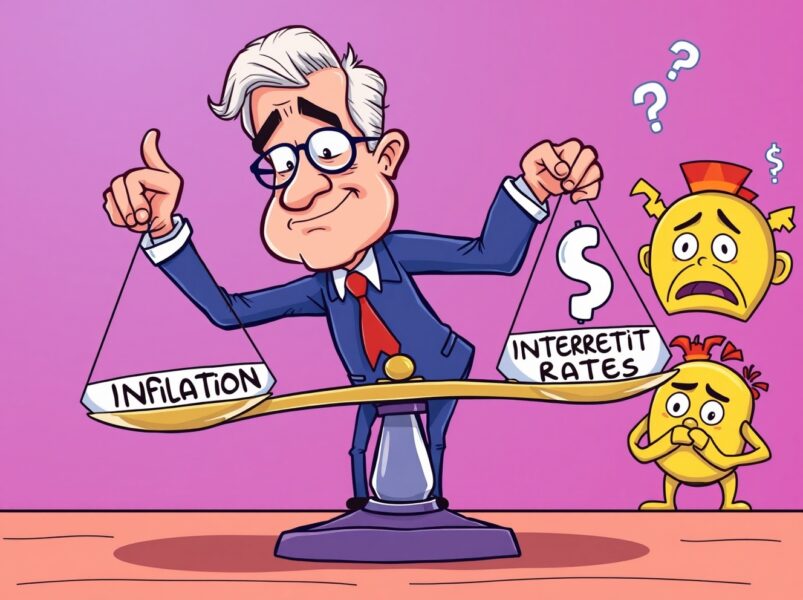
Federal Reserve officials are expressing caution regarding the potential consequences of further interest rate reductions. Kansas City Fed President Jeffrey Schmid recently issued a significant warning, suggesting that additional rate cuts could impede progress in controlling inflation. This statement arrives at a pivotal moment for the Federal Reserve as it navigates its monetary policy strategy.
Concerns Over Inflationary Repercussions of Rate Cuts
Schmid articulated that implementing further interest rate reductions might not effectively address underlying weaknesses in the labor market. More critically, he posited that such cuts could negatively impact inflation by potentially re-stimulating price pressures. The Federal Reserve faces the complex task of balancing various economic objectives.
Current economic data indicates that an premature easing of monetary policy could:
- •Undermine the recent gains made in reducing inflation.
- •Introduce new risks to price stability.
- •Complicate the formulation of future monetary policy decisions.
The Risks Associated with Aggressive Interest Rate Reductions
A primary concern highlighted is that further rate cuts could jeopardize inflation management efforts at a time when price stability seems increasingly attainable. Schmid's viewpoint reflects a growing apprehension among some Federal Reserve officials regarding the pace of policy adjustments. Historical precedent demonstrates that premature policy shifts can often lead to a resurgence of inflationary pressures.
Furthermore, existing issues within the labor market necessitate targeted interventions rather than broad monetary stimulus. The intricate relationship between employment levels and inflation demands a cautious and deliberate approach from policymakers.
Impact of the Warning on Future Policy Directions
Schmid's remarks suggest a potential divergence of opinions within the Federal Reserve concerning the appropriate speed for policy normalization. His perspective implies that some officials believe further rate cuts could negatively influence inflation expectations. This viewpoint underscores the importance of patience and decisions that are heavily reliant on incoming economic data.
Key factors that will be considered in upcoming Federal Reserve meetings include:
- •An in-depth analysis of recent inflation trends.
- •Thorough assessments of labor market conditions.
- •Considerations regarding financial stability.
- •An evaluation of global economic developments.
Practical Implications for Investors
Market participants should anticipate potential differences in policy stances among Federal Reserve officials. The warning that further rate cuts could harm inflation suggests a possible inclination to resist aggressive easing measures. Investors are advised to closely monitor economic indicators and adjust their expectations accordingly.
Crucial data points that investors should track include:
- •Core inflation measurements, such as the Personal Consumption Expenditures (PCE) price index excluding food and energy.
- •Employment cost indices, which measure changes in the cost of labor.
- •Consumer spending patterns, reflecting household demand.
- •Business investment trends, indicating corporate confidence and future growth prospects.
Frequently Asked Questions
Why does Schmid believe rate cuts could hurt inflation?
He is concerned that premature easing of monetary policy might reignite price pressures and counteract the progress the Federal Reserve has made toward its 2% inflation target.
What specific labor market concerns did he mention?
Schmid indicated that rate cuts would not be an effective solution for addressing structural issues within the labor market, which require more specialized interventions.
How does this position differ from other Fed officials?
Some Federal Reserve officials have expressed support for more rapid rate cuts, which could lead to policy disagreements within the Federal Reserve system.
What economic indicators should I monitor?
Investors should pay close attention to core PCE inflation data, unemployment rates, wage growth figures, and consumer spending patterns to gauge potential policy shifts.
Could this warning affect market expectations?
Yes, this warning may temper market expectations for aggressive interest rate reductions and encourage a more cautious approach from investors.
What’s the timeline for potential policy changes?
The Federal Reserve will continue to make decisions based on incoming economic data, with each scheduled meeting offering an opportunity for reassessment.