



Key Takeaways
- •The Federal Reserve implemented another 25 basis point rate cut and announced the end of quantitative tightening effective December 1st, but Chair Powell refrained from committing to further cuts in December, leading to caution in the near term.
- •The weakness observed in cryptocurrency markets is attributed to an adjustment in market expectations rather than a fundamental breakdown of the macro thesis; markets had anticipated a more aggressive easing cycle and reacted to the resulting uncertainty.
- •With capital continuing to favor strong AI-driven equities, the rotation of liquidity into the cryptocurrency sector will depend on clearer signals from inflation and labor data, as well as more definitive direction from the Federal Reserve.
Powell's decision to cut rates and halt quantitative tightening was met with a cooling in cryptocurrency markets as investors recalibrated their expectations for future easing. Shifts in market sentiment are driven by the timing of these events, prevailing expectations, and the current preference for equities, which is considered temporary.
What Just Happened
The Federal Reserve executed a 25 basis point rate cut, adjusting the federal funds target range to 3.75%–4.00%. Additionally, the central bank signaled an end to its quantitative tightening program, set to commence in December. On the surface, these actions represent a clear departure from restrictive monetary policy, which typically provides a boost to risk assets, including cryptocurrencies.
However, instead of experiencing a rally, cryptocurrency markets showed signs of weakness. Bitcoin and Ethereum faced selling pressure, and overall risk appetite within digital asset markets diminished. This reaction, occurring despite what is generally considered a bullish macroeconomic catalyst, surprised many traders. Understanding this outcome requires examining not only the Fed's actions but also the market's prior expectations.
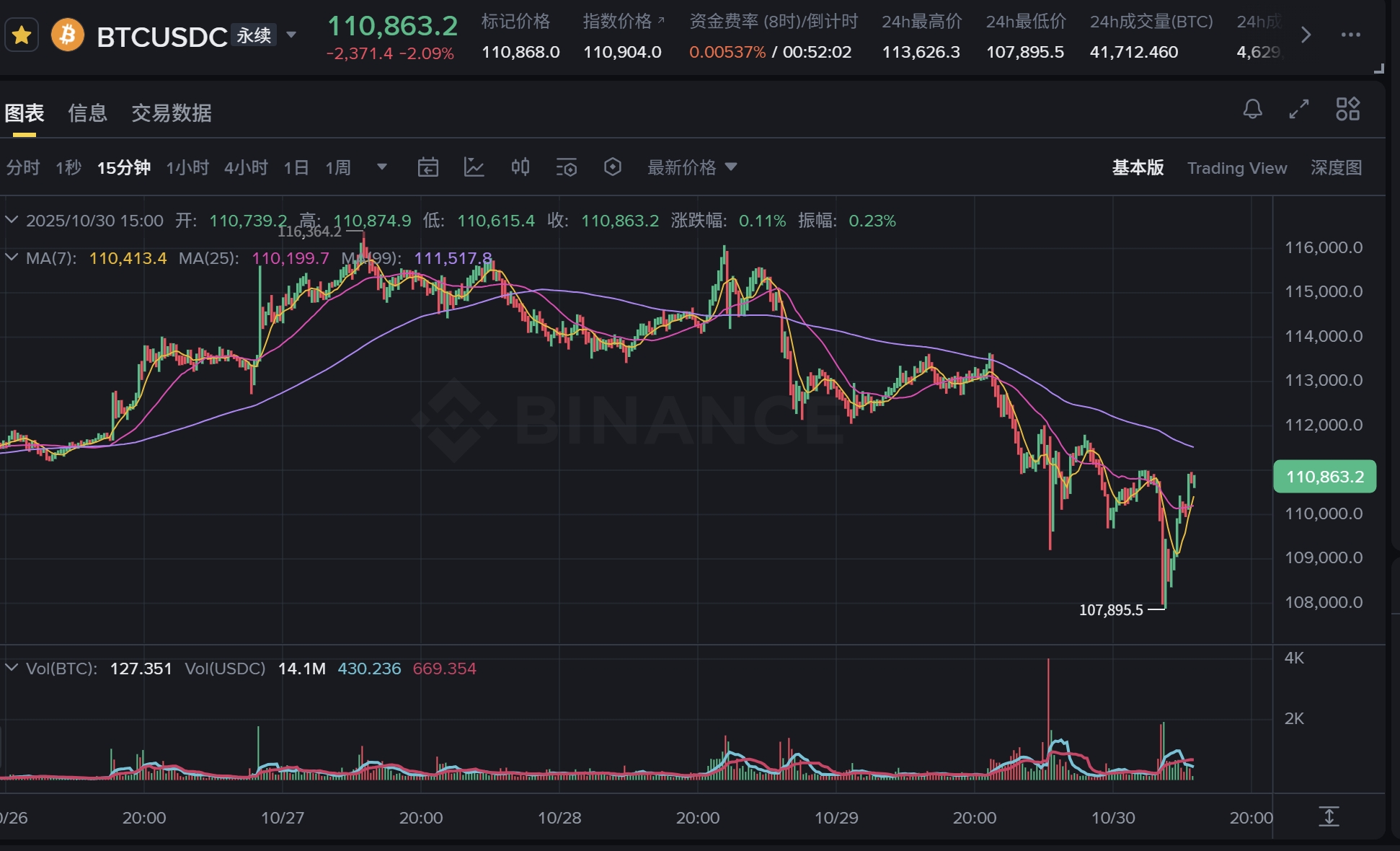
The Fed Cut Rates — But Not Expectations
The rate cut itself was widely anticipated by the market. The element that caught many participants off guard was Federal Reserve Chair Jerome Powell's reluctance to commit to another rate cut in December. Leading up to the announcement, traders had factored in a high probability of consecutive easing measures. Following the press conference, these expectations shifted significantly, with the odds of a December rate cut dropping from approximately 85% to around 60%.
This development was not indicative of a hawkish pivot by the Fed; rather, it served as a reminder that the central bank intends to remain data-dependent and avoid pre-committing to an aggressive easing path. In a market environment that had priced in a degree of certainty regarding future policy, the introduction of uncertainty carried considerable weight. The message conveyed was not one of aggressive easing, but rather a more measured approach: easing would occur, but cautiously and contingent upon prevailing economic conditions. This subtle distinction was sufficient to reset short-term market sentiment.
Positioning Mattered More Than Headlines
The decline in cryptocurrency markets was not a result of a weakening macroeconomic narrative. Instead, it stemmed from traders being positioned for a more dovish signal than what was ultimately delivered. Given the strong performance of digital assets throughout the year, many market participants had adopted long positions leading into the Federal Reserve's announcement, anticipating confirmation of an uninterrupted policy easing cycle.
What they received was a degree of ambiguity. When market expectations are stretched, even slightly less-dovish language can prompt a reduction in positions. This reaction is not necessarily a sign of bearish conviction but rather a demonstration of disciplined risk management. The long-term investment thesis for digital assets remains constructive; the short-term trading catalyst simply lost its expected strength.
Capital Still Prefers Equities — For Now
Another significant factor influencing market dynamics is competition for capital. U.S. technology equities continue to attract investment due to robust demand driven by artificial intelligence, tangible earnings growth, and consistent institutional flows. With improving macroeconomic conditions and strong corporate fundamentals, equity markets currently present a clear and dynamic investment opportunity.
Cryptocurrencies typically absorb liquidity after traditional markets have already priced in their upside potential. At present, capital is favoring assets offering greater visibility over those with higher volatility. This does not inherently signal weakness in digital assets; rather, it indicates that the liquidity cycle is in its early stages of rotation, with cryptocurrencies positioned further down the investment pipeline.
It’s About Sequencing, Not Sentiment
The overall macroeconomic direction has not fundamentally changed: the process of monetary easing has commenced, liquidity is gradually returning to the system, and policy headwinds are diminishing. However, investors require further confirmation before fully committing capital. Key indicators that market participants are closely watching include:
- Continued moderation in inflation rates.
- Ongoing signs of softness in labor market data.
- Renewed clarity that the December meeting remains a possibility for another rate cut.
Until these signals become more robust, a cautious approach to positioning is likely to prevail. Historically, cryptocurrencies tend to lead market performance once confidence in the easing cycle becomes undeniable. The current period of caution is primarily a reflection of timing and pacing, rather than a fundamental shift in sentiment.
Not a Bear Turn — Just a Reset
A short-term pullback following a widely anticipated event does not invalidate the broader bullish case for cryptocurrencies. Instead, the market is currently recalibrating its expectations and awaiting stronger evidence to support a sustained rally. Liquidity does not lift all asset classes simultaneously; it moves in a sequential manner. The current caution observed in the market is a function of pacing and timing, not a sign of pessimism.
This environment rewards discipline and strategic timing over immediate urgency. When greater clarity emerges, cryptocurrencies typically transition from being market laggards to leaders relatively quickly. The long-term investment opportunity in digital assets remains intact.