



Portal Secures $25M; Launches Atomic OTC Platform
Portal to Bitcoin has secured a $25 million funding round which was led by JTSA Global and included investments from Coinbase Ventures, OKX Ventures, and Arrington Capital. The funds will primarily support the launch of a new atomic over-the-counter (OTC) trading platform. The platform promises "instant, trustless cross-chain settlement" specifically designed for large-scale transactions.
The launch of this OTC trading platform is expected to transform institutional trading by utilizing an atomic swap mechanism that relies on Hash Time Locked Contracts (HTLCs) and Bitcoin Taproot contracts. This development indicates a significant shift towards a trustless system for large account transactions, with a notable focus on non-custodial cross-chain swaps.
Immediate reactions from the crypto industry are positive, as seen on social media and quoted by industry executives. Modern integration of such protocols often garners attention as potential disruptors in traditional trading frameworks. Prominent voices from the Bitcoin community recognize the protocol's potential impact on reducing reliance on custodial intermediaries in large transactions.
Crypto Community Anticipates Regulatory Scrutiny Amid Innovations
The use of atomic swap mechanisms, like those implemented by Portal to Bitcoin, eliminates the need for custodial bridges, a feature differentiating it significantly from traditional cross-chain technologies.
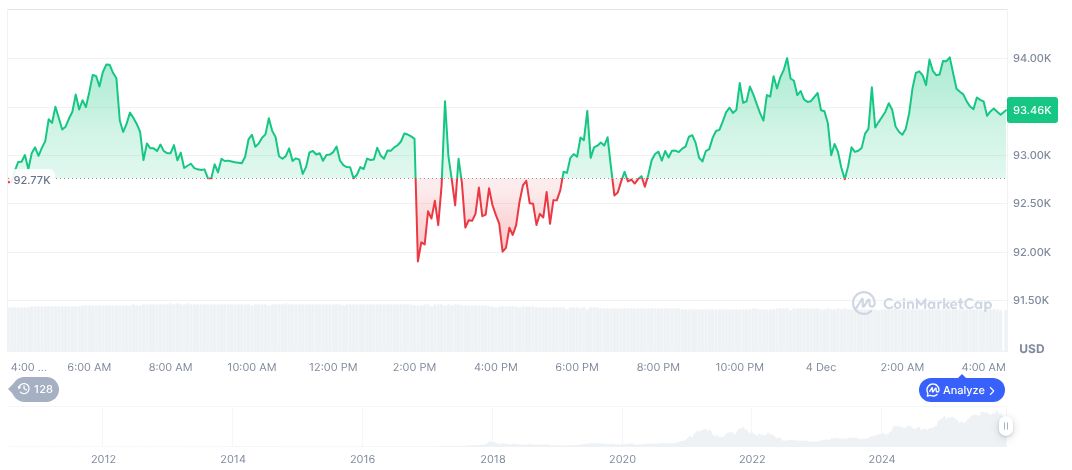
According to CoinMarketCap, Bitcoin's current price stands at $92,005.21, with a market cap of $1.84 trillion. It commands a 58.72% market dominance, although it has seen a 1.11% dip over the past 24 hours. Its 24-hour trading volume is marked at $68.36 billion, noting an 11.83% decrease. Recent price trends show a 0.56% rise over seven days, followed by a 24.92% drop over the past sixty days, indicating significant volatility.
From a regulatory stance, the Coincu research team highlights that increased adoption of portals like these could trigger tighter oversight from financial authorities. They note historical patterns of increased regulation following significant technological shifts in trading mechanisms. These changes often prompt regulatory bodies to reassess existing frameworks to incorporate new market dynamics.