



Pi Network has launched Pi Node version 0.5.4, now rebranded as Pi Desktop. This update aims to enhance node performance, refine reward calculations, and improve developer accessibility within the Pi ecosystem.
Version 0.5.4, announced on November 6, introduces several performance optimizations and interface changes. Pi Desktop now integrates mining functions, the Pi App Studio, and a suite of developer tools into a single platform. The development team stated that the goal is to streamline participation for node operators and foster more efficient dApp development across the network.
What’s New in Pi Desktop
Key improvements include fixes for reward calculation errors, enhanced automatic updates, and better block container creation, addressing issues previously raised by community node operators. A newly added open port verification system is designed to ensure fairer node bonus assessments, potentially improving long-term engagement among miners.
Pi Node version 0.5.4 has been released! This update introduces several improvements to Node performance, Node mining rewards calculations, and the user experience on the Pi Desktop application. https://t.co/jeozstvj2I
— Pi Network (@PiCoreTeam) November 6, 2025
Pi Desktop now allows users to access approved external resources and blogs directly from within the interface, eliminating the need for separate browser navigation. The update also corrects display issues within Pi App Studio, where app previews were not rendering properly.
In its release notes, the development team emphasized that these refinements were guided by extensive community feedback. "Pi App Studio is now accessible from the main navigation bar, alongside the Pi mining app and Node," the developers stated, highlighting their focus on integrating core ecosystem tools under a unified dashboard.
Building on the OpenMind Project
This release follows the success of OpenMind, Pi Network’s decentralized AI initiative. OpenMind tested large-scale distributed computing across its infrastructure, with over 350,000 active nodes performing image recognition tasks in a collaborative proof-of-concept. This marked one of the network’s largest coordinated efforts to date.
The OpenMind collaboration also served as the first venture investment under Pi Network Ventures, signaling the project's intention to bridge blockchain development with real-world applications in AI and data science.
On-Chain Struggles Persist
Despite these technical milestones, Pi Network’s on-chain performance indicates ongoing challenges. According to PiScan, the network currently hosts only 296 active mainnet nodes and three validators, a significant decrease from its testnet engagement levels.
Developer sentiment has also shown signs of cooling. The decentralized freelancing marketplace WorkforcePool, a former Pi Hackathon winner, recently announced it is seeking buyers due to high operational costs and limited ecosystem support. This development has reignited concerns about sustainability and the pace of developer progress within Pi’s ecosystem.
Pi Coin Under Pressure
Pi Coin’s market performance reflects these ongoing tensions. After a brief recovery in late October, the token has fallen by approximately 10% over the past week, trading near $0.21, according to OKX data. Technical indicators suggest sideways movement, with the MACD showing stagnation and the RSI near 50, indicating a lack of strong buying momentum.
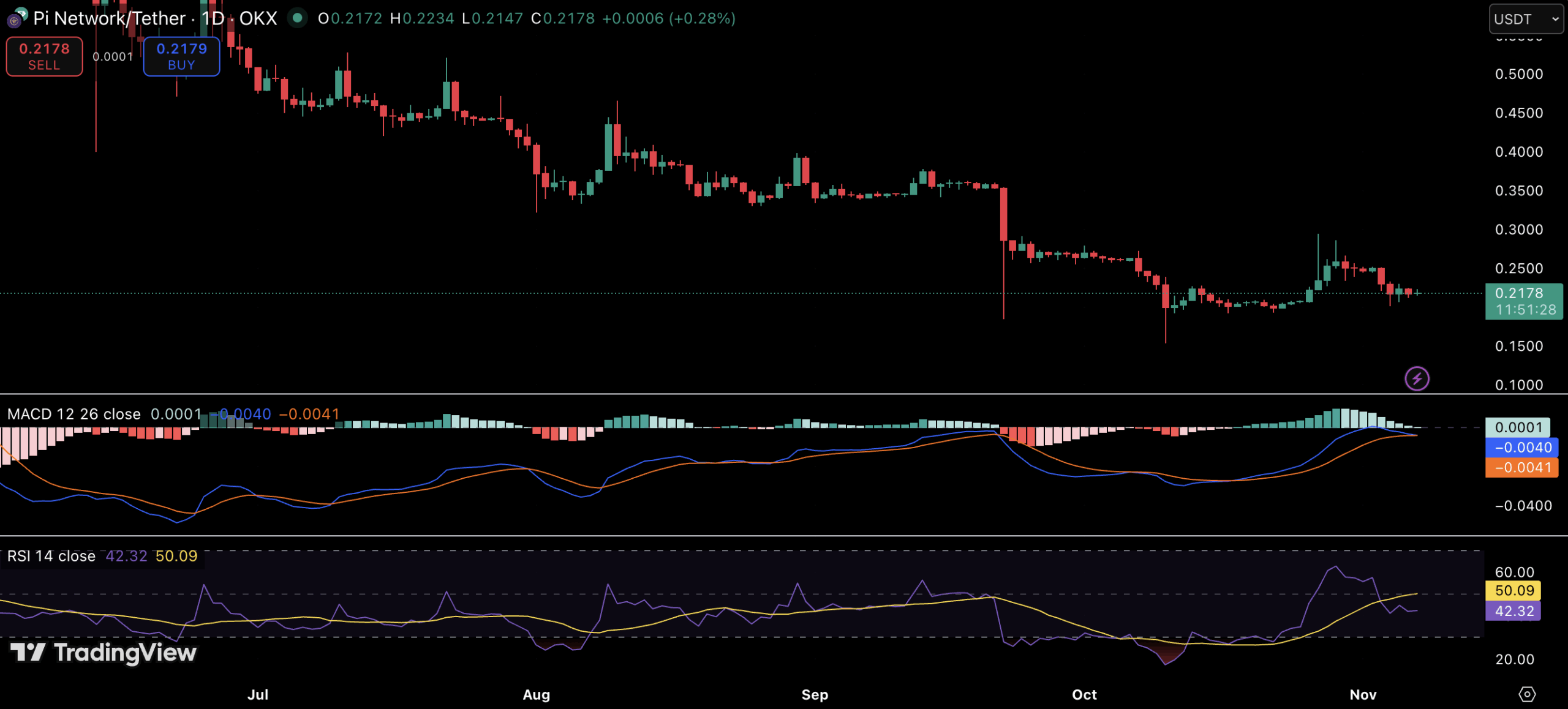
While the network’s recent upgrade aims to restore confidence and usability, traders appear cautious. The primary challenge for many in the Pi community is now less about technological progress and more about convincing developers and users alike that the project can sustain long-term growth beyond its experimental phases.