
200+ crypto news providers in one place.

CoinFeather
200+ crypto news providers in one place.
Quick market read from this story
Nvidia stock trades near $192 with consensus price targets at $250-$275 by year-end
Q4 FY26 data center revenue surged 120% YoY, with FY27 guidance exceeding $180B
Blackwell B200 chips are shipping at scale, with supply constrained through H2 2026
Risks include high valuation (45x forward P/E), competition from hyperscaler ASICs, and macro volatility.
Deep Dive
Nvidia's stock (NVDA) is facing recalibrated forecasts for 2026 following a volatile start to the year, influenced by energy shocks from the Iran war and market rotations. Currently trading around $192, down from February highs near $210, Nvidia's forward P/E ratio stands at 45x, despite strong demand for its Blackwell GPUs and previews of the Rubin platform.
Consensus price targets for Nvidia's stock by year-end range from $250 to $275, suggesting a potential 30-40% upside. Some analysts, like those at Cantor Fitzgerald, are more optimistic, projecting over $300 if AI capital expenditure cycles extend into 2027. However, market sentiment shows caution, with Polymarket traders assigning only a 37.5% probability for NVDA to trade above $200 in March, reflecting concerns about macroeconomic risks but also confidence in the $192 support level.
Bearish models, such as CoinCodex, project a year-end price of $217 (a 13% gain), while LongForecast anticipates $292, driven by sustained growth in data center demand.
Nvidia continues to demonstrate strong execution in the AI chip market. The company reported a 120% year-over-year increase in data center revenue for Q4 FY26, exceeding estimates. Nvidia's guidance for FY27 anticipates over $180 billion in revenue, as major hyperscalers like Microsoft and Meta significantly increase their AI infrastructure investments.
The Blackwell B200 chips are being shipped at scale, though CEO Jensen Huang has indicated that supply will remain constrained through the second half of 2026. Nvidia is also developing its next-generation Vera Rubin architecture, slated for release in 2027, which promises a fourfold performance increase, aiming to maintain its lead over competitors like AMD and custom silicon solutions.
Beyond AI, Nvidia is diversifying its business through energy storage and automotive sectors. Its Drive platform is integral to advanced driver-assistance systems (ADAS), and the company is experiencing international growth through sovereign AI initiatives in Japan and the UAE. Nvidia maintains gross margins above 75%, providing a buffer against potential pricing pressures.
Several risks could impact Nvidia's stock performance. The company's current valuation, with a forward P/E of 45x, places it at a premium compared to historical averages, making it susceptible to potential AI spending slowdowns or margin erosion if hyperscalers increasingly adopt their own custom ASICs. The conflict in Iran led to a spike in oil prices to $84, indirectly benefiting Nvidia through increased demand for defense and AI compute, but also raising inflation concerns that could delay interest rate cuts.
Furthermore, Q1 FY27 deliveries may face scrutiny due to ongoing export restrictions to China. Technical indicators show a neutral Relative Strength Index (RSI) at 48, with key support levels identified at $185 (the 200-day moving average) and resistance between $200–$210. Options market activity suggests a defensive posture, with elevated put-to-call ratios.
The outlook for Nvidia's stock remains largely bullish, with the consensus target of $250 considered conservative by some if the Rubin platform meets its performance goals and industry-wide AI capital expenditure reaches $1 trillion. More cautious analysts project a ceiling of $200–$220, citing cyclical risks.
Key upcoming catalysts for Nvidia include its Q1 earnings report, expected in late May, updates on Blackwell supply, and the tape-out progress of the Rubin architecture. For investors, dips to the $185 level are viewed as potential buying opportunities, reinforcing Nvidia's position as the primary beneficiary of the AI megatrend, holding approximately 90% of the AI GPU market share.
Source, catalyst, and sector overlap from the latest feed.
Coinbase stock (COIN) surged over 14% to $208.70 following positive statements from CEO Brian Armstrong and Donald Trump. Brian Armstrong stated crypto foundations are stronger than ever, citing increased institutional adoption and global bank integration. Donald Trump backed the crypto industry, urging banks to work with it and not block progress on stablecoins. Bitcoin rallied back towards $73,219, up 9%, as ETF flows turned positive and large investors re-entered the market.
Dogecoin price surged 8% to trade near $0.09857 resistance. A breakout above $0.100 is eyed as a confirmation of bullish momentum. Technical analysis suggests a potential bullish expansion pattern, similar to previous cycles. Key support at $0.096 is critical for maintaining upward momentum.
Bitcoin surged past $72,000, liquidating $350 million in short positions. Ethereum and Solana saw significant liquidations with $68M and $42M respectively. Macro factors including easing Iran tensions and oil pullback contributed to risk-on sentiment. Technical indicators suggest bullish momentum with potential for $75,000 Bitcoin.
SHIB exchange reserves have fallen to 80.9 trillion tokens, a decrease of over 1.6 trillion since mid-January. Whale activity includes a significant withdrawal of $394,000 worth of SHIB from CoinOne. Futures markets show short-sellers dominating with a long-to-short ratio of 0.91. SHIB price is trading at $0.00000558, needing to reclaim $0.000006 for a technical floor.
Tesla's robotaxi event and FSD v13 demo scheduled for late March/early April are key catalysts. Analysts are divided with price targets ranging from $25 to $600, consensus around $396-$450. Energy storage segment shows strong growth with 2026 guidance of 100+ GWh, potentially offsetting EV margin pressure. Q1 deliveries missed expectations at ~400K, impacting near-term sentiment.
Bitcoin is considered undervalued by Keyrock CEO Kevin de Patoul despite recent price declines. The market is misinterpreting macro conditions and structural progress in digital assets, according to de Patoul. 2026 is viewed as a transition year for digital assets, focusing on traditional finance moving onchain rather than a speculative boom. Institutional adoption and tokenization efforts are advancing, but utility and liquidity for tokenized assets are still under development.
Chainlink CCIP integrated with Monad, enabling Bitcoin-backed liquidity from Coinbase Wrapped BTC. Over $5 billion in cbBTC liquidity is now accessible to the Monad DeFi ecosystem. LINK price saw a 4.97% increase to $8.99, with analysts watching for potential price movements. Early adopters Curvance and Neverland are launching cbBTC markets on Monad.
Bitcoin faces quantum computing fears, drawing parallels to past climate concerns. Industry initiatives like Coinbase's quantum advisory board and Strategy's quantum security program aim to mitigate risks. Startups are developing post-quantum cryptography solutions for blockchains. Ethereum Foundation's roadmap includes post-quantum cryptography and privacy features by 2029.
Vitalik Buterin proposes new Ethereum scaling plan focusing on base layer improvements and advanced cryptography. OKX launches OnchainOS toolkit to support autonomous crypto trading agents. NEAR co-founder predicts AI agents will become primary users of blockchain technology. First block supporting Bitcoin's BIP-110 'clean-up' proposal is mined, signaling ongoing governance debate.
Sophisticated iOS exploit kit 'Coruna' identified by Google Threat Intelligence. Coruna targets iOS 13-17.2.1 with 23 vulnerabilities, used by spies and crypto scammers. Potential U.S. intelligence contractor origins suggested for the exploit kit. Users urged to update iOS devices as exploits are patched in newer versions.
Live Feed
Loading the broader stream in the same flow as the homepage feed.
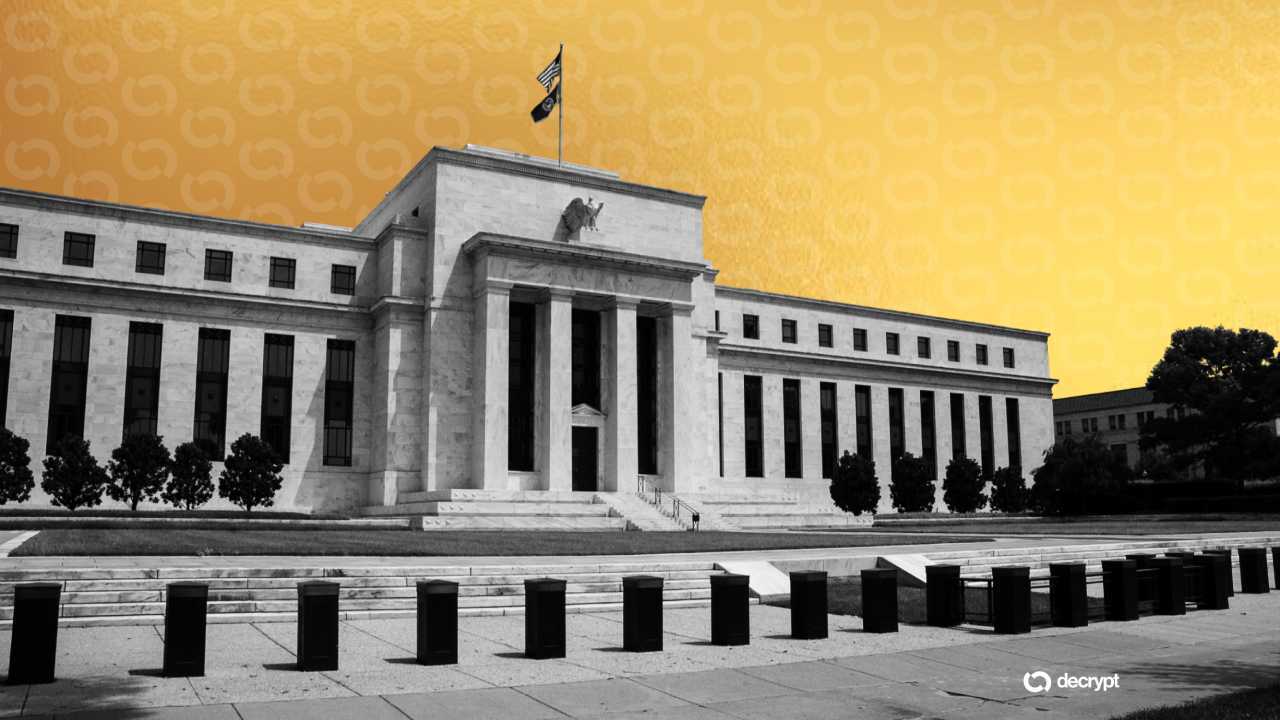
Kraken is the first crypto bank to receive a Federal Reserve master account. Major banking groups criticize the approval as risky and potentially violating Fed policies. The dispute highlights ongoing tensions between traditional banks and the crypto industry. The approval is seen as a step towards greater integration of crypto firms into the traditional financial system.

Coinbase CEO Brian Armstrong met with President Trump prior to Trump's public criticism of banks regarding a crypto bill. Trump stated banks are undermining the GENIUS Act and urged passage of market structure legislation. The GENIUS Act is stalled due to bank concerns over stablecoin interest rates impacting deposits and lending. Crypto stocks, including COIN, saw gains amid a broader crypto market surge.

Giving Block facilitated over $100 million in stablecoin donations in 2025. USDC, RLUSD, USDT, and DAI were among the top stablecoins used for donations. A US payment stablecoin bill in 2025 elevated stablecoins to 'cash-equivalent' status, boosting nonprofit confidence. US Senate considers market structure bill impacting stablecoin yield, with industry leaders divided.

Taiwan indicted 62 individuals for alleged links to Prince Group, a criminal organization. Approximately $339 million was allegedly laundered through Taiwan via shell companies and asset purchases. The U.S. DOJ previously indicted Prince Group's chairman for "pig butchering" scams and seized over 127,000 BTC. Scam compounds in Southeast Asia are a growing global threat, often relying on coerced labor.

Bitcoin price surged past $73,000, driving total crypto market cap to $2.47 trillion. Ethereum approached $2,130, with potential for a $500 upside move if breakout occurs. XRP also saw gains, nearing $1.44, alongside other large-cap altcoins. Geopolitical tensions led to an 873% surge in crypto outflows from Iranian exchanges.

Bitcoin price surged above $70,000 for the first time since early February. The rally occurred after Bitcoin entered the week oversold, heavily shorted, and underowned, indicating potential for a short squeeze. Spot Bitcoin ETFs saw over $1.6 billion in inflows over the last six trading days. US investor demand, indicated by a positive Coinbase Premium Index, is supporting the recovery.

Fairshake PAC has secured victories for multiple pro-crypto candidates in the 2026 U.S. congressional primaries. Jessica Steinmann, backed by over $750,000 from Fairshake, won the Republican primary for Texas' 8th District with nearly 70% of the vote. The PAC's efforts to unseat Texas Democrat Al Green are heading to a runoff, with Green trailing his opponent. Incumbent Representatives French Hill (R-AR) and Tim Moore (R-NC), both supported by Fairshake, also won their respective primaries.

Spot Bitcoin ETFs saw $1.7 billion in inflows since Feb. 24, reversing prior outflows. This shift suggests investors are becoming more comfortable with Bitcoin's price action. Inflows appear to be straightforward bullish bets rather than arbitrage strategies. BlackRock's IBIT has added $300 million year-to-date, indicating strong conviction from asset managers.

Arizona Senate Bill 1649 proposes creating a state-managed digital asset reserve funded by seized criminal assets. The bill specifically names Bitcoin, XRP, and DigiByte as eligible holdings for the reserve. The state treasurer could invest up to 10% of public funds in digital assets, with potential for lending to generate returns. Governor Katie Hobbs has previously vetoed similar legislation due to volatility concerns.

Bitcoin price surpassed $73,000 after weeks of consolidation. Traders are skeptical, warning of a potential bull trap due to overhead supply and derivatives positioning. Widespread bearish sentiment could paradoxically lead to a short squeeze. Macroeconomic uncertainty and geopolitical tensions add to the complex outlook.

Founders Fund fully exited its ETHZilla stake, previously 7.5%, by end of 2025. ETHZilla sold 24,291 ETH in December 2025 to meet debt obligations. Leveraged Ether treasury strategies face risks from volatility, smart contracts, and DeFi yields. Direct ETH exposure via ETFs or custody solutions offer cleaner alternatives to equity wrappers.
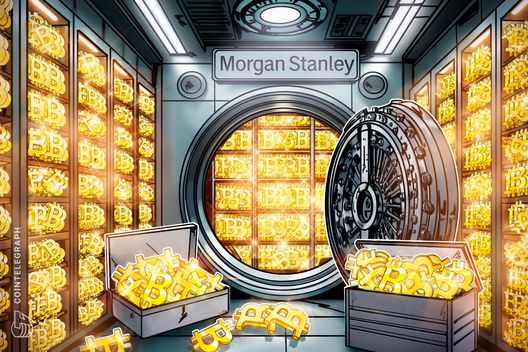
Morgan Stanley selects BNY Mellon and Coinbase as custodians for its Bitcoin Trust ETF. The ETF filing indicates a growing institutional adoption of crypto assets. Recent Bitcoin ETF flows have turned positive, with significant inflows recorded. Morgan Stanley's move establishes its presence in the crypto sector and potential for RWA trading.

AVAX price is testing resistance near $9.7 after breaking out of consolidation. A sustained move above $9.7-$10.3 could target $10.5. RSI shows mild bearish divergence, indicating potential momentum weakening. Immediate support is at $9.0, with a stronger demand zone at $8.2.
Signal context only. Validate with price action, liquidity, and risk limits before taking a position.
