


North Dakota Follows Wyoming in Stablecoin Issuance
North Dakota's move to introduce a stablecoin follows Wyoming's earlier adoption of state-backed digital currencies. Fiserv’s extensive payment network will underpin the "Roughrider Coin," designed primarily for interbank settlements and merchant transactions, indicating significant evolution in local monetary transactions.
The deployment marks a shift toward blockchain integration at the state level, aiming for rapid, cost-effective settlements. This advancement follows Wyoming's strategic efforts and reflects broader experimentation with tokens in the U.S. financial system. Governors and financial leaders from both states are championing the initiative.
“It is clear to me that digital assets are going to have a future. The United States has to address this issue. Washington’s being a little bit stodgy, which is why Wyoming, being a nimble and entrepreneurial state, can make a difference.” — Mark Gordon, Governor, Wyoming
State-Issued Stablecoins Gain Traction Amid Regulatory Considerations
Did you know? Wyoming was the first U.S. state to issue a stablecoin, pioneering a wave of state-backed tokens now including North Dakota's "Roughrider Coin." This development has stimulated more states to explore digital currency solutions.
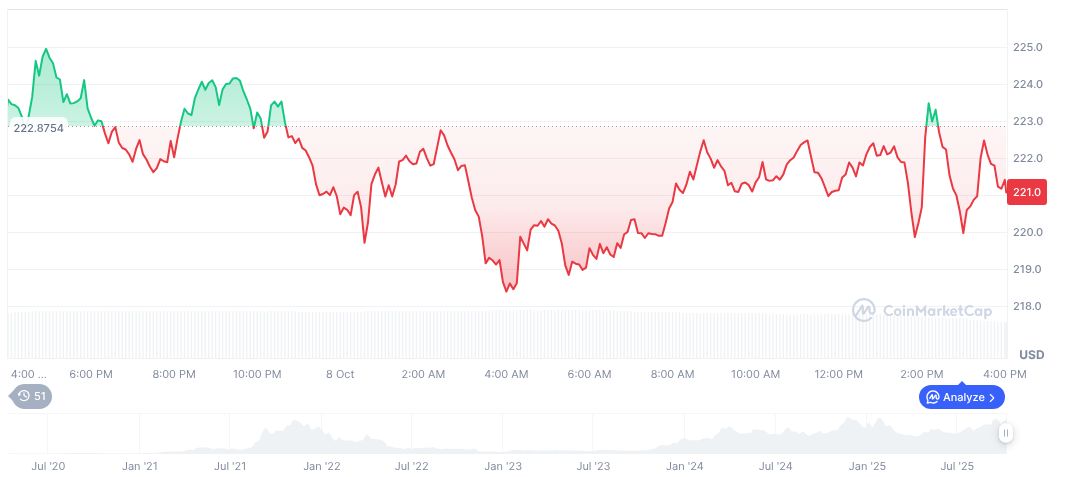
Solana (SOL) currently trades at $226.63, with a market cap of formatNumber(123786435044, 2) and a trading volume of formatNumber(7046162793, 2). The asset has shown a 37.54% gain over 90 days, as reported by CoinMarketCap on October 9, 2025, highlighting active interest in blockchain solutions.
Research from Coincu suggests that state-issued stablecoins could bolster financial technology adoption, promoting secure, efficient transaction methods. Continued regulatory oversight will likely enhance legitimacy, prompting other states to consider similar initiatives for digital infrastructure expansion.