


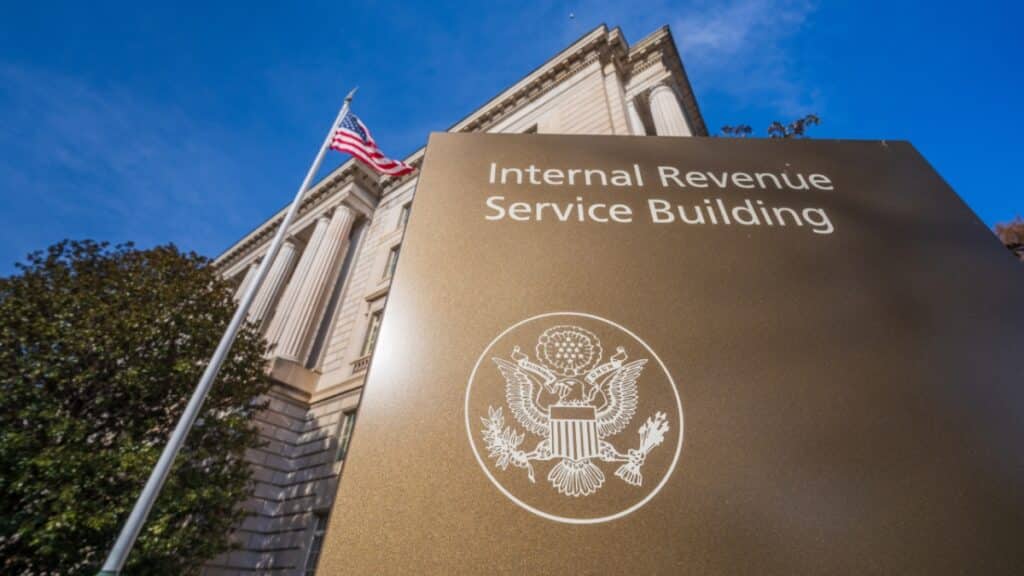
In a landmark move for the cryptocurrency industry, the U.S. Treasury Department and the Internal Revenue Service (IRS) have issued new guidance allowing cryptocurrency exchange-traded products (ETPs) and investment trusts to participate in staking without losing their tax advantages.
The guidance, published on November 10, 2025, as Revenue Procedure 2025-31, establishes a “safe harbor” framework that permits widely held fixed investment trusts to stake digital assets such as Ethereum and Solana while maintaining their status as investment or grantor trusts under existing tax regulations.
Previously, these products risked losing their favorable pass-through tax treatment if they engaged in staking, as it was seen as “varying the investment,” an activity inconsistent with the definition of a passive investment trust.
The new safe harbor resolves that uncertainty, providing clear rules for how staking can be conducted without triggering entity-level tax complications.
Staking Requirements and Tax Implications
Under the framework, trusts must meet a 14-part test. These requirements include that they hold only cash and a single type of digital asset, trade on a national securities exchange, and delegate staking through an approved custodian to a third-party staking provider on arm’s-length terms.
Trusts are also prohibited from actively managing staking rewards or making market-based decisions to improve returns.
Importantly, staking rewards will now be taxed as ordinary income to investors when received, rather than at the trust level. This preserves the current model used by spot crypto ETFs. Issuers must also disclose staking operations, validator performance, and potential penalties such as “slashing.”
Industry Impact and Future Outlook
Analysts estimate that Ethereum-based ETFs could yield 3–5% annually, while Solana products may return 5–7%, depending on network participation.
Treasury Secretary Scott Bessent called the guidance “a step forward for innovation that keeps America leading in blockchain technology.” The move is being hailed as a major milestone for institutional crypto adoption, bridging traditional finance and decentralized networks under a compliant, tax-recognized framework.