



On November 7th, the Nasdaq experienced a 2% decline, with notable drops in Tesla, Intel, and NVIDIA. This coincided with Bitcoin falling below $101,000, leading to significant market liquidations and increased trading activity. This market shift underscores the interconnectedness of stocks and cryptocurrencies, influencing investor sentiment and contributing to heightened volatility.
Nasdaq and Bitcoin Decline as Long-Term Holders Sell Off
Large-scale sell-offs were a prominent feature, with long-term Bitcoin holders offloading approximately 405,000 BTC, a value exceeding $42 billion. This occurred as the Nasdaq's decline mirrored similar trends observed in cryptocurrency markets. Major technology companies experienced stock price reductions: Tesla saw a 5.78% drop, Intel declined by 3.95%, and Nvidia fell by 3.43%, aligning with the broader cryptocurrency slide.
The cryptocurrency markets faced considerable volatility. Bitcoin's descent below $101,000 marked its lowest point in six months and represented a failure to hold multiple support levels. Similarly, Ethereum and other stablecoins reacted to an intensification of selling pressure, which was partly attributed to institutional investors and large whale traders liquidating their positions.
Raoul Pal, CEO of Real Vision, commented, "The recent struggles in both the Nasdaq and crypto sectors are a reminder of the ongoing volatility that impacts digital assets critically."
Historical Impact of Major Bitcoin Sell-offs
The recent sell-offs by long-term Bitcoin holders, who collectively divested nearly 2% of the total supply, bear resemblance to historical events. These past instances, where similar actions by long-term holders preceded substantial price corrections in the crypto market, offer a point of comparison for current trends.
Bitcoin (BTC) has entered a turbulent phase, with its price declining to $101,178.94 following significant market sell-offs. The cryptocurrency's market capitalization is currently around $2 trillion, exhibiting noticeable fluctuations over recent months, including a 17.10% decrease in the last 30 days. Notably, trading volume has decreased by over 22%, indicating a reduction in overall market activity, according to data from CoinMarketCap.
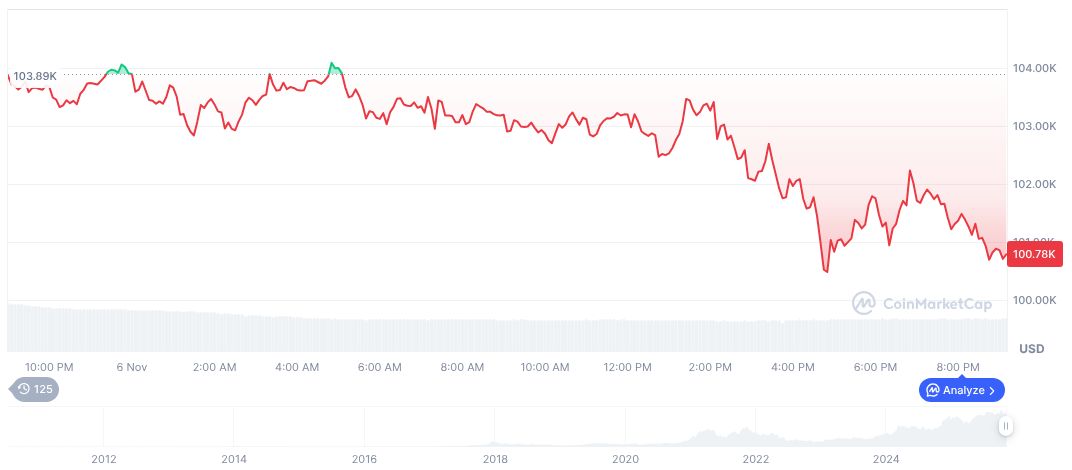
Insights suggest that potential regulatory considerations and liquidity concerns may emerge, influenced by prolonged periods of market instability and extensive asset liquidations. Historical patterns indicate a need for caution as cryptocurrencies navigate these market adjustments.