


Strategy's Continued Commitment to Bitcoin
On January 18, Strategy Executive Chairman Michael Saylor released information regarding Bitcoin tracking, which is typically a precursor to additional Bitcoin acquisitions disclosed the following day. This pattern signals potential shifts in Strategy's Bitcoin holdings, influencing its financial strategies and possibly impacting Bitcoin market dynamics.
Michael Saylor's recent disclosure on January 18 is anticipated to precede Strategy's usual pattern of confirming a new Bitcoin purchase. Historically, Strategy announces purchases via Form 8-K filings the following day after Saylor's official X post. This pattern has remained consistent from 2020, contributing to Strategy's accumulation of a significant Bitcoin reserve.
This announcement suggests Strategy's continued commitment to Bitcoin, despite market volatility. The company's strategy has sparked discussions around corporate treasury management innovations and its potential long-term effects on shareholder value. Reflecting on the strategy, Michael Saylor stated, "my problem with the premise is, you somehow think that it’s okay for 400 million companies to not buy BTC, and you like that? And you’re going to criticize the 200 companies that bought BTC?"
Bitcoin's Price Dynamics and Corporate Influence
Michael Saylor's Bitcoin acquisition announcements frequently prompt immediate market reactions, highlighting the influential role of corporate decisions on cryptocurrency market dynamics.
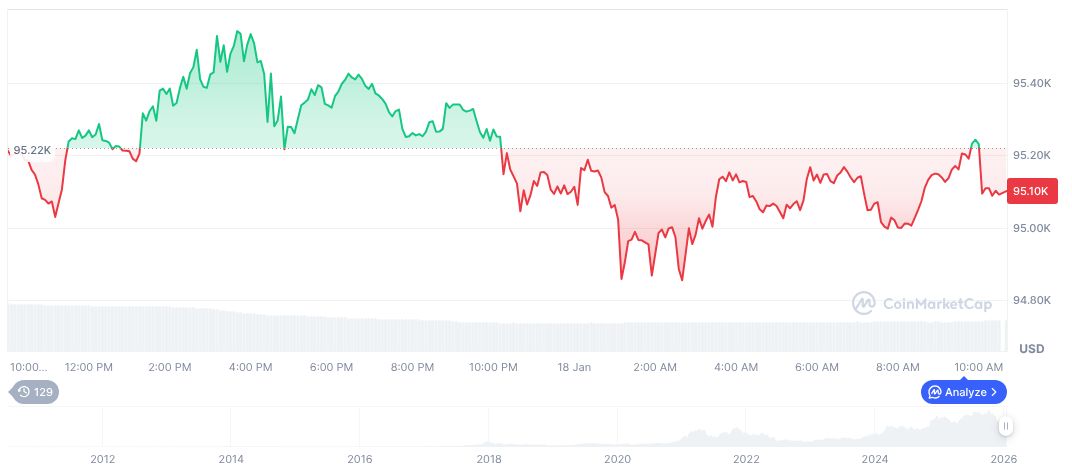
As of January 18, 2026, Bitcoin's price stands at $95,037.86, with a market cap of approximately $1.90 trillion and a market dominance of 58.94%. Over the past 60 days, Bitcoin's price noted a 3.83% increase, reflecting periodic fluctuations. The 24-hour trading volume saw a decrease, underscoring typical market volatility. Data aligns with recent disclosure timing. For further insights into Bitcoin's future in the market, consider Michael Saylor's tweets.
Coincu's research team suggests Strategy's approach reinforces Bitcoin's acceptance as a corporate reserve asset. This continuous pattern might encourage more corporate entities to explore cryptocurrency investments, potentially driving regulatory bodies to reevaluate oversight frameworks in response to increased corporate involvement.