


The Vision for Bitcoin-Backed Banking
Michael Saylor, founder of MicroStrategy, has put forth a compelling vision for the future of global finance at the Bitcoin MENA event in Abu Dhabi. He advocates for the creation of Bitcoin-backed digital banking systems, designed to attract significant capital inflows by offering high-yield, low-volatility accounts. This strategic initiative aims to leverage Bitcoin reserves to fundamentally alter global financial structures and attract an estimated $50 trillion in deposits.
Saylor's proposal centers on utilizing overcollateralized Bitcoin reserves and tokenized credit to build these new banking systems. The goal is to attract trillions of dollars in capital through regulated banking channels, presenting a substantial financial shift with enticing returns for global depositors. The envisioned banking structure includes a composition of 80% digital credit, 20% fiat currency, and a 10% reserve margin, a framework designed to promote stability and potentially reshape global interest rate dynamics.
Bitcoin isn’t just ‘digital gold’ — it’s digital capital, and the foundation for a new age of digital currency, digital finance, and digital credit.
Michael Saylor, Executive Chairman, MicroStrategy, made this statement in reference to the potential of Bitcoin, as highlighted during Binance Blockchain Week.
Strategic Financial Implications of Bitcoin
Bitcoin, created in 2009 as a decentralized alternative to traditional banking in response to the financial crisis, plays a pivotal role in the cryptocurrency market. As of recent data, Bitcoin (BTC) holds a market price of $90,761.29, with a substantial market cap of $1.81 trillion. Its market dominance stands at 58.67%, underscoring its significant influence within the broader cryptocurrency landscape. Despite its prominence, Bitcoin has experienced a price decline of 25.33% over the past 60 days, illustrating its inherent market volatility.
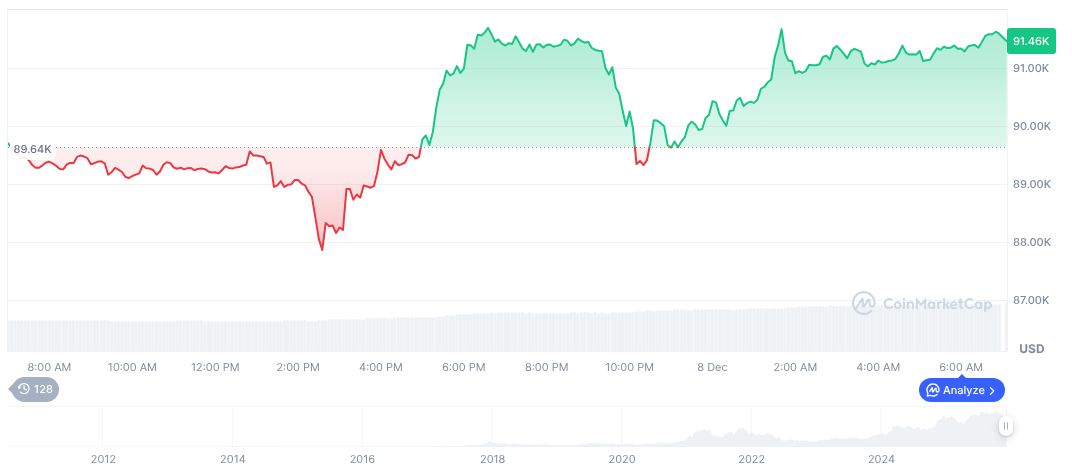
Researchers suggest that Saylor's proposal could lead to accelerated adoption of Bitcoin within mainstream financial systems. This potential shift could necessitate transformations in regulatory frameworks and spur significant innovation within the digital finance sector. The increasing demand for high-yield, Bitcoin-backed financial products may also exert pressure on traditional financial institutions and regulatory bodies to adapt more rapidly to these evolving market dynamics.