


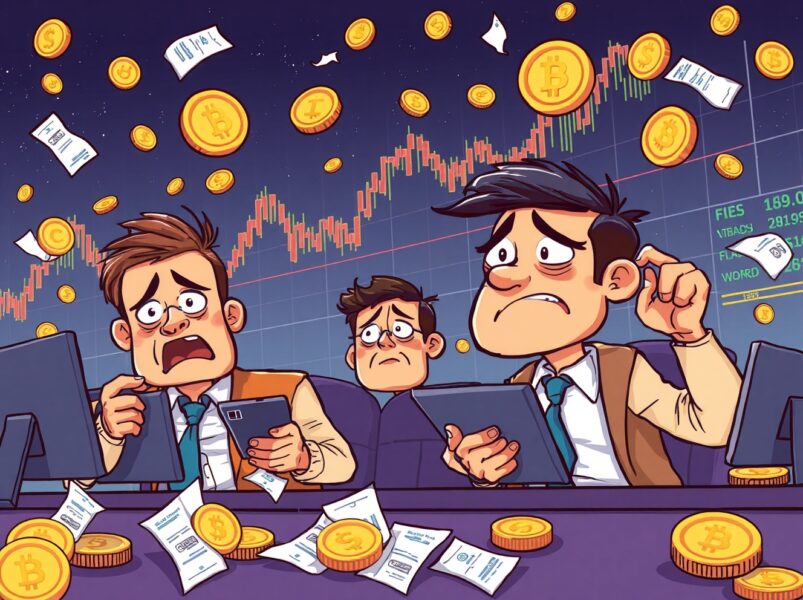
The cryptocurrency market recently experienced a significant event, with major exchanges processing a substantial amount of crypto futures liquidation. In just one hour, $106 million in futures were liquidated, contributing to a larger total of $1,206 million liquidated over the preceding 24 hours. These extensive liquidations indicate notable shifts in market sentiment and can have considerable consequences for traders. Understanding the process of crypto futures liquidation and the factors that contribute to these dramatic market movements is crucial for navigating the crypto landscape.
What is Crypto Futures Liquidation?
Crypto futures liquidation refers to the forced closure of a trader's leveraged position by an exchange. Futures contracts are agreements to buy or sell a digital asset at a specified price on a future date. In cryptocurrency trading, these contracts often involve leverage, which allows traders to control larger positions with a smaller amount of capital, known as margin.
- •Leverage: This financial tool magnifies both potential profits and losses.
- •Margin: This is the collateral deposited by a trader to open and maintain a leveraged position.
- •Liquidation: If the market price moves unfavorably against a leveraged position, and the trader's margin falls below the exchange's maintenance margin threshold, the exchange automatically closes the position to prevent further losses. This compulsory closure is known as liquidation.
These events can occur rapidly and severely impact traders, particularly in volatile markets. A foundational understanding of this mechanism is essential for engaging in crypto trading.
Why Do Massive Crypto Futures Liquidations Occur?
The occurrence of large-scale crypto futures liquidations is typically driven by a confluence of factors:
- •Sudden Price Swings: The inherent volatility of cryptocurrencies means that rapid price increases or decreases can quickly move leveraged positions into a deficit, triggering margin calls and subsequent liquidations.
- •Excessive Leverage: Traders who employ high leverage to amplify potential gains also expose themselves to a greater risk of liquidation, as even minor price movements can deplete their margin.
- •Market Contagion: A significant initial liquidation can initiate a chain reaction. The selling pressure from these forced closures can drive prices lower, triggering additional liquidations and creating a cascading effect.
- •Stop-Loss Hunting: In certain market conditions, sophisticated traders may aim to drive prices to specific levels to trigger a wave of stop-loss orders and liquidations, thereby profiting from the subsequent price action.
These liquidation events underscore the significant risks associated with leveraged trading and the unpredictable nature of digital asset markets.
Immediate Impact of Such Liquidations
When a substantial wave of crypto futures liquidations occurs, its effects ripple throughout the entire market, leading to several immediate consequences:
- •Increased Volatility: The forced selling activity resulting from liquidated positions can intensify price movements, leading to more pronounced market swings.
- •Shift in Trader Sentiment: Such events often induce fear and panic among traders, which can lead to further selling as individuals attempt to reduce their exposure and de-risk their portfolios.
- •Potential for Price Floors: While initially bearish, extensive liquidations can sometimes serve as a market cleansing mechanism, eliminating over-leveraged positions. Once this process is complete, it may establish a more stable price floor in the short term.
Periods of high liquidation activity can be both concerning and, for some traders employing appropriate strategies, present opportunities. However, exercising caution is always recommended.
Navigating the Storm: Actionable Insights for Traders
Witnessing or experiencing a crypto futures liquidation event can be disquieting. However, by implementing sound strategies, traders can enhance their protection and potentially identify opportunities. Here are several actionable insights:
- •Practice Prudent Risk Management: It is essential to never invest more capital than one can afford to lose. Traders should clearly define their risk tolerance and adhere to it strictly.
- •Avoid Excessive Leverage: While the allure of high leverage is strong, it significantly increases the risk of liquidation. It is advisable to use lower leverage, particularly during periods of heightened market volatility.
- •Implement Stop-Loss Orders: Stop-loss orders are vital tools for limiting potential losses. A strategically placed stop-loss order can prevent a minor loss from escalating into a liquidation event.
- •Stay Informed and Educated: A thorough understanding of market dynamics, technical analysis, and the fundamental principles of the assets being traded is the most effective defense against market risks.
- •Diversify Your Portfolio: Spreading investments across various assets can help mitigate the risks associated with the volatility of any single asset.
By adopting these practices, traders can build greater resilience against the inherent unpredictability of the crypto market and the risks associated with sudden liquidations.
The recent $106 million crypto futures liquidation serves as a potent reminder of the inherent volatility and risks present within the cryptocurrency market. While such events can be alarming, they are also a natural part of the market's cleansing process, eliminating over-leveraged positions. For traders, the paramount takeaway is the critical importance of prioritizing risk management, understanding the mechanics of leverage and liquidation, and committing to continuous education. By adhering to these principles, individuals can better navigate these turbulent market conditions and potentially emerge with stronger trading strategies.
Frequently Asked Questions (FAQs)
What causes a crypto futures liquidation?
A crypto futures liquidation is triggered when a trader's leveraged position depreciates significantly, causing their deposited margin (collateral) to fall below the exchange's required maintenance margin level. This typically occurs due to rapid price movements that are contrary to the trader's position, especially when high leverage is employed.
Is a liquidation bad for the overall crypto market?
While large-scale liquidations can precipitate immediate price declines and heightened volatility, they can also be viewed as a market reset. By clearing out excessive leverage, these events may contribute to a more stable and healthier market in the long term, as they remove positions that are highly susceptible to minor price fluctuations.
How can I avoid getting liquidated in crypto futures trading?
To prevent liquidation, traders must implement robust risk management practices. This includes utilizing conservative leverage, setting effective stop-loss orders, avoiding over-positioning, and ensuring sufficient margin is maintained in the trading account to absorb market fluctuations.
What is ‘leverage’ in the context of crypto futures?
Leverage enables traders to control positions that are larger than their initial capital. For instance, 10x leverage allows a trader to control $1,000 worth of cryptocurrency with only $100 of their own funds. While leverage can amplify profits, it equally magnifies losses, thereby increasing the risk of liquidation.
Do all crypto exchanges handle liquidations the same way?
Although the fundamental concept of liquidation is consistent across different exchanges, the specific methodologies, margin requirements, and liquidation engine protocols can vary. It is crucial for traders to familiarize themselves with the distinct policies of the exchange they are using for futures trading.