



Key Developments in Institutional Bitcoin Integration
Michael Saylor, the founder of MicroStrategy, has revealed that major U.S. banks are significantly accelerating their adoption of Bitcoin for custody and lending services. Currently, eight of the top ten banks are actively integrating Bitcoin into their offerings. This rapid institutional involvement is expected to reposition Bitcoin as a key financial asset, driving a new era of institutional demand and potentially transforming its market value by 2026.
U.S. Banks Integrate Bitcoin as Asset Evolution Accelerates
Michael Saylor, founder of MicroStrategy, anticipates that major banks' accelerating Bitcoin adoption will redefine the asset's role in global finance. Eight leading U.S. banks are engaged in Bitcoin custody and lending services, increasing the cryptocurrency's institutional integration. This evolution signifies a redirection from Bitcoin as a mere speculative asset to a pivotal financial instrument.
Saylor predicts a significant structural demand increase led by the banking sector, highlighting Bitcoin's transition to a global financial asset. Additionally, leaders like Saylor stress this initiative aligns with regulatory acknowledgement, hinting at broader economic effects. Banks such as Charles Schwab and Citigroup plan to roll out Bitcoin services by 2026, as confirmed by their official remarks.
"This institutional integration, especially banks extending credit against Bitcoin as collateral, will drive a new structural demand era for Bitcoin starting in 2026."
Bitcoin Price, Market Dominance, and Institutional Influence
The current rapid institutional adoption of Bitcoin is juxtaposed with the corporate wave begun by MicroStrategy in 2020, marking a transition from halving-cycle-driven price changes to sustained, credit-based demand.
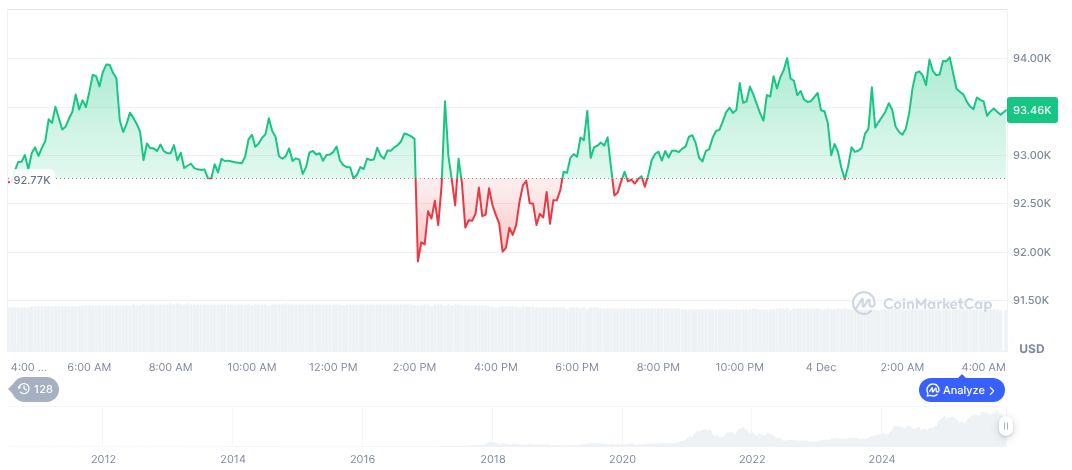
Bitcoin (BTC) is trading at $93,181.16 with a market cap of 1.86 trillion, reflecting a 58.66% dominance in the crypto market. The last update showed a 0.31% rise in 24 hours, with the 30-day period seeing a 10.57% decline.
Experts suggest that stronger integration of Bitcoin within institutional frameworks could lead to wider financial adoption and influence future regulatory stances. Historical trends and current market dynamics underscore this as a pivotal moment for Bitcoin's wider acceptance across traditional financial institutions.