
Navigating Crypto News

CoinFeather
Navigating Crypto News

Quick market read from this story
Lido DAO's proposed $20M LDO buyback signals a strategic response to significant token price underperformance relative to ETH, aiming to establish a near-term price floor amidst declining protocol revenue.
The launch of Lido Earn (EarnETH and EarnUSD) represents a strategic pivot towards a multi-product organization, diversifying revenue streams beyond liquid staking and potentially attracting new user segments.
While regulatory clarity on Ethereum staking is a tailwind, Lido faces increased institutional competition from products like BlackRock's staked ETH ETF, necessitating continued innovation and market share defense.
The LDO token's sustained downtrend and consolidation near historic lows suggest that while the buyback may offer temporary support, a significant upside catalyst is needed to break the current bearish structure.
Deep Dive
The Lido DAO is currently holding a governance vote that could see 10,000 stETH, valued at approximately $20 to $21 million, used for a one-off buyback of its native LDO token. This move is proposed as a response to a significant price dislocation between LDO and Ethereum, with LDO trading near its all-time lows.
The proposal, submitted on March 27, 2026, aims to address the LDO/ETH ratio, which stands at 0.00016, 63% below its two-year median and 96% down from its peak. If approved, the Lido Growth Committee would execute the buyback in tranches of 1,000 stETH, targeting around 70 million LDO tokens, or approximately 8.5% of the circulating supply. Purchased tokens would return to the treasury and not be eligible for governance.
This initiative comes as Lido's revenue fell 23% year-over-year in 2025, reaching $40.5 million. Despite maintaining a 23.2% market share in Ethereum liquid staking, the protocol faces competition from exchange-based staking, spot ETH ETFs, and restaking platforms. A separate plan for an automated annual $10 million buyback is also slated for Q2 2026, contingent on annual revenue exceeding $40 million.
In March 2026, Lido launched two new products under a MetaVault framework: EarnETH and EarnUSD. EarnETH is a growth-oriented vault deploying ETH and stETH across blue-chip DeFi protocols, currently holding about 61,000 ETH with an estimated 5% annual yield. EarnUSD represents Lido's entry into stablecoin yield, deploying USDC and USDT across lending markets and real-world asset protocols. Mellow Protocol curates strategies for these vaults, with $5 million from the treasury allocated as a first-loss layer to absorb initial losses.
The DAO's 2026 budget, GOOSE-3, allocates $60 million: $43.8 million for core maintenance and $16.2 million for discretionary growth spending. This growth allocation is earmarked for liquidity incentives for stETH and Lido Earn, institutional development for stETH-based ETFs, and further expansion of the Earn product line. Lido is signaling a strategic pivot from a single-product protocol to a multi-product organization.
The broader Ethereum staking environment has seen significant developments. On March 17, 2026, a joint SEC and CFTC ruling classified Ethereum as a digital commodity and staking as an "administrative activity." This regulatory clarity paved the way for BlackRock to launch its iShares Ethereum Trust with staking functionality. Additionally, the Ethereum Foundation disclosed staking an additional $46 million of its ETH treasury. Consequently, a record 30.9% of total ETH supply, over 38.1 million ETH, is now staked. While this regulatory clarity benefits Lido, it also intensifies institutional competition.
LDO is trading around $0.32, showing a modest daily increase. The Relative Strength Index (RSI) is at 56.6, and the Moving Average Convergence Divergence (MACD) indicates some short-term momentum. However, LDO has been in a sustained downtrend since September 2025, consolidating between $0.28 and $0.35 since late January 2026. A sustained move above $0.35 would signal a significant upside development.
Source, catalyst, and sector overlap from the latest feed.
Ethereum is consolidating at a critical multi-year trendline, with historically low realized volatility suggesting a significant price move is imminent. The ETH/BTC ratio is testing a key threshold, indicating potential altcoin outperformance if momentum continues, which could signal broader market participation. While multiple technical indicators align, the lack of confirmed breakouts means the current support level could either lead to a strong recovery or a decisive breakdown.
Midnight Network has officially launched, introducing a privacy-focused blockchain designed to bridge traditional finance with digital assets, potentially attracting institutional capital seeking enhanced data security. Monument Bank's plan to tokenize £250 million in retail deposits on Midnight represents a significant real-world adoption case for a regulated U.K. bank on a public blockchain, testing the network's institutional thesis. Despite the launch and institutional backing from entities like Google Cloud and MoneyGram, the NIGHT token's price has fallen over 90% from its peak, indicating market skepticism or a disconnect between development progress and token valuation. The dual-token model (NIGHT and DUST) aims to stabilize transaction costs and support long-term sustainability through a buy-back mechanism, a key innovation for enterprise adoption compared to volatile gas fees.
XRP's on-chain data presents a dichotomy: institutional ETF inflows suggest accumulation, while collapsing DEX liquidity and high short interest in derivatives indicate bearish sentiment, creating a contested market scenario. The significant drop in AMM and DEX liquidity, coupled with increased whale-to-exchange transactions, suggests a weakening structural support for XRP's price, despite positive ETF flows. The current market structure, with institutional buying via ETFs and aggressive short positioning, sets the stage for a potential short squeeze, but the risk of a 'fake breakout' remains if spot demand doesn't overcome derivative pressure. Traders should monitor XRP's funding rates closely, as a sustained rise in price with deeply negative funding could signal genuine spot demand overcoming short positions, while continued negative funding during a price rise may indicate a squeeze that will be sold into.
The UAE's proactive regulatory approach to stablecoins, exemplified by the registration of USDU, positions it ahead of Western jurisdictions in establishing clear frameworks for digital assets. USDU's launch on Crypto.com, backed by UAE Central Bank registration and dual oversight, signifies a significant step for institutional adoption of regulated stablecoins in the region. The UAE's regulatory clarity on stablecoins, including restrictions to institutional use and specific compliance laws, may attract further digital asset innovation and capital, potentially influencing global regulatory trends.
The Ethereum Foundation's record $46 million ETH stake signifies a strategic shift towards yield generation, indicating sustained conviction in ETH's long-term value and potentially reducing circulating supply. Vitalik Buterin's continued 99% ETH concentration, despite a recent sale, reinforces the narrative of long-term holding and development funding, suggesting his personal financial exposure remains a strong proxy for ETH's market performance. The increasing scale of institutional staking, exemplified by the Ethereum Foundation and entities like MAVAN, points to a maturing market where ETH is increasingly viewed as a yield-generating asset, structurally supporting its price by locking up supply. While technical indicators show a cautious recovery, the fundamental signals from major holders like the Foundation and Buterin suggest a positive underlying sentiment, though traders should monitor for confirmation of a sustained trend reversal.
Microsoft's integration of GPT and Claude in Copilot Researcher, via 'Critique' and 'Council' modes, demonstrates a significant advancement in AI research capabilities by leveraging multi-model collaboration to improve accuracy and reduce hallucinations. The development highlights a shift from single-model dominance to multi-model orchestration, suggesting that the value in AI may increasingly lie in how different models are combined and managed, rather than the performance of any single model. By outperforming existing AI research tools on the DRACO benchmark, Microsoft's approach signals a potential new standard for AI-driven research and analysis, impacting the competitive landscape among major AI developers.
The Ethereum Foundation's significant ETH staking move signals a strategic shift towards active treasury management and yield generation, potentially influencing other large holders. This substantial staking operation, valued at $46.2 million, enhances the security of the Ethereum proof-of-stake network and demonstrates long-term commitment. By moving from passive holding to active staking, the Foundation aligns its incentives with network security and long-term viability, reducing immediate selling pressure.
Square's rollout of Bitcoin POS payments, settling in USD by default, lowers adoption barriers for merchants by mitigating volatility and custody risks. This development signals a practical step towards Bitcoin's utility as everyday money, potentially increasing transaction volume and demand for BTC. The integration by a major payment processor like Square could encourage broader adoption of crypto payments by traditional businesses. While the immediate impact on BTC price may be limited, the long-term implications for Bitcoin's use case as a payment rail are significant.
Square's integration of Bitcoin Lightning Network for millions of US small businesses represents a significant step towards mainstream adoption, potentially increasing BTC transaction volume and utility. The default settlement to USD for merchants, coupled with waived processing fees until 2026, lowers the barrier to entry for businesses and signals a pragmatic approach to integrating crypto payments. This large-scale rollout leverages Layer 2 technology, highlighting the scalability and speed improvements of the Lightning Network over the base Bitcoin blockchain for everyday transactions. The development could be interpreted as a 'TCP/IP moment' for financial infrastructure, suggesting a foundational shift in how digital payments are processed and adopted globally.
The Ethereum Foundation's increased ETH staking, now totaling $50 million, signals a strategic shift towards enhancing financial sustainability through DeFi yield generation. This proactive treasury management by the Ethereum Foundation, aiming to stake up to 70,000 ETH, could set a precedent for other large holders and potentially increase demand for staking services. The Foundation's involvement in staking aligns with broader ecosystem developments like the Ethereum Economic Zone, suggesting a coordinated effort to bolster Ethereum's infrastructure and financial health.
Mitsubishi's adoption of JPMorgan's Kinexys blockchain for corporate payments signals growing institutional trust in blockchain-based financial infrastructure, potentially driving further adoption in traditional finance. The expansion of Kinexys beyond payments into tokenization of assets like private credit and real estate, coupled with other major institutions like BlackRock and Franklin Templeton exploring tokenization, indicates a significant shift towards RWA and tokenized assets. JPMorgan's continued investment in blockchain infrastructure, despite CEO Jamie Dimon's past skepticism, highlights a strategic pivot towards leveraging distributed ledger technology for core financial services and future market opportunities.
Bernstein maintains 'Outperform' ratings on Coinbase, Robinhood, and Figure despite lowered price targets, signaling a belief in their long-term growth potential in areas like tokenized assets and prediction markets. The analysis suggests a potential bottom for crypto stocks, with current prices ~60% off their peaks, presenting a 'buy the dip' opportunity for investors anticipating a crypto market recovery. Despite weak Q1 earnings and reduced EPS estimates for Coinbase, its stablecoin revenue and derivatives business expansion, alongside Robinhood's prediction market growth and Figure's tokenization efforts, are highlighted as key resilience factors. The report indicates a strategic shift in analyst focus towards diversified revenue streams beyond direct crypto trading, emphasizing the growth prospects in tokenized real-world assets and prediction markets for these companies.
The CLARITY Act, if passed, is positioned not to directly benefit Ripple but to remove regulatory uncertainty for all financial institutions, potentially unlocking broader adoption of digital assets by global banks. Brad Garlinghouse's commentary suggests that the primary impact of the CLARITY Act is enabling traditional finance to engage with crypto, rather than altering Ripple's existing legal standing post-SEC lawsuit. Ripple's prime brokerage revenue tripling indicates growing institutional confidence and demand for digital asset services, independent of the CLARITY Act's passage, highlighting current business momentum. The article highlights XRP Ledger's expanding use cases beyond payments, including real-world asset tokenization, suggesting a diversification of utility that could support its long-term value proposition.
Live Feed
Loading the broader stream in the same flow as the homepage feed.

U.S. lawmakers are urging federal regulators to issue guidance clarifying that insider trading laws apply to prediction markets, potentially impacting platforms like Polymarket and Kalshi. The request stems from concerns over potential insider trading on prediction markets related to government and military actions, suggesting a heightened regulatory scrutiny on these platforms. This development highlights the increasing overlap between traditional financial regulations and emerging digital asset markets, particularly concerning derivatives and information asymmetry.
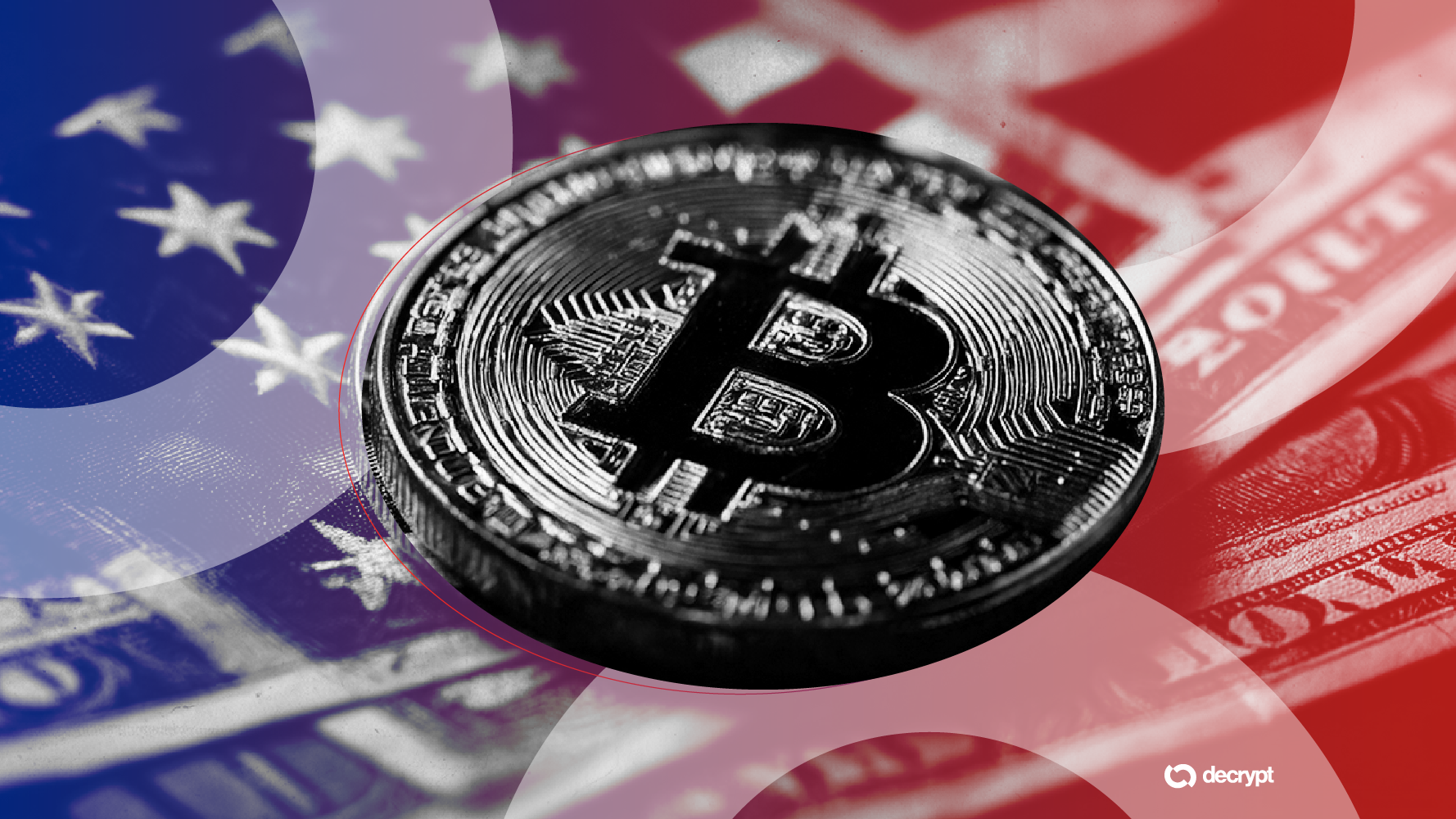
The introduction of the 'Mined in America' Act signals a potential shift towards greater U.S. government support for domestic Bitcoin mining operations, aiming to reduce reliance on foreign-manufactured hardware. This legislation could incentivize U.S. manufacturers to develop crypto mining equipment domestically, potentially impacting supply chains and the cost of mining hardware. The bill's inclusion of a voluntary certification program and potential access to federal programs suggests a move to integrate Bitcoin mining more formally into the U.S. economy, with implications for job creation and energy policy. By seeking to enshrine a 'Strategic Bitcoin Reserve' into law, the act reflects a growing political interest in Bitcoin as a strategic asset, though specific funding mechanisms remain undefined.

The NFL's request to prediction markets, supported by the CFTC's deference, signals increased regulatory scrutiny on event contracts that could be susceptible to manipulation. This development indicates a potential shift in how prediction markets operate, particularly concerning event contracts tied to real-world, non-financial outcomes. Traders should monitor how prediction market platforms adapt to these regulatory pressures, as it could impact the availability and nature of future event contracts.

The convergence of institutional finance, AI agents, and blockchain infrastructure at Consensus Miami signals a maturing market where traditional players are actively integrating digital assets, suggesting a potential for increased capital flow and adoption. The explicit mention of regulatory clarity from the SEC and potential frameworks in Washington indicates a shift towards a more defined legal landscape, which could reduce uncertainty and encourage further institutional participation. The focus on 'agentic commerce' and AI agents executing trades highlights a significant technological evolution, positioning blockchain not just as a speculative asset class but as foundational infrastructure for future automated economies. Despite current market lows, the author's strong conviction in Consensus as a 'genuine inflection point' driven by tangible integrations like Mastercard's acquisition of BVNK suggests underlying strength and development that may precede a market upswing.
Despite a recent 4.7% surge and a golden cross formation on the hourly chart, Shiba Inu has pulled back 2.18%, indicating that short-term selling pressure has returned and the bullish technical signal may be unreliable. Significant exchange outflows of over 30 billion SHIB tokens suggest underlying accumulation and demand, implying that long-term holders may be viewing the current price weakness as a buying opportunity. The formation of a golden cross, while typically bullish, carries a higher risk of false signals on shorter timeframes, especially given SHIB's history of rapid reversals after similar patterns.
The launch of the Blockchain Leadership Fund, backed by major players like Chainlink Labs and Anchorage Digital, signifies increased institutional engagement in shaping crypto policy through political action. As a hybrid PAC, the BLF's ability to make direct contributions and independent expenditures provides a flexible tool for influencing both candidates and public perception ahead of the 2026 midterms. The entry of BLF into the crypto lobbying space, alongside the well-funded Fairshake PAC, intensifies competition for influence and suggests a growing strategic investment in the political landscape by the digital asset industry. The focus on policy development and the explicit mention of influencing rules of the road indicate a proactive approach by industry leaders to secure favorable regulatory environments for digital assets.

A significant $53 million Bitcoin short position opened on Hyperliquid suggests a bearish sentiment among large traders, potentially signaling downside risk. Geopolitical tensions and upcoming US economic data are creating a risk-averse environment, influencing trader behavior and potentially impacting Bitcoin's price action. The whale's diversified macro bets, including shorts on silver and longs on oil, indicate a broader market strategy that could influence correlated asset movements.
Solana's price action near $80 suggests potential accumulation after a liquidity sweep, indicating seller exhaustion and a possible shift in momentum towards reclaiming higher resistance levels. Analysts highlight the $84-$85 zone as a critical resistance for Solana; a successful reclaim could trigger a move towards $88-$92, signaling a stronger bullish reversal and potentially influencing broader altcoin market trends. Despite short-term mixed sentiment, a broader market structure analysis suggests a potential long-term reversal for Solana, with significant support identified between $70 and $80. Downside risks remain below $70, with a potential acceleration towards $50 if this level breaks, though such corrections could present long-term accumulation opportunities.

Federal Reserve Chair Powell's comments on inflation expectations being 'well anchored' eased bond market concerns, leading to a drop in Treasury yields and reduced Fed rate hike probabilities. Despite dovish Fed commentary, rising oil prices to over $100 per barrel continue to pressure risk assets, causing U.S. stocks and Bitcoin to give up early gains. The market is currently balancing dovish Fed signals against persistent inflationary pressures from commodities, creating a mixed sentiment for risk assets like Bitcoin.
Dogecoin faces a critical juncture to break a five-month losing streak by month-end, with current price action, increased volume, and a neutral RSI suggesting potential for a short-term reversal. Whale accumulation of 4.5 million DOGE below $0.09 and institutional holders maintaining their positions despite recent price dips indicate underlying support and a potential 'hold' strategy ahead of a possible rebound. The correlation with Bitcoin's broader recovery provides a potential tailwind for DOGE, making its ability to break immediate resistance at $0.093-$0.095 a key indicator for trend continuation.

Nearly half of Bitcoin's supply is currently underwater, with long-term holders experiencing their deepest losses in three years, signaling a significant deterioration in market confidence. The divergence between Bitcoin's recent price stabilization and the increasing percentage of holders in loss presents a historical 'warning sign' for potential downside risk, similar to patterns observed in mid-2018 and mid-2022. Despite the negative on-chain metrics, the absence of a rush to exchanges to sell Bitcoin suggests that current price levels might stabilize, preventing a more severe downturn if this behavior persists.

Alibaba's Qwen 3.5 Omni release signifies a significant advancement in native omnimodal AI, integrating text, audio, and video processing for more seamless and interactive AI agents. The model's superior performance on audio benchmarks and real-time web search capabilities suggest a competitive edge against existing large language models, potentially driving adoption for advanced AI applications. Features like voice cloning and audio-visual vibe coding indicate a push towards more sophisticated AI functionalities, which could redefine user interaction and workflow automation in the near future. While the technology is impressive, its direct impact on the crypto market is currently limited as it is an AI development rather than a blockchain-specific event.

Bitcoin's continuous trading allows it to act as a real-time macro market, pricing geopolitical events and sentiment shifts outside traditional U.S. trading hours. The interplay between Iranian geopolitical developments and U.S. political messaging is directly influencing cross-asset pricing, with Bitcoin acting as an early indicator. The upcoming week's economic data, particularly concerning oil prices and inflation, will be interpreted through the lens of geopolitical risk, with Bitcoin's 24/7 price action providing immediate market feedback. Traders are closely monitoring Bitcoin's behavior during off-hours for clues on market sentiment regarding geopolitical events, potentially offering an asymmetric trading edge before traditional markets open.
SpaceX's potential IPO, targeting a $1.75T valuation, may significantly impact retail brokerages like Robinhood and SoFi by prioritizing underwriter-linked platforms such as E*Trade for retail share allocation. The exclusion of Robinhood and SoFi from a substantial retail allocation in the SpaceX IPO could negatively affect their trading volume and customer engagement, as evidenced by Robinhood's stock pressure following the news. A new Nasdaq rule allowing faster inclusion of large-cap companies into the Nasdaq 100 could further boost demand for the SpaceX IPO, potentially increasing its attractiveness and influencing brokerage participation.
Signal context only. Validate with price action, liquidity, and risk limits before taking a position.
