
Navigating Crypto News

CoinFeather
Navigating Crypto News
Quick market read from this story
MicroStrategy's pause in Bitcoin accumulation is attributed to unfavorable stock performance and market conditions, indicating a tactical rather than a fundamental shift in strategy.
The company's reliance on selling equity at a premium for Bitcoin purchases means that a downturn in its stock price directly impacts its ability to acquire more BTC.
While the accumulation streak has broken, MicroStrategy's continued holding of its existing Bitcoin stash suggests a neutral near-term outlook, awaiting more favorable financial conditions for future purchases.
Deep Dive
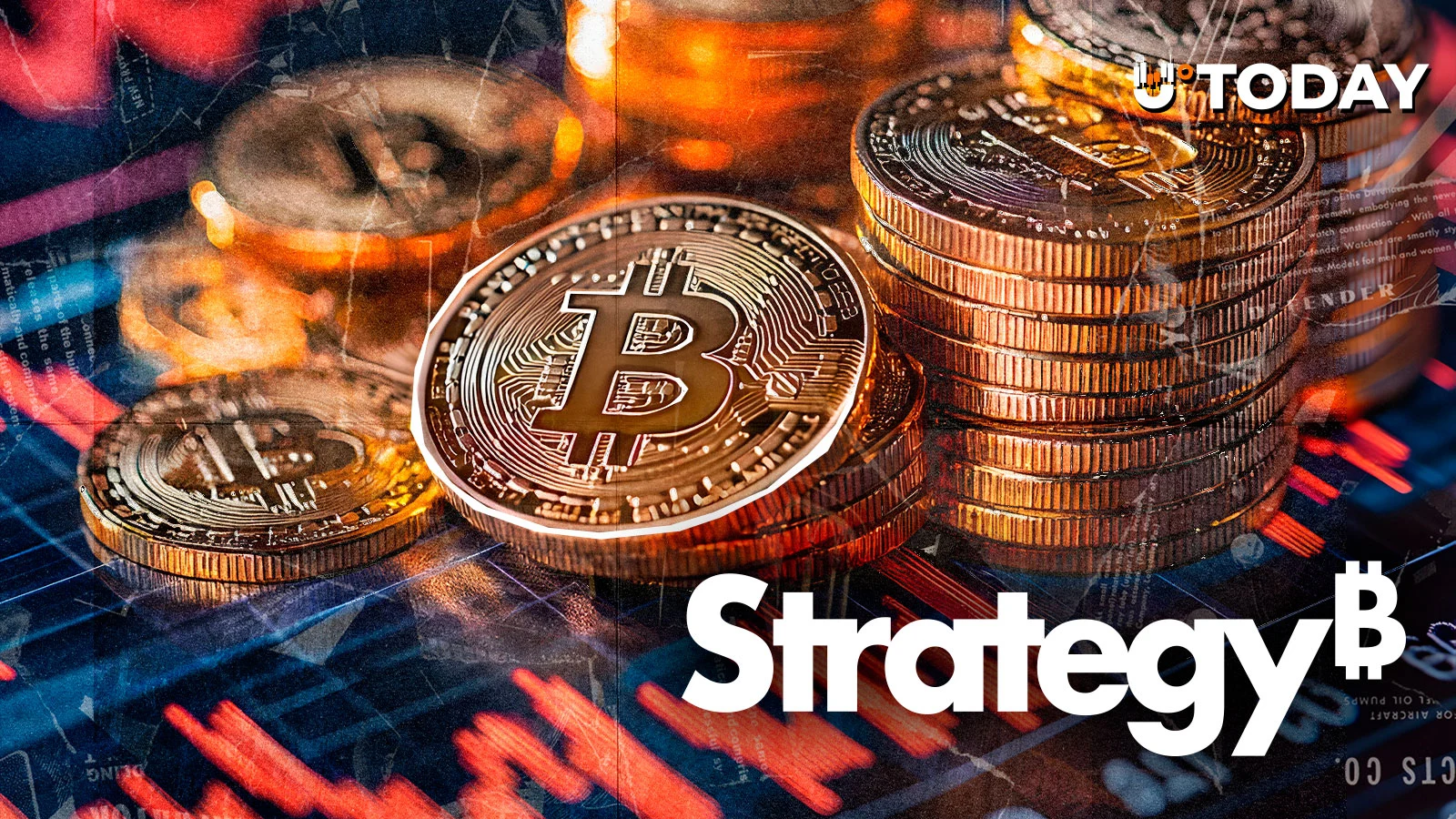
MicroStrategy, a significant corporate holder of Bitcoin, has broken its typical pattern by making no announcements regarding new Bitcoin purchases in the final week of March. The software company did not sell any shares or acquire additional Bitcoin between March 23 and March 29, leading to market speculation about the reasons behind this deviation.
Traditionally, MicroStrategy CEO Michael Saylor posts a graphic on X (formerly Twitter) on Sundays, followed by a formal announcement of Bitcoin purchases on Mondays. However, the absence of the usual
Source, catalyst, and sector overlap from the latest feed.
Square's integration of Bitcoin Lightning Network for millions of US small businesses represents a significant step towards mainstream adoption, potentially increasing BTC transaction volume and utility. The default settlement to USD for merchants, coupled with waived processing fees until 2026, lowers the barrier to entry for businesses and signals a pragmatic approach to integrating crypto payments. This large-scale rollout leverages Layer 2 technology, highlighting the scalability and speed improvements of the Lightning Network over the base Bitcoin blockchain for everyday transactions. The development could be interpreted as a 'TCP/IP moment' for financial infrastructure, suggesting a foundational shift in how digital payments are processed and adopted globally.
Live Feed
Loading the broader stream in the same flow as the homepage feed.

U.S. lawmakers are urging federal regulators to issue guidance clarifying that insider trading laws apply to prediction markets, potentially impacting platforms like Polymarket and Kalshi. The request stems from concerns over potential insider trading on prediction markets related to government and military actions, suggesting a heightened regulatory scrutiny on these platforms. This development highlights the increasing overlap between traditional financial regulations and emerging digital asset markets, particularly concerning derivatives and information asymmetry.

Microsoft's integration of GPT and Claude in Copilot Researcher, via 'Critique' and 'Council' modes, demonstrates a significant advancement in AI research capabilities by leveraging multi-model collaboration to improve accuracy and reduce hallucinations. The development highlights a shift from single-model dominance to multi-model orchestration, suggesting that the value in AI may increasingly lie in how different models are combined and managed, rather than the performance of any single model. By outperforming existing AI research tools on the DRACO benchmark, Microsoft's approach signals a potential new standard for AI-driven research and analysis, impacting the competitive landscape among major AI developers.

The NFL's request to prediction markets, supported by the CFTC's deference, signals increased regulatory scrutiny on event contracts that could be susceptible to manipulation. This development indicates a potential shift in how prediction markets operate, particularly concerning event contracts tied to real-world, non-financial outcomes. Traders should monitor how prediction market platforms adapt to these regulatory pressures, as it could impact the availability and nature of future event contracts.

The convergence of institutional finance, AI agents, and blockchain infrastructure at Consensus Miami signals a maturing market where traditional players are actively integrating digital assets, suggesting a potential for increased capital flow and adoption. The explicit mention of regulatory clarity from the SEC and potential frameworks in Washington indicates a shift towards a more defined legal landscape, which could reduce uncertainty and encourage further institutional participation. The focus on 'agentic commerce' and AI agents executing trades highlights a significant technological evolution, positioning blockchain not just as a speculative asset class but as foundational infrastructure for future automated economies. Despite current market lows, the author's strong conviction in Consensus as a 'genuine inflection point' driven by tangible integrations like Mastercard's acquisition of BVNK suggests underlying strength and development that may precede a market upswing.
Despite a recent 4.7% surge and a golden cross formation on the hourly chart, Shiba Inu has pulled back 2.18%, indicating that short-term selling pressure has returned and the bullish technical signal may be unreliable. Significant exchange outflows of over 30 billion SHIB tokens suggest underlying accumulation and demand, implying that long-term holders may be viewing the current price weakness as a buying opportunity. The formation of a golden cross, while typically bullish, carries a higher risk of false signals on shorter timeframes, especially given SHIB's history of rapid reversals after similar patterns.
The launch of the Blockchain Leadership Fund, backed by major players like Chainlink Labs and Anchorage Digital, signifies increased institutional engagement in shaping crypto policy through political action. As a hybrid PAC, the BLF's ability to make direct contributions and independent expenditures provides a flexible tool for influencing both candidates and public perception ahead of the 2026 midterms. The entry of BLF into the crypto lobbying space, alongside the well-funded Fairshake PAC, intensifies competition for influence and suggests a growing strategic investment in the political landscape by the digital asset industry. The focus on policy development and the explicit mention of influencing rules of the road indicate a proactive approach by industry leaders to secure favorable regulatory environments for digital assets.

A significant $53 million Bitcoin short position opened on Hyperliquid suggests a bearish sentiment among large traders, potentially signaling downside risk. Geopolitical tensions and upcoming US economic data are creating a risk-averse environment, influencing trader behavior and potentially impacting Bitcoin's price action. The whale's diversified macro bets, including shorts on silver and longs on oil, indicate a broader market strategy that could influence correlated asset movements.

Federal Reserve Chair Powell's comments on inflation expectations being 'well anchored' eased bond market concerns, leading to a drop in Treasury yields and reduced Fed rate hike probabilities. Despite dovish Fed commentary, rising oil prices to over $100 per barrel continue to pressure risk assets, causing U.S. stocks and Bitcoin to give up early gains. The market is currently balancing dovish Fed signals against persistent inflationary pressures from commodities, creating a mixed sentiment for risk assets like Bitcoin.
Dogecoin faces a critical juncture to break a five-month losing streak by month-end, with current price action, increased volume, and a neutral RSI suggesting potential for a short-term reversal. Whale accumulation of 4.5 million DOGE below $0.09 and institutional holders maintaining their positions despite recent price dips indicate underlying support and a potential 'hold' strategy ahead of a possible rebound. The correlation with Bitcoin's broader recovery provides a potential tailwind for DOGE, making its ability to break immediate resistance at $0.093-$0.095 a key indicator for trend continuation.

Square's rollout of Bitcoin POS payments, settling in USD by default, lowers adoption barriers for merchants by mitigating volatility and custody risks. This development signals a practical step towards Bitcoin's utility as everyday money, potentially increasing transaction volume and demand for BTC. The integration by a major payment processor like Square could encourage broader adoption of crypto payments by traditional businesses. While the immediate impact on BTC price may be limited, the long-term implications for Bitcoin's use case as a payment rail are significant.

Alibaba's Qwen 3.5 Omni release signifies a significant advancement in native omnimodal AI, integrating text, audio, and video processing for more seamless and interactive AI agents. The model's superior performance on audio benchmarks and real-time web search capabilities suggest a competitive edge against existing large language models, potentially driving adoption for advanced AI applications. Features like voice cloning and audio-visual vibe coding indicate a push towards more sophisticated AI functionalities, which could redefine user interaction and workflow automation in the near future. While the technology is impressive, its direct impact on the crypto market is currently limited as it is an AI development rather than a blockchain-specific event.

Mitsubishi's adoption of JPMorgan's Kinexys blockchain for corporate payments signals growing institutional trust in blockchain-based financial infrastructure, potentially driving further adoption in traditional finance. The expansion of Kinexys beyond payments into tokenization of assets like private credit and real estate, coupled with other major institutions like BlackRock and Franklin Templeton exploring tokenization, indicates a significant shift towards RWA and tokenized assets. JPMorgan's continued investment in blockchain infrastructure, despite CEO Jamie Dimon's past skepticism, highlights a strategic pivot towards leveraging distributed ledger technology for core financial services and future market opportunities.

Bitcoin's continuous trading allows it to act as a real-time macro market, pricing geopolitical events and sentiment shifts outside traditional U.S. trading hours. The interplay between Iranian geopolitical developments and U.S. political messaging is directly influencing cross-asset pricing, with Bitcoin acting as an early indicator. The upcoming week's economic data, particularly concerning oil prices and inflation, will be interpreted through the lens of geopolitical risk, with Bitcoin's 24/7 price action providing immediate market feedback. Traders are closely monitoring Bitcoin's behavior during off-hours for clues on market sentiment regarding geopolitical events, potentially offering an asymmetric trading edge before traditional markets open.
SpaceX's potential IPO, targeting a $1.75T valuation, may significantly impact retail brokerages like Robinhood and SoFi by prioritizing underwriter-linked platforms such as E*Trade for retail share allocation. The exclusion of Robinhood and SoFi from a substantial retail allocation in the SpaceX IPO could negatively affect their trading volume and customer engagement, as evidenced by Robinhood's stock pressure following the news. A new Nasdaq rule allowing faster inclusion of large-cap companies into the Nasdaq 100 could further boost demand for the SpaceX IPO, potentially increasing its attractiveness and influencing brokerage participation.
Signal context only. Validate with price action, liquidity, and risk limits before taking a position.
No explicit catalyst tagged.
Deloitte's independent audit confirming Ripple's RLUSD stablecoin is fully backed by liquid reserves provides a significant de-risking event for the asset, potentially increasing institutional confidence and adoption. The RLUSD audit, coupled with recent listings and new partnerships for Ripple's ecosystem, signals a strategic push for regulatory compliance and utility, differentiating it from less transparent stablecoins. While the audit itself is a positive factual development, the immediate market impact on RLUSD's price is likely to be gradual as adoption and utility gains materialize, suggesting a 'watchlist' rather than an immediate 'buy' signal.
