
Navigating Crypto News

CoinFeather
Navigating Crypto News

Quick market read from this story
Kalshi and Polymarket are reportedly in early-stage fundraising talks aiming for $20 billion valuations, signaling significant investor confidence in the prediction market sector's growth potential.
The potential funding rounds, if successful at the target valuations, would represent a substantial increase from their late 2025 valuations, indicating strong market demand and potential for future expansion.
The surge in interest from traditional finance players like Nasdaq and Cboe, alongside Coinbase and Robinhood entering the space, highlights a growing mainstream acceptance and integration of prediction markets.
With open interest on Kalshi exceeding $400 million and Polymarket at $360 million, the platforms demonstrate robust user engagement and trading volume, supporting their ambitious valuation targets.
Deep Dive
Prediction market platforms Kalshi and Polymarket are reportedly in discussions for significant fundraising rounds that could each value the companies at approximately $20 billion. If these valuations are achieved, they would represent a doubling of their worth from late 2025. These discussions are in their early stages and may not result in finalized investments, according to The Wall Street Journal.
Prediction markets enable users to trade contracts based on the outcomes of real-world events, spanning categories like sports, politics, and elections. Kalshi, founded in 2018, currently operates in the United States under Commodity Futures Trading Commission approval. The company previously raised $1 billion at an $11 billion valuation in December 2025 and has recently achieved an annualized revenue run rate of about $1.5 billion.
Polymarket, established in 2020, was valued at $9 billion in October 2025 following an investment commitment of up to $2 billion from Intercontinental Exchange. Both platforms are considered leaders in the rapidly growing prediction market sector.
Open interest on Kalshi is currently over $400 million, while Polymarket's stands at $360 million, according to a Dune dashboard. In terms of weekly notional volume, Polymarket recorded $1.9 billion and Kalshi $1.87 billion last week. The prediction market space has attracted significant attention, leading major companies like Coinbase and Robinhood to enter the field. Furthermore, financial giants Nasdaq and Cboe are exploring the introduction of binary bets for traditional market directions, mirroring prediction market functionalities.
Source, catalyst, and sector overlap from the latest feed.
Latin America's crypto transaction volume surged 60% to over $730 billion in 2025, indicating a significant shift towards practical utility over speculation. Argentina's crypto adoption is driven by cross-border payments and stablecoin use, with fintech integrations enabling peso payments to Brazilian merchants via stablecoins. Brazil leads the region in transaction size with $318.8 billion, benefiting from institutional trading and increasing regulatory clarity. Peru shows rapid growth with doubled crypto app users, fueled by interoperability between banks and digital wallets for payments.
Block's pragmatic embrace of stablecoins, driven by customer demand and competitive pressure from Stripe and PayPal, signals a strategic pivot beyond its Bitcoin-centric approach. Despite personal reservations, Jack Dorsey's decision to support stablecoins acknowledges their significant market traction and integration into broader payment ecosystems. This development highlights the growing influence of stablecoins in the crypto market, forcing even staunch Bitcoin advocates to adapt their strategies to meet user needs and market trends.
Major institutional investors anticipate a market rotation away from concentrated AI tech plays, suggesting a potential shift in capital allocation that could benefit assets like Bitcoin if they are perceived as diversifiers. The narrative for Bitcoin may evolve from a macro fear hedge to a portfolio diversification tool, especially if economic growth remains steady and inflation is contained, reducing the urgency for alternative stores of value. As equity markets become more selective, Bitcoin's simpler investment case, independent of specific AI revenue models, could position it favorably compared to smaller, more speculative crypto assets tied to broad AI themes. The shift towards deeper stock picking and away from crowded trades by institutional investors implies a more challenging market environment where Bitcoin's role as a hedge or diversifier will be tested against traditional assets like gold.
Circle's internal adoption of USDC for $68 million in intercompany transfers highlights the efficiency gains of stablecoins over traditional banking for corporate treasury operations. The successful use of Circle Mint for rapid settlement demonstrates a practical application of stablecoin technology beyond speculative trading, potentially increasing institutional confidence. This internal use case signals Circle's commitment to leveraging its own infrastructure, potentially paving the way for broader adoption of USDC for business-to-business payments and treasury management.
President Trump's proposed 'Strategic Bitcoin Reserve' remains stalled due to a lack of congressional authorization, highlighting the limitations of executive orders in enacting significant policy changes. The potential inclusion of Bitcoin reserve legislation within the National Defense Authorization Act presents a narrow window for progress, contingent on the Trump administration prioritizing the initiative. Despite industry enthusiasm, the absence of concrete legislative action means the U.S. government's Bitcoin holdings and potential future acquisitions are uncertain, impacting market expectations for institutional demand.
Colossus aims to disrupt traditional payment networks like Visa and Mastercard by building a sovereign credit card rail on an Ethereum Layer-2, potentially reducing fees and offering a more decentralized alternative. The startup's strategy to operate without traditional KYC/AML requirements, based on its interpretation of the GENIUS Act, presents a novel approach but may face regulatory scrutiny and challenges in adoption by merchants accustomed to fiat settlement. The project's reliance on stablecoin transfers for transactions, while aiming for on-chain freedom, requires acquirers to bridge to traditional fiat for merchant settlement, highlighting a key integration challenge. Following the collapse of similar ventures like UnCash, Colossus's success hinges on its ability to navigate the complex payment ecosystem and overcome established relationships, despite its ambitious goal of replacing incumbents.
Strategy's STRC preferred stock is functioning as a yield-generating instrument to fund Bitcoin accumulation, with recent trading surges potentially unlocking significant capital for further BTC purchases. The STRC ATM program allows Strategy to continuously raise capital for Bitcoin buys, indicating a sustained accumulation strategy driven by market demand for yield. While recent STRC trading activity suggests potential for over $300 million in proceeds for Bitcoin acquisition, actual purchase amounts will be confirmed in upcoming SEC filings, highlighting a speculative element to immediate repricing.
Significant weekly capital inflows of $680 million into Hyperliquid, surpassing major blockchains, indicate growing investor confidence and liquidity, supporting potential price appreciation. The HYPE token's breakout from a falling wedge pattern, coupled with strong protocol revenue and increasing derivatives trading activity, suggests a bullish technical setup with a potential target of $55-$58. Hyperliquid's leading fee generation, exceeding $1.7 million in 24 hours, highlights robust network demand and user engagement, positioning it as a key player in decentralized derivatives trading. With strong on-chain metrics and a bullish technical outlook, traders may interpret the current momentum as a signal for a potential rally, provided resistance levels are overcome.
Kalshi and Polymarket are reportedly exploring fundraising rounds at a $20 billion valuation, doubling their previous valuations and signaling strong investor confidence in the prediction market sector. Despite potential for significant growth, both platforms face increasing regulatory scrutiny and insider trading allegations, which could impact future operations and valuations. The news suggests a potential surge in capital inflow into prediction market infrastructure, though regulatory headwinds remain a key risk factor for traders.
Kazakhstan's central bank plans to allocate $350 million into cryptocurrencies and related companies, signaling a significant governmental embrace of digital assets and potentially influencing market sentiment towards broader institutional adoption. The planned investment, potentially funded by gold and FX reserves, suggests a strategic diversification by the central bank, indicating a belief in the long-term value and integration potential of digital assets within traditional financial systems. New regulations and licensing for crypto exchanges are being introduced, aiming to legitimize trading and combat illicit activities, which could foster a more secure environment for both domestic and international participants in Kazakhstan's crypto market.
Iran's crypto economy, valued at $7.8 billion in 2025, is being utilized as a critical tool for sanctions evasion and funding, with IRGC-linked wallets processing over 50% of Q4 inflows. The U.S. Treasury is shifting its strategy from targeting individual wallets to blacklisting entire exchanges, indicating an escalation in efforts to disrupt Iran's crypto-based financial channels. Ordinary Iranians are increasingly relying on Bitcoin and stablecoins to hedge against 40-50% inflation and a collapsing rial, highlighting crypto's role as a survival mechanism amidst economic and geopolitical instability. Iran's strategic use of Bitcoin mining as a form of monetary policy to pay for imports bypasses the dollar-denominated global trade system, presenting a unique challenge to traditional financial sanctions.
Bitcoin ETFs experienced significant outflows totaling $348.83 million, indicating a cooling of institutional demand following recent price corrections and a shift in market sentiment. Despite the substantial daily withdrawals, the overall inflows into Bitcoin ETFs since their inception remain positive, suggesting that current outflows may represent a short-term consolidation rather than a fundamental loss of institutional interest. BlackRock's IBIT and Fidelity's FBTC saw the largest outflows, highlighting a broad-based caution among institutional investors, even from previously dominant funds.
Bitcoin ETFs experienced significant outflows totaling $349 million, indicating a potential shift in institutional sentiment following recent price rallies. Large holders ('whales') sold portions of their recent Bitcoin accumulations, coinciding with retail investors increasing their positions amid rising market fear. The divergence in buying and selling behavior between whales and retail investors suggests a potential continuation of the current market correction before a stronger rebound. ETF flows and key support levels around the mid-sixty thousands are critical indicators for traders to monitor for short-term price direction and potential liquidity sweeps.
The $9 million SEC penalty for the NYSE's 2023 opening auction failure highlights regulatory oversight on traditional market infrastructure, potentially influencing confidence in exchange operations. While this event primarily impacts traditional finance infrastructure, it occurs as the NYSE explores tokenization, suggesting a need for robust systems before expanding into digital asset markets. The NYSE's proactive implementation of safeguards post-incident indicates a focus on operational stability, which could be a positive signal for its future digital market initiatives.
Dubai's VARA has issued cease and desist orders against KuCoin and MEXC entities for operating without the required licenses, signaling increased regulatory scrutiny on exchanges targeting the emirate. The regulatory action against KuCoin and MEXC highlights the importance of compliance with local licensing frameworks for crypto service providers operating in or marketing to Dubai residents. Traders should monitor potential impacts on user access and operational continuity for KuCoin and MEXC within the Dubai jurisdiction, which could affect trading volumes and sentiment for these platforms.
Live Feed
Loading the broader stream in the same flow as the homepage feed.
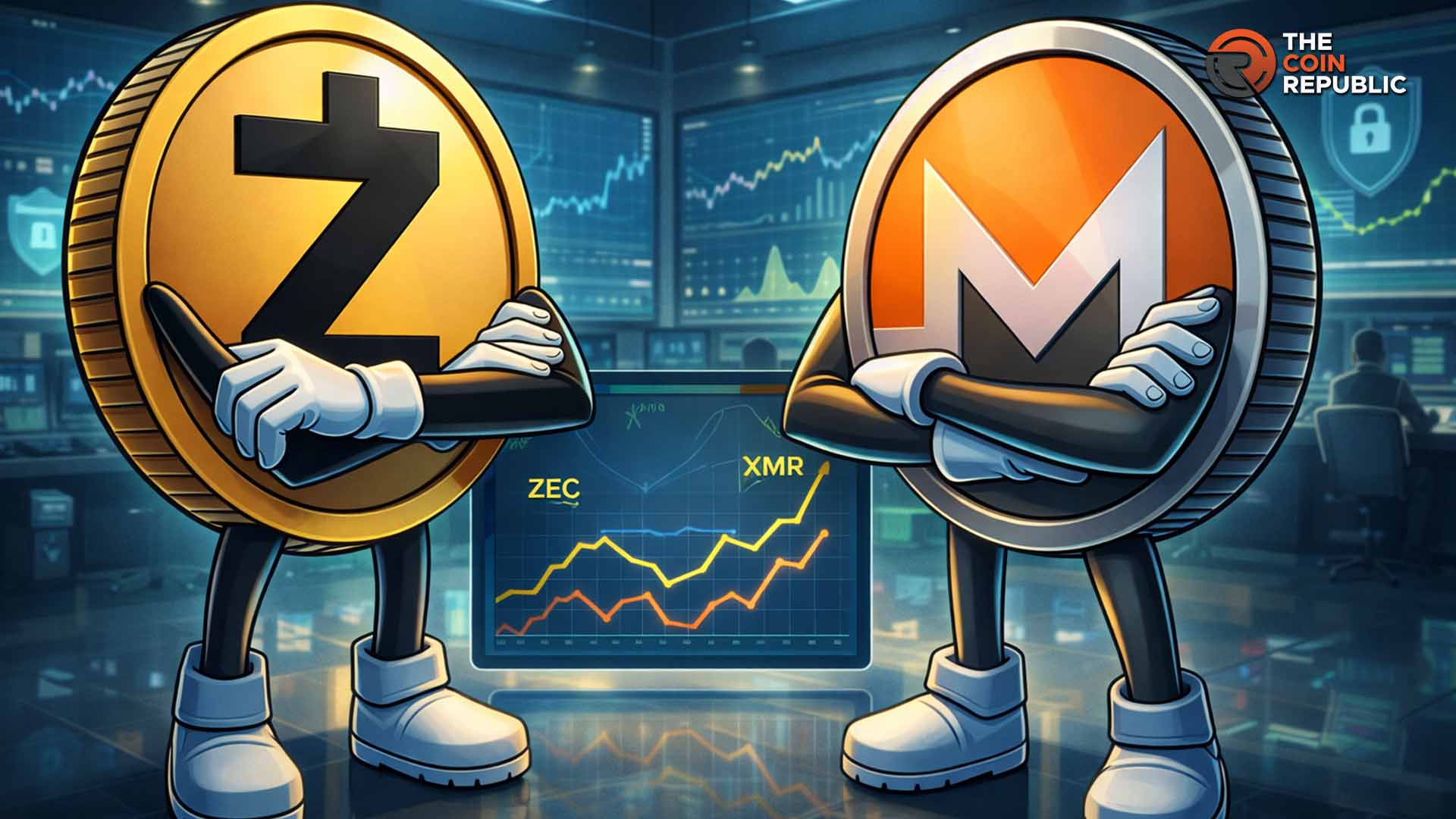
Monero (XMR) is showing stronger recent price momentum compared to Zcash (ZEC), indicating a potential shift in leadership within the privacy coin sector. Despite Zcash (ZEC) losing ground in price action, its leading position in the zero-knowledge proof (ZK) coin category by market cap highlights its technological significance and potential for future recovery. While both Zcash and Monero utilize proof-of-work mining, the profitability difference is marginal, suggesting mining economics are unlikely to be a primary driver for significant price divergence in the short term. The current market sentiment is cautiously optimistic, with a focus on sector-specific performance, making privacy coins like Monero and Zcash areas of interest for traders seeking alternative growth narratives.
PEPE price has broken below a key support level around $0.00000347, which is now acting as resistance, indicating a bearish market structure. The current technical indicators, including RSI and MACD, suggest fading buying momentum and favor sellers, pointing towards a potential further downtrend. A sustained price action above $0.00000347 is required to invalidate the bearish setup and signal a potential short-term recovery for PEPE.

Major meme coins like DOGE, SHIB, and PEPE failed to participate in the recent market-wide relief rally, indicating a potential lack of strong liquidity inflows and waning speculative interest. Technical analysis suggests DOGE and SHIB are facing significant resistance, while PEPE has broken key support, signaling bearish momentum for these meme tokens despite broader market upticks. The muted performance of historically leading meme coins implies that the current crypto bounce may not be driven by strong risk-on sentiment, potentially leading to a rotation back to major assets or further downside.

Rising oil prices are signaling potential inflation concerns, which could delay expected Federal Reserve rate cuts, leading to higher Treasury yields and a stronger dollar, thereby tightening global financial conditions. Bitcoin's price action is increasingly correlated with liquidity expectations, making it sensitive to shifts in Treasury yields and the US dollar, which are directly influenced by oil price movements and their impact on inflation psychology. While macro factors like oil prices are setting the tone, the internal dynamics of crypto derivatives markets, including leverage resets and positioning adjustments, will determine Bitcoin's ability to cushion or amplify macro-driven moves. Traders should monitor the interplay between oil prices, Fed policy expectations, and the USD/Treasury yield complex as a primary macro dashboard for Bitcoin, rather than focusing on direct oil-to-Bitcoin correlations.
Solana's price action is currently dictated by two key liquidity clusters around $95 and $78-$85, suggesting potential for a short-term sweep of downside liquidity before a possible rally. The broader market sentiment remains cautious due to macroeconomic factors like a strengthening dollar and mixed US job data, creating headwinds for crypto assets like Solana. Despite price consolidation, Solana's underlying payment volume shows significant growth (755% YoY), bolstered by strategic integrations like Western Union's stablecoin issuance, indicating strong fundamental development.
Florida's Senate passing stablecoin regulation marks the first state-level framework, potentially setting a precedent for other jurisdictions and influencing national crypto policy discussions. The unanimous approval suggests a bipartisan consensus on the need for stablecoin oversight, which could lead to increased institutional adoption and clearer operational guidelines for issuers. While the bill awaits the Governor's signature, its passage indicates a growing trend of regulatory clarity in the US, which could reduce uncertainty for stablecoin projects operating within Florida.
The US National Cybersecurity Strategy's inclusion of crypto and blockchain signifies governmental recognition of these technologies as critical infrastructure, potentially leading to increased focus on their security and integration into national defense frameworks. While acknowledging crypto's infrastructure role, the strategy's emphasis on combating financial crime suggests a potential for stricter regulatory actions against privacy-enhancing tools like mixers and privacy coins. The strategy's proactive stance on quantum computing threats indicates a forward-looking approach to cybersecurity, which could eventually impact blockchain security and necessitate the adoption of post-quantum cryptography. The dual approach of supporting crypto infrastructure while signaling enforcement against illicit use creates a complex regulatory environment that market participants must navigate, potentially shaping future policy and market development.

Circle's internal adoption of USDC for treasury settlements demonstrates a practical, real-world use case for stablecoins, potentially increasing demand and trust in the ecosystem. By replacing traditional fiat wires with USDC, Circle achieved near-instantaneous settlement for internal transfers, highlighting efficiency gains that could be replicated by other multinational corporations. This internal integration of Circle Mint for treasury management streamlines financial operations, reducing reliance on traditional banking systems and their inherent delays.

Cardano's Input Output Group clarifies the USDCx infrastructure aims for direct withdrawals to Cardano, bypassing traditional bridge complexities and enhancing DeFi and payment functionalities. The USDCx integration represents an ecosystem-level upgrade for Cardano's financial rails, signaling potential for increased liquidity and adoption as it connects directly to Circle's xReserve. By enabling direct USDC deposits and swaps to Cardano native assets, the USDCx initiative aims to streamline user experience and unlock new use cases for stablecoin liquidity within the ecosystem.
Signal context only. Validate with price action, liquidity, and risk limits before taking a position.
